
Used Truck Fuel Consumption in Africa 2026 — Real L/100km & Cost per km
Truck fuel consumption on a used HOWO 371 6×4 dump truck runs 32–38 litres per 100 km fully loaded and 13–16 L/100 km empty. At Nigeria’s October 2026 diesel price of $1.29 per litre, that is roughly $0.44 per kilometre loaded. The same truck in Kenya costs $0.57/km, because diesel there is $1.67.
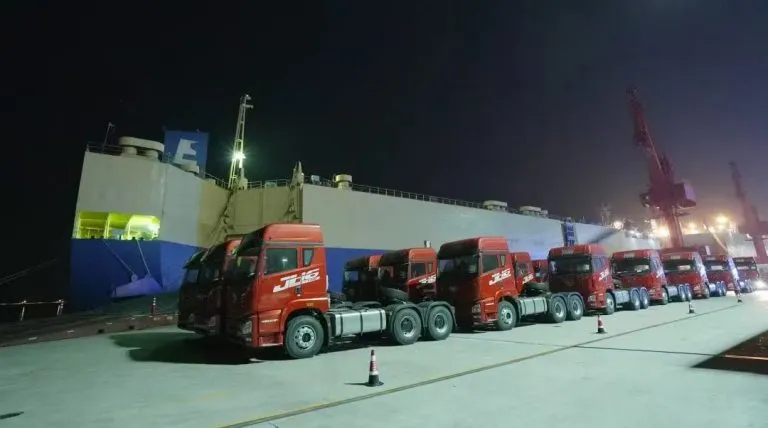
Because we source and inspect these trucks in Shijiazhuang and ship them from Tianjin to Lagos, Tema, Mombasa and Dar es Salaam, we see the real numbers. After the truck price, fuel is the first thing a serious buyer asks about, and it is also where most cost estimates go wrong. So here are the numbers we see in inspection reports and in feedback from owners after their first three months on the road. Then we will look at why a healthy 371 can drink 45 L/100 km instead of 34.

Truck Fuel Consumption at a Glance
Three things move truck fuel consumption more than anything else: how much weight you carry, how fast you hold, and the condition of the fuel system. The table below gives planning ranges for the models we ship most often; our dump truck guide covers the specs behind them. All figures are litres per 100 km at a 45–60 km/h average on mixed tarmac and graded road.
| Model | Engine | Loaded | Half load | Empty | Typical work |
|---|---|---|---|---|---|
| HOWO 371 6×4 dump | WD615.47, 9.7 L | 32–38 L | 22–26 L | 13–16 L | Sand, gravel, construction |
| HOWO 380 6×4 dump | WD615.96, 9.7 L | 33–39 L | 23–27 L | 13–16 L | Heavier site work |
| HOWO 8×4 380 dump | WD615.96, 31 t GVW | 38–46 L | 27–32 L | 15–18 L | Mining, bulk haulage |
| HOWO T7H 440 tractor | MC11.44, 10.5 L | 30–36 L | 21–25 L | 12–15 L | Long-haul trailers |
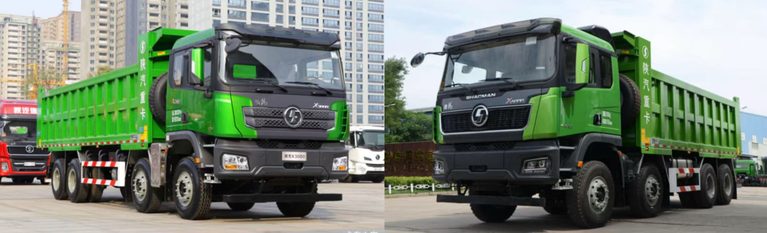
| Shacman F3000 380 dump | Weichai WP10.380 | 33–40 L | 23–28 L | 13–16 L | Construction, quarry |
| Shacman X3000 430 tractor | Weichai WP12.430 | 31–38 L | 22–27 L | 12–16 L | Heavy long-haul |
| FAW J6P 420 6×4 dump | FAW CA6DM2, 11 L | 32–39 L | 22–27 L | 13–16 L | Construction, mining |
| FOTON Auman 380 tractor | Weichai WP10.380 | 30–36 L | 21–25 L | 12–15 L | Regional haulage |
| Great Wall Wingle 7 4×4 | 2.0 L diesel | 8–10 L | 7–8 L | 6–7 L | Site support, light cargo |
However, these ranges assume a healthy fuel system and a driver who is not in a hurry. If you work in a quarry or sit in stop-start traffic all day, add 15–25%. If you run a flat highway at a steady 55–60 km/h, take off 5–8%. Yet those adjustments matter more than the brand badge. In fact, the gap between a well-maintained 371 and a neglected one is often bigger than the gap between a 371 and a 380. Still, treat the table as a starting point, not a guarantee.
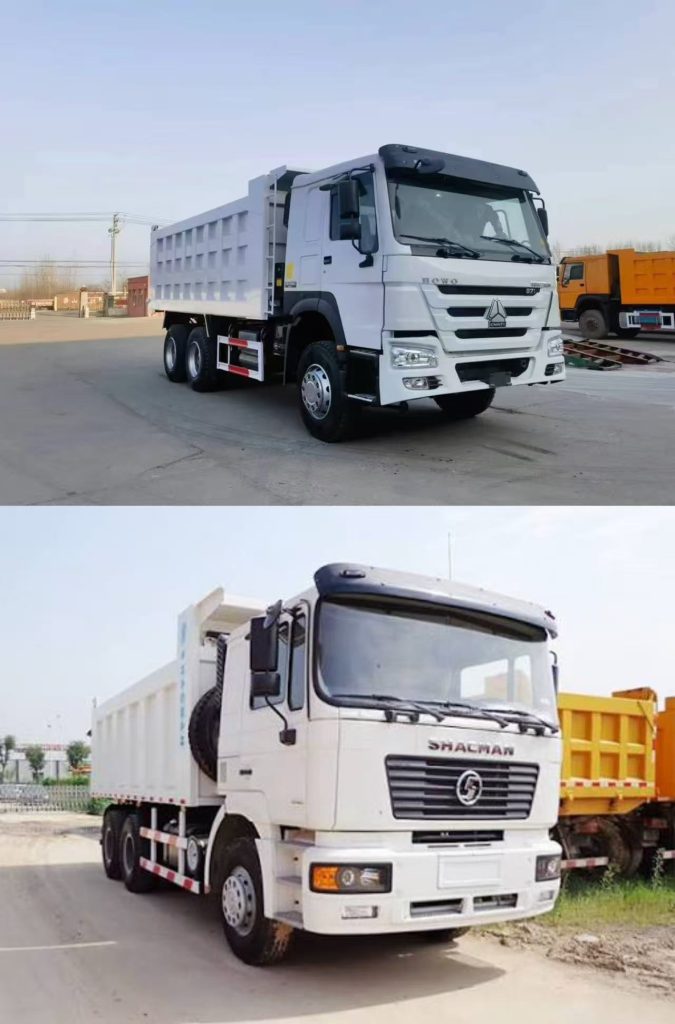
Why Truck Fuel Consumption Varies: 28 or 45 L/100 km
Even so, two operators running identical 2019 HOWO 371s can be 30% apart on fuel, and neither is lying. Weight and speed explain most of it. Yet the biggest variable is often the driver, not the truck.
Because weight matters so much, a 6×4 tipper at 25 t gross is doing well to hold 34 L/100 km. But push the same truck to 31 t and you add roughly 9–12%, because every extra tonne costs about 1.5–2% in fuel. Then push the cruising speed from 60 to 85 km/h and you add another 4–6 L, since drag rises with the square of speed. On a 200 km run, that one habit can cost more than a year of filters.
After weight and speed, terrain comes next. If a truck spends its day climbing out of a quarry pit, it will never match a highway figure, whatever the spec sheet says. Then heat matters too: at 35–40°C the air thins, the cooling fan runs more, and consumption climbs 3–5%. So if you are comparing two used trucks, compare them on the same route with the same load. Otherwise you are comparing the drivers, not the trucks.
Diesel Prices Across Africa — October 2026
Fuel consumption is only half the equation. However, the other half is what you pay at the pump, and that varies far more than most buyers expect.
| Country | Diesel (USD/litre) | Local price | Cost per 100 km* | Cost per km |
|---|---|---|---|---|
| Nigeria | $1.29 | NGN 1,715.50 | $43.86 | $0.44 |
| Ghana | $1.58 | GHS 18.46 | $53.72 | $0.54 |
| Kenya | $1.67 | KES 216.57 | $56.78 | $0.57 |
| Zambia | $1.67 | ZMW 33.27 | $56.78 | $0.57 |
| Tanzania | $1.55 | TZS 4,086 | $52.70 | $0.53 |
| South Africa | $2.11 | ZAR 34.72 | $71.74 | $0.72 |
*Based on a HOWO 371 loaded at 34 L/100 km. Prices from GlobalPetrolPrices.com, update of 12 October 2026. Check your local pump before you finalise a budget, because African diesel prices move with exchange rates and subsidy decisions, sometimes within weeks. For instance, a 10% currency move can add $0.04–0.06 per km overnight.
That said, the spread is worth noting. The same truck, doing the same work, costs 64% more per kilometre in South Africa than in Nigeria. As a result, a CIF price alone tells you very little about whether a truck will make money. If you want country-specific import numbers, see our guides for Nigeria, Ghana, Kenya and Zambia.

A Real Monthly Fuel Budget — Nigeria vs Kenya
For example, take a 2019 HOWO 371 tipper working 4,000 km a month, which is about 160–180 working hours on short-haul construction work. It burns 1,360 litres at 34 L/100 km. The CIF and duty numbers for the same truck are in our HOWO 371 Nigeria case study. While 4,000 km is a reasonable planning figure, a long-haul truck may do 8,000 km and a site truck only 2,500.
| Item | Nigeria | Kenya |
|---|---|---|
| Diesel per month (1,360 L) | $1,754 | $2,271 |
| Diesel per year (48,000 km) | $21,053 | $27,254 |
| Extra fuel cost per year | — | +$6,201 |
Overall, $6,000 a year is not a rounding error. Over three years, that is $18,600 — enough to change which truck you can afford next. So if you are choosing between two markets, or between a 371 and a larger 8×4, run this number. Do it before you fall in love with a truck.
Truck Fuel Consumption vs the Rest of Your Cost per km
Fuel is 55–65% of a working truck’s running cost, but it is not the whole bill. Besides diesel, maintenance and tyres are the lines that surprise first-time owners. This is the planning model we give buyers who ask whether a truck can carry its own costs.
| Cost line | USD per km | Notes |
|---|---|---|
| Diesel | $0.44–0.57 | Loaded 34 L/100 km, Nigeria to Kenya |
| Driver | $0.10–0.15 | $400–600/month at 4,000 km |
| Maintenance and repairs | $0.08–0.15 | Oil, filters, brakes, injectors, clutch |
| Tyres | $0.03–0.05 | 10 tyres at $180–260, 60,000–80,000 km |
| Insurance, permits, registration | $0.02–0.05 | Varies widely by country |
| Total running cost | $0.67–0.97 | Excludes finance and major failures |
For example, a 40 km round trip burns about 13.6 litres, or $17.50 of diesel in Nigeria. Then add the other lines and that trip costs roughly $29–30 before finance. If your rate per trip is below that, the truck is working for free. And no discount on the purchase price fixes a bad route. At the same time, finance adds another 10–15% if you borrow, so the rate has to clear that too. Therefore, a route that looks profitable on paper can lose money on the road.
Eight Reasons Your Truck Fuel Consumption Is Too High
If consumption has drifted up by 10% or more, one of these is usually the cause. They are listed in the order we find them during inspection. In practice, the last three cost more than the first five on most trucks.
- First, under-inflated tyres. A tyre 20% below spec adds 1–3% to fuel use and wears out faster. On 12.00R20 tyres, check pressure weekly, cold. This is the cheapest fix on the list.
- Second, a clogged air filter. A restricted intake can cost up to 10%. In dusty quarry or Harmattan conditions, inspect every 5,000 km and blow it out; replace at 20,000–25,000 km.
- Third, worn injectors or a tired fuel pump. Expect 5–12% plus black smoke and harder starting. A return-flow test takes 20 minutes and tells you more than a scan tool.
- Besides that, overloading. Every extra tonne costs about 1.5–2% in fuel, and it also eats brakes, springs and tyres. The fine is the small part of the bill.
Driver and route factors behind high truck fuel consumption
- Then there is driving style. Hard acceleration and 90 km/h cruising can add 10–15%. Keep the engine in its torque band, roughly 1,200–1,600 rpm on a WD615. Use the gear that holds speed rather than the one that sounds sporty.
- After that, dragging brakes or bad alignment. A binding brake or a bent axle adds 3–5% and ruins tyres. When you stop after a long run, touch each hub: one that is much hotter than the rest is telling you something.
- Next, the wrong axle ratio for the terrain. A fast highway ratio in a hilly quarry forces constant downshifting. Match the ratio to the job, not to the brochure.
- Finally, idling. A WD615 burns 2–3 litres an hour at idle. Two hours a day, six days a week, is about 60 litres a month, or roughly $77 in Nigeria for going nowhere.
Then there is one more item that does not show up as consumption but ends up costing more: dirty or watered diesel. It damages injectors and pumps, and the repair bill arrives months later. So fit a water separator, drain it weekly, and buy from a station you trust. Our spare parts guide lists the parts that fail first on Chinese trucks in Africa.
How to Measure Your Truck Fuel Consumption
First, do not trust the dashboard, and do not trust a single tank. Although the dashboard may show an average, it rarely matches a fill-to-fill calculation. Instead, use the fill-to-fill method over at least three fills, on the same route and load pattern.
- Fill the tank until the nozzle clicks, at the same pump if possible. Write down the odometer reading.
- Work normally. At the next fill, note the litres added and the new odometer reading.
- Divide litres by kilometres, then multiply by 100. That is your L/100 km for that tank.
- Repeat three times. A single tank can be off by 10% because of foam, slope or a different pump.
| Date | Odometer | Litres added | km since last fill | L/100 km |
|---|---|---|---|---|
| 12 Oct | 148,320 | 340 | 1,000 | 34.0 |
| 15 Oct | 149,310 | 351 | 990 | 35.5 |
| 18 Oct | 150,280 | 330 | 970 | 34.0 |
| Average | — | 1,021 | 2,960 | 34.5 |
After a month of logs, you will spot a bad injector or a dragging brake before it becomes a roadside repair. Besides that, it gives you a real number to compare against the table above, instead of a guess.
What to Check Before You Buy a Used Truck
In fact, truck fuel consumption is one of the few things you can partly verify before payment. Before you pay a deposit, ask for a cold-start video and a fuel log. These checks take about an hour and have saved buyers more than any price negotiation.
- Injector return flow. Excessive return on one cylinder means a worn nozzle. Ask for a cold-start video and a hot-start video.
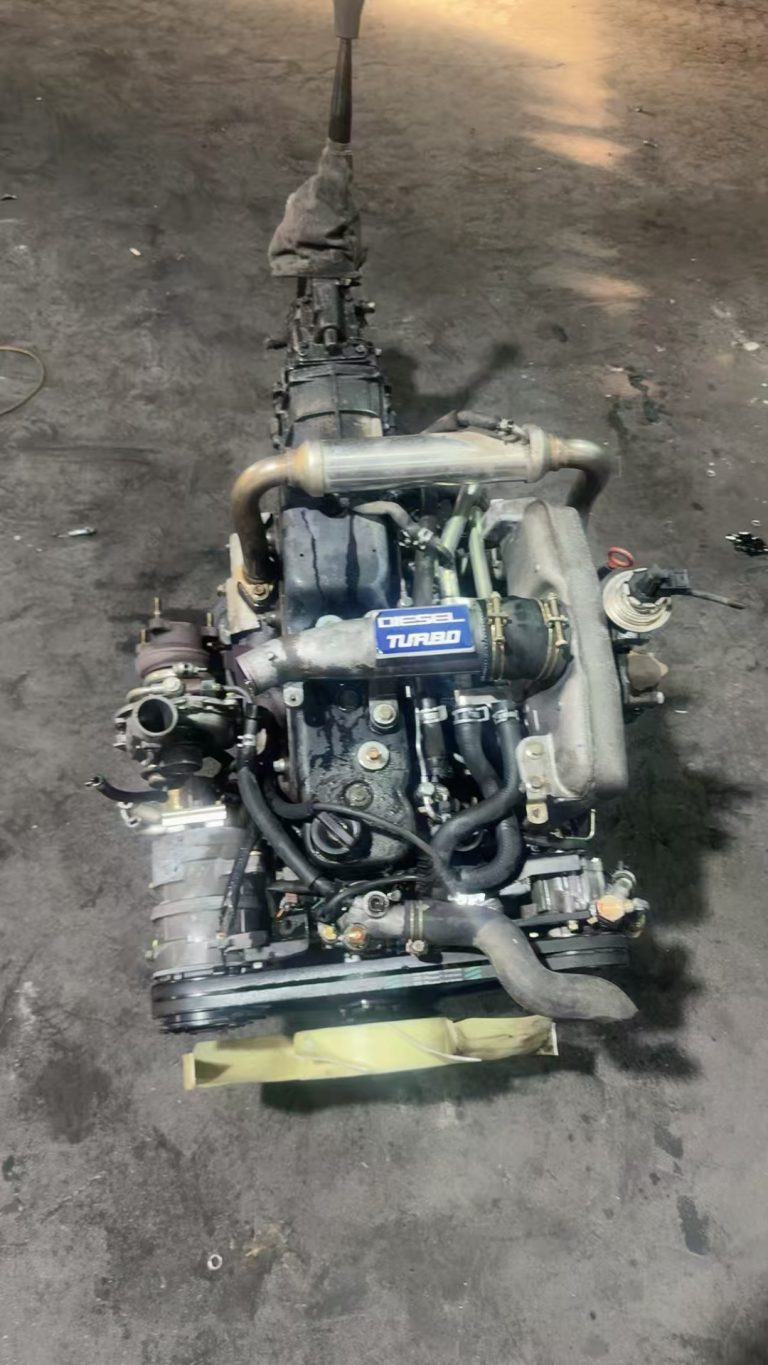
- Turbo shaft play and oil in the intake. A tired turbo shows as blue smoke and rising oil consumption.
- Air intake and intercooler hoses. Look for cracks, loose clamps and oily residue. A boost leak costs fuel and power.
- Exhaust smoke. Black is over-fuelling, blue is oil, white is coolant. Each points to a different repair bill.
- Blow-by. Remove the oil filler cap with the engine running. Heavy pulsation means worn rings or liners.
- Tyre wear pattern. Uneven shoulders mean alignment or pressure problems; cupping means suspension or balance.
- Odometer and differential ratio. Check that the ratio matches the terrain the truck will work in, and that the mileage is consistent with pedal and seat wear.
Before delivery, we run a 30-point inspection on every unit and send photos and video of the actual truck, not a stock image. The full list is in our used truck inspection checklist. If a seller will not show you the engine running from cold, walk away. Our scam guide explains the other red flags.
Frequently Asked Questions About Truck Fuel Consumption
What is normal truck fuel consumption for a HOWO 371?
A 6×4 HOWO 371 uses 32–38 L/100 km fully loaded, about 22–26 L at half load, and 13–16 L empty. The 34 L figure most operators quote is a loaded average on mixed road. Quarry work or steep grades can push it to 40 L.
Is a HOWO 380 thirstier than a 371?
It is, by about 1–2 L/100 km at the same load. That said, the 380 only makes sense if you regularly run at the top of the weight range or need the extra torque for hills. For 25 t work on normal roads, a 371 is the cheaper truck to run. If you are weighing the 371 against the 400 hp version, our 371 vs 400 comparison has the numbers.
How much diesel does a tipper use per hour?
Because a tipper spends much of its day loading, waiting and manoeuvring, litres per engine hour is the more useful number. A 6×4 tipper averaging 25–30 km/h burns roughly 7–11 litres per engine hour. That beats L/100 km for site work, where the truck rarely holds a steady speed.
How much can I save by driving better?
Overall, most operators can cut 10–15% with three changes. Hold 55–60 km/h instead of 85, keep rpm in the torque band, and stop idling for long periods. On 1,360 litres a month, 10% is 136 litres — about $175 in Nigeria, $227 in Kenya.
Can I convert a used truck to CNG or LNG?
Although a conversion is technically possible, the economics depend on a reliable filling station on your route. For most buyers in Nigeria, Ghana or Kenya, the conversion cost and lost cargo space outweigh the saving. The exception is a fixed daily route with your own refuelling point.
How do I check truck fuel consumption before I buy?
Before you agree, ask for the previous owner’s fuel log, then verify with a loaded test drive of at least 50 km. If no log exists, check injectors, air filter, tyre pressure and exhaust smoke, and budget 5–10% above the spec figure for the first month.
Watch — HOWO 371 Dump Truck in Action
Still, paper numbers only go so far. This short clip shows a HOWO 371 6×4 tipper working, with the real 2026 CIF Lagos price: watch on YouTube.
Quick Answer — Truck Fuel Consumption in Africa, 2026
- A loaded HOWO 371 6×4 dump truck burns 32–38 L/100 km; empty, 13–16 L/100 km.
- At October 2026 diesel prices, that is $0.44/km in Nigeria, $0.54 in Ghana, $0.57 in Kenya and Zambia, and $0.72 in South Africa.
- Total running cost, including driver, maintenance, tyres and permits, is roughly $0.67–0.97/km before finance.
- The three biggest savings are tyre pressure, a clean air filter and holding 55–60 km/h instead of 85.
In short, if you want a fuel and cost estimate for a specific truck and port, send your country, truck type and model on WhatsApp at +86 157 1768 7720 with the word FUEL. We will reply with real stock, a 30-point inspection report and a firm CIF price. You can also start from our used vehicles by type page or the import guides by country hub.
About the Author
Bean Wang is the founder of HebeiCar, the trading name of Ziquan (Xingtai) International Trade Co., Ltd. The company exports used trucks from Yuanshi County, Shijiazhuang, Hebei, China. Since 2014 he has helped more than 500 fleet owners and dealers across 20+ African countries source inspected HOWO, Shacman, FAW and FOTON trucks at factory-direct prices. He writes about fuel, maintenance and import cost from what he sees in the yard and hears from owners after delivery, not from a spec sheet.
Related reading: full landed-cost breakdown, how long Chinese trucks last in Africa, Weichai vs Cummins vs Yuchai, and Chinese vs Japanese trucks.