HOWO 371 vs 400 Dump Truck — Which Horsepower Should You Buy in 2026?
Quick answer: If you are buying your first dump truck for Africa, the HOWO 371 6×4 is usually the smarter buy — 371 hp hauls 25–30 tonnes, parts are everywhere, and a 2019–2021 unit lands around $17,000–20,000 CIF Lagos. However, step up to the HOWO 400 8×4 when you are moving 40–50 tonnes of ore on long, hilly mine roads. It costs more up front and burns more diesel, yet it pays you back on volume — not on fuel. Below, this HOWO 371 vs 400 guide breaks down the engines, payload, fuel use and real 2026 prices, so you can pick with numbers instead of badges.
So here is the whole comparison in one table, before we get into the detail:
| HOWO 371 (6×4) | HOWO 380 (8×4) | HOWO 400 (8×4) | |
|---|---|---|---|
| Engine family | WD615.47 | D10.38 | MC11.40-50 (MAN-derived) |
| Rated power | 371 hp / 273 kW | 380 hp / 279 kW | 400 hp / 294 kW |
| Torque | ~1,500 N·m | ~1,600 N·m | ~1,900 N·m |
| Typical payload | 25–30 t | 40–50 t | 40–50 t |
| Body volume | 16–20 m³ | 20–28 m³ | 22–28 m³ |
| Best for | Sand, gravel, mixed roads | Mining, overburden | Mining, long hauls |
| Parts availability | Excellent | Very good | Good (growing) |
Why the HOWO 371 vs 400 question comes up on every call
I sell these trucks out of Yuanshi County, Shijiazhuang, and the question “371 or 400?” comes up on almost every call from Nigeria, Ghana, Tanzania and Zambia. It is a good question too, because the two trucks are built for different jobs, and the wrong pick turns into an expensive mistake. Over the last eight years I have watched buyers get it right — and get it badly wrong. This guide is what I tell them.
One warning before we start, though. “371” and “400” are not trim levels on the same truck. The number is the engine rating, and behind it sit different engine families, different torque curves, different rear axles and, in most cases, a different number of wheels. Therefore, compare them as two different machines, not one truck in two flavours.
How the HOWO 371 vs 400 engines compare
Torque, not horsepower, is what pulls a loaded truck
Horsepower gets printed on the door and quoted in every WhatsApp message. Yet it is not the number that moves a loaded truck up a ramp. That number is torque — the twisting force at the wheels — and it is where the HOWO 371 vs 400 comparison really gets interesting.
The WD615 in the 371
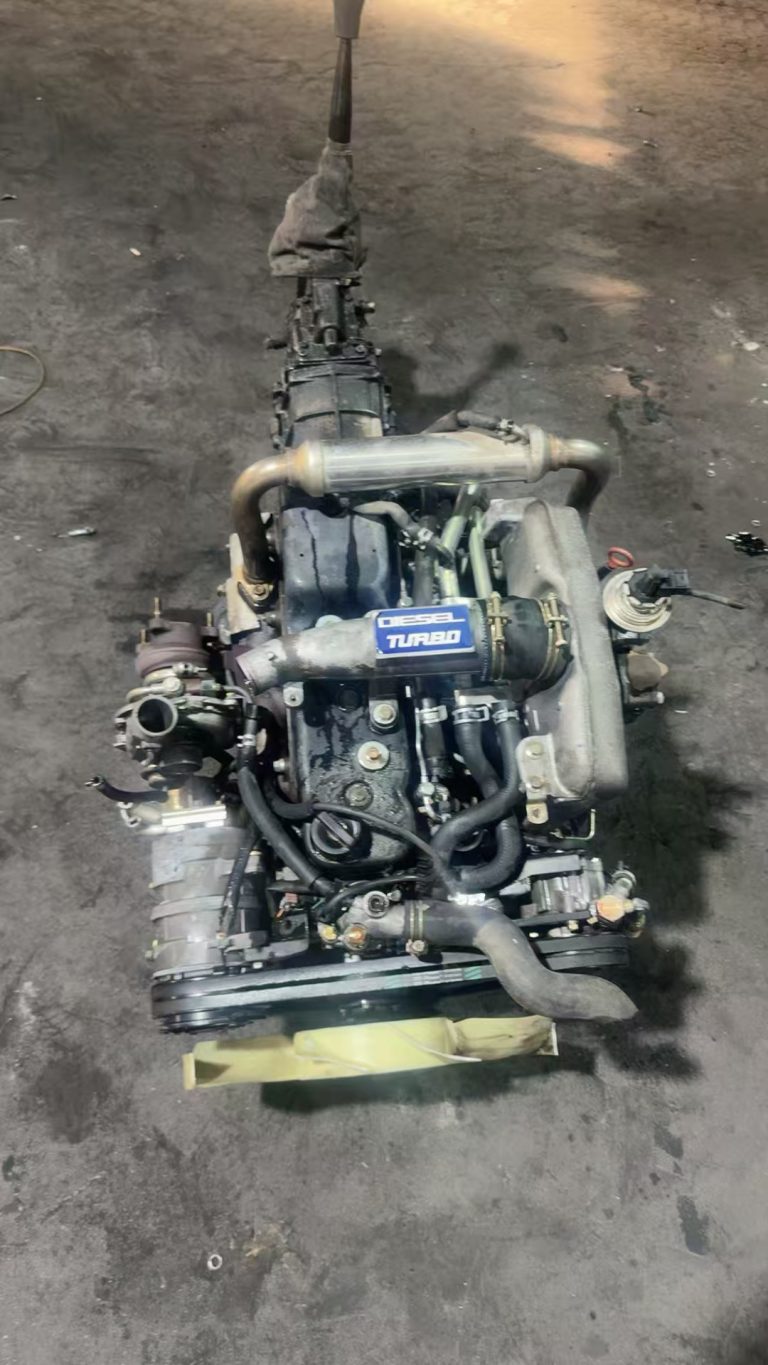
The 371 runs the Sinotruk WD615 engine, a 9.726-litre straight-six that has been built in Jinan for decades. So it is simple, mechanical, and fixable by any roadside workshop from Onitsha to Ndola. Peak torque is roughly 1,500 N·m, although it arrives relatively high in the rev range. That is why a loaded 371 feels unstoppable in first and second gear and a little lazy at speed.
The MC11 in the 400
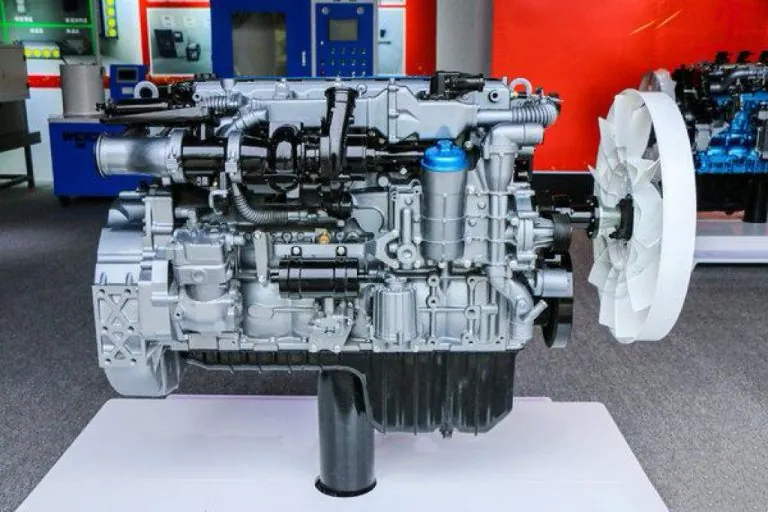
Meanwhile, the 400 uses the newer MC11 — a MAN-derived design that Sinotruk builds under licence. Same six cylinders, but a modern fuel system, a lighter block and roughly 1,900 N·m of torque from just 1,000 rpm. Translated from spec-sheet language: the 400 pulls hard from low revs, holds speed better on a long climb, and is quieter while doing it.
A warning about badges and model years
One honest note, because it catches people out. “371” is not a fixed spec across every year. On older HOWO units you will also meet the 336 (WD615.69) and the 375, and on the 8×4 chassis the same 371 badge can sit on a truck with two steering axles and a much bigger body. Therefore, always read the engine plate and the VIN, not the sticker on the cab. For a full breakdown of the WD615 family, and how it compares with Cummins and Yuchai, see our engine comparison guide.
HOWO 371 vs 400: side-by-side specs
| Spec | HOWO 371 6×4 | HOWO 400 8×4 |
|---|---|---|
| Common model code | ZZ3257N3847A | 8×4 chassis (ZZ3317-series) |
| Engine | WD615.47, 9.726 L | MC11.40-50, 10.5 L |
| Power / torque | 371 hp (273 kW) @ 2,200 rpm / ~1,500 N·m | 400 hp (294 kW) / ~1,900 N·m @ 1,000–1,400 rpm |
| Gearbox | HW19710, 10-speed manual | HW19710 or HW21712, 10/12-speed |
| Drive | 6×4 (10 wheels) | 8×4 (12 wheels) |
| Front axle | HF9 (9 t) | Two steering axles |
| Rear axle | HC16 (16 t) | HC16 / HCD16 bogie |
| Tyres | 12.00R20 | 12.00R20 or 315/80R22.5 |
| Fuel tank | 400 L | 400 L |
| Typical used years | 2018–2022 | 2021 onwards |
What the spec sheet leaves out
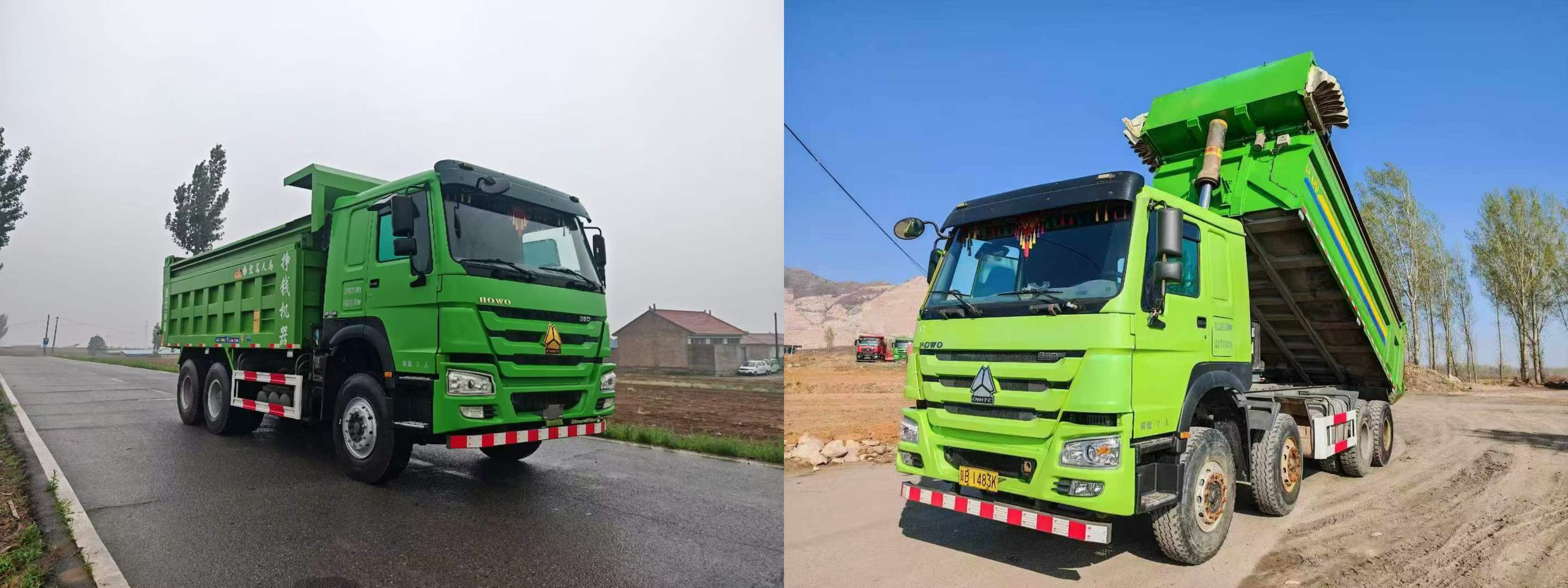
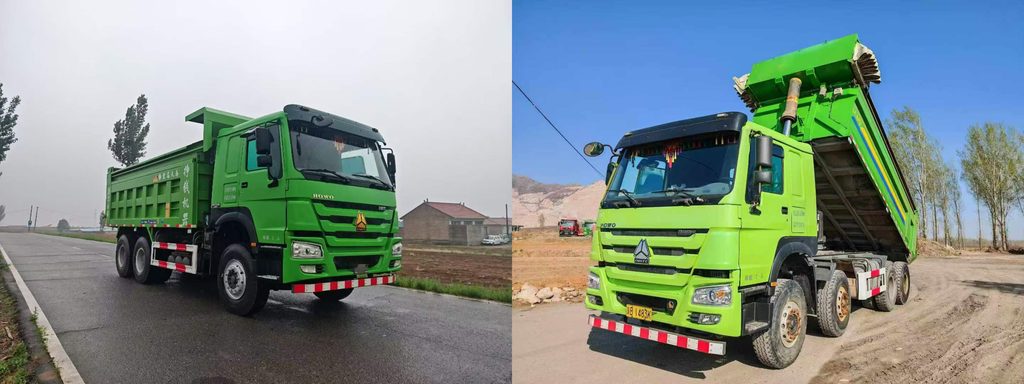
Numbers on their own do not sell trucks, so here is the version that matters. If your route is paved or reasonably graded, and you are tipping sand or gravel, then the 6×4 371 will do everything you need and cost you less to run. But if your route is a pit ramp in the rainy season, the extra axle and the extra 400 N·m are what keep you from being the truck that needs a tow.
▶ Watch the video: a HOWO 6×4 dump truck, 371 hp, filmed in one continuous take in our yard. The truck in the video is a typical grade-A unit ready for export. Watch on YouTube. For current stock and a CIF price to your port, WhatsApp +86 157 1768 7720.
HOWO 371 vs 400 payload and body size
What a HOWO 371 6×4 carries
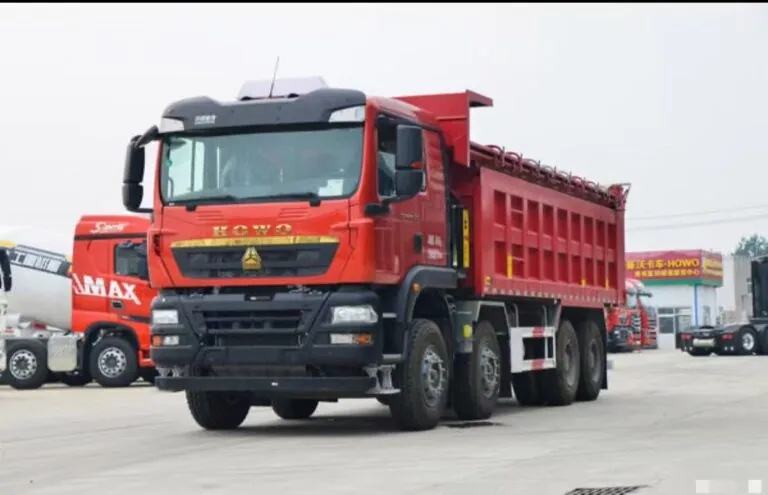
A HOWO 371 6×4 with the standard body carries 25–30 tonnes legally and comfortably. On a Nigerian sand run that is around 16–20 m³ per trip, loaded by a small excavator in a few minutes. It is the truck that made HOWO famous in West Africa, and for good reason: it fits almost every access road a quarry or depot has.
The 8×4 trucks are a different category
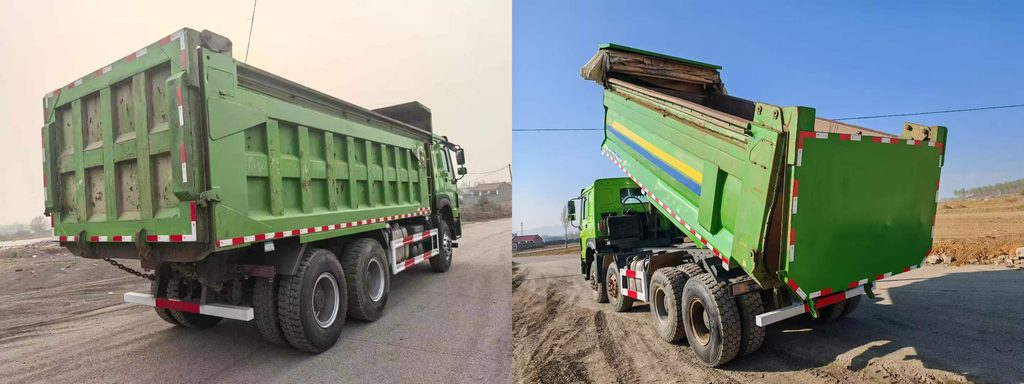
By contrast, the 8×4 trucks sit in a different class altogether. With 12 wheels sharing the load, an 8×4 371 handles 40–50 tonnes, and the 400 does the same weight more easily, with less strain on the driveline. Body volumes therefore run 20–28 m³, and in mining work you will see them matched to bigger excavators and shorter cycle times.
Match the truck to the loader, not the badge
Here is the part buyers miss. Paying for a 400 does not automatically move more material. If your loader is a 3-tonne excavator and your stockyard gate is 3.5 metres wide, then a 400 8×4 will spend half its life waiting. So match the truck to the loader, the gate and the weighbridge — not to the engine badge.
HOWO 371 vs 400 fuel consumption: what buyers report
Why there is no single honest figure
Nobody can give you one honest fuel figure for a dump truck, because it depends on load, gradient, road surface and how the driver treats the throttle. Even so, after years of asking buyers what their trucks actually drink, the pattern is consistent enough to be useful:
| Condition | HOWO 371 6×4 | HOWO 400 8×4 |
|---|---|---|
| Empty, decent road | ~24–30 L / 100 km | ~28–35 L / 100 km |
| Loaded, mixed roads | ~38–48 L / 100 km | ~45–58 L / 100 km |
| Loaded, pit or muddy ramp | ~50 L / 100 km+ | ~55–65 L / 100 km |
The 400 is not always thirstier per tonne
Still, read that table with one caveat. The 400 burns more fuel per kilometre, yet it is not automatically thirstier per tonne. Because its torque arrives low in the rev range, it often holds a gear on a climb where the 371 has to drop two and scream. As a result, on a long, steady mining haul the gap narrows sharply, and on short urban runs the 371 wins easily. If your work is stop-start in the city, do not buy the bigger engine hoping to save fuel. You will not.
One more point on diesel quality
In addition, there is a practical point here about diesel quality. The WD615 tolerates the dirtier fuel and the looser service intervals common in remote areas better than most engines. It is not a coincidence that the 371 is still the default truck on sites where the nearest workshop is four hours away. If you want the full picture of how long these engines last with proper maintenance, our lifespan and maintenance guide goes deeper.
Where the HOWO 380 fits in
The middle child, and the value pick
You will see plenty of used HOWO 380s on the market, and buyers often ask how they compare with the 371 and the 400. The short version: the 380 sits right between them, and it usually comes on the 8×4 chassis with the D10.38 engine — 380 hp and around 1,600 N·m.
In practice, the 380 is the value pick of the 8×4 family. You get the four-axle payload and stability of the 400, at a lower purchase price, and with an engine that is still firmly part of the WD-family parts ecosystem. So if your budget will not stretch to a 400 but you need to move 40 tonnes, this is the truck to look at. We usually hold 6×4 and 8×4 units in stock — see the live listings for the HOWO 380 6×4 and the HOWO 380 8×4.
HOWO 371 vs 400 prices: FOB China and CIF Africa 2026
What these ranges actually mean
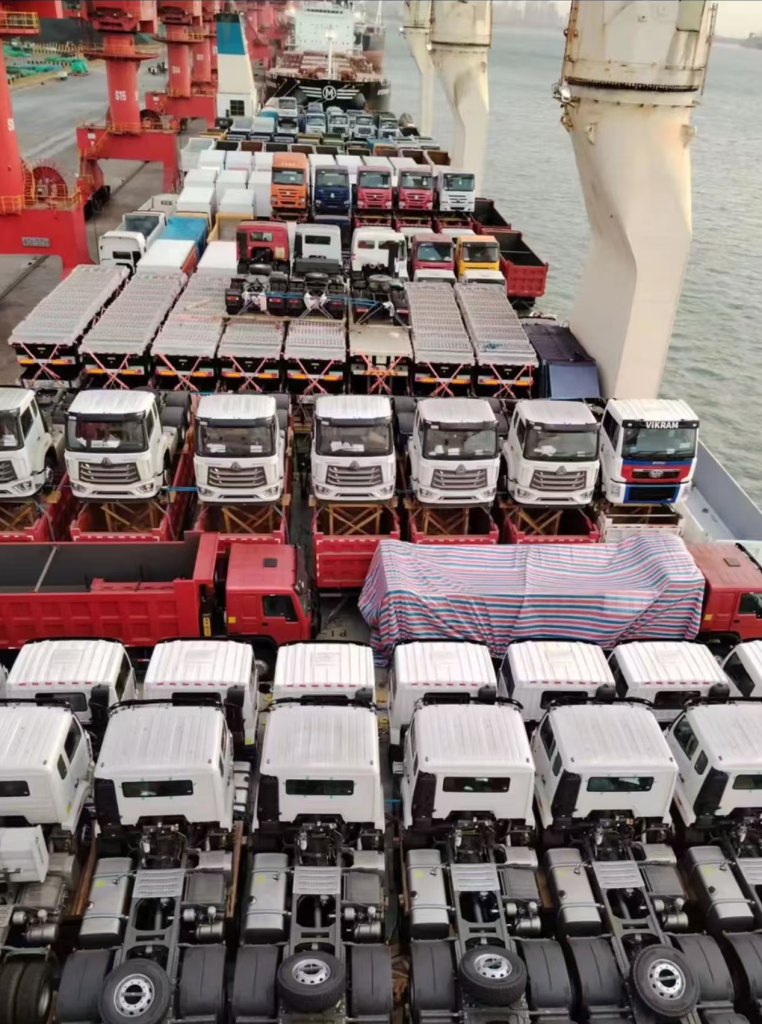
These are the ranges we actually quote for grade A/B used units with a video inspection, updated for 2026. FOB is the truck loaded at the Chinese port, while CIF adds ocean freight, insurance and export documents to your destination port. As a rule of thumb, CIF to Lagos adds $3,000–5,000 to the FOB figure.
| Model | Year | FOB China | CIF Lagos | CIF Mombasa / Dar |
|---|---|---|---|---|
| HOWO 371 6×4 | 2018–2020 | $13,500–16,500 | $17,000–20,000 | $17,500–20,500 |
| HOWO 371 6×4 | 2021–2022 | $16,000–19,000 | $19,500–22,500 | $20,000–23,000 |
| HOWO 380 6×4 | 2019–2021 | $14,500–17,500 | $18,000–21,000 | $18,500–21,500 |
| HOWO 380 8×4 | 2018–2020 | $15,500–18,500 | $19,000–22,000 | $19,500–22,500 |
| HOWO 380 8×4 | 2021–2023 | $18,500–22,000 | $22,000–25,500 | $22,500–26,000 |
| HOWO 400 8×4 | 2021–2023 | $19,000–24,000 | $23,000–27,000 | $23,500–27,500 |
Two things to remember about price and freight
Two things I would say to any buyer staring at that table. First, freight moves: rates to African ports have been high and booking windows long through 2026, so always ask for a CIF quote rather than doing the shipping maths yourself. Our shipping cost guide breaks down RoRo versus container pricing by port.
Second, the cheapest truck in the list is rarely the cheapest truck in the end. A $13,000 2018 unit with 180,000 km will need more in its first year than a $17,000 2021 unit. Because of that, we grade every truck and send the buyer the real condition on video before any deposit, precisely so that you are choosing between honest options.
Parts, tyres and what the truck costs to keep
Parts: where the 371 quietly wins
In any HOWO 371 vs 400 running-cost comparison, this is where the 371 quietly wins — and it is not a small advantage. The WD615 shares parts across thousands of HOWO trucks in Africa, so consumables are cheap and available in most major cities. Filters, brake chambers, clutch plates, water pumps — all ordinary items you can buy locally. Our spare parts guide covers where parts are stocked, and how to tell genuine parts from the dangerous copies that flood some markets.
Tyres and yearly running costs
The MC11 in the 400 is well supported by Sinotruk’s dealer network and getting better every year, but it is not yet as universal as the WD615. If you operate far from a dealer, that matters more than the spec sheet suggests. Budget roughly $1,200–2,000 a year for routine service on either truck, plus tyres. A set of 12.00R20s for a 6×4 runs about $1,500–2,200, and an 8×4 needs twelve of them.
▶ Watch the video: the HOWO 8×4 dump truck built for African mining — 40-tonne capacity, walkaround from the yard, from $19,000 CIF Lagos. Watch on YouTube. For an 8×4 quote to your port, WhatsApp +86 157 1768 7720.
So which one should you buy?
Three questions to answer first
So how do you settle the HOWO 371 vs 400 question without drowning in spec sheets? Forget the badge, and answer three questions about your work instead:
- What are you hauling? Sand, gravel and building materials on normal roads → 371 6×4. Ore, overburden and rock on pit roads → 380 or 400 8×4.
- How far and how steep? Short city runs and flat terrain → the 371 is cheaper to run and easier to manoeuvre. Long hauls with real climbs → the 400’s low-end torque earns its keep.
- Who fixes it? If the nearest proper workshop is hours away, buy the WD615 truck. Simple beats sophisticated when downtime costs you $500 a day.
What buyers choose, market by market
And by market, the pattern I see is fairly consistent. Nigerian buyers mostly want the 371 6×4 for sand and construction, plus the occasional 8×4 for quarry work. Ghana and Tanzania lean to 8×4s for mining support. Zambia and the DRC run the heaviest 8×4 fleets, where the 400 makes the most sense. Whichever way you go, if you are deciding between brands as well as engines, start with our brand comparison and the HOWO vs Shacman vs FAW breakdown.
What to check before you pay, on either truck
The frame, not the engine
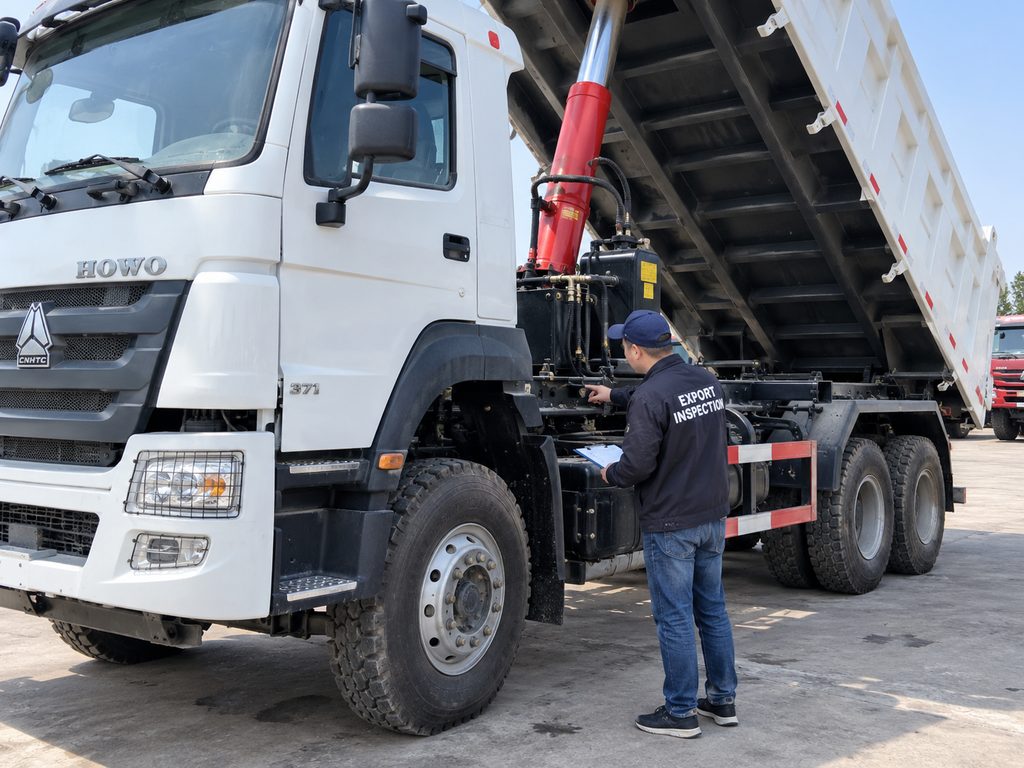
The engine is the headline, but it is not where the expensive surprises hide. On a used HOWO dump truck, check the frame for cracks around the spring hangers and the tipping pivot. Then run the hydraulics up and down at least three times, and look at the cab mounts — a hard-worked 8×4 will show stress there long before it shows it on the dash. After that, cross-check the odometer against the service records and the actual wear on the pedals and steering wheel.
Free checklists and how we inspect
For example, our full 30-point inspection checklist is free to use, and it is the same list our own team works through. If you want to see how we apply it, the quality and inspection page shows the process end to end. And if a deal feels rushed, or the paperwork has gaps, our guide to ten used truck scams is worth ten minutes before you send a deposit.
Common questions from buyers
For mining — ore, overburden, pit ramps — the 400 8×4 is the better tool. Its extra axle spreads the load, and its 1,900 N·m of torque climbs ramps the 371 would struggle with. That said, many mines still run 371 8×4s.
A HOWO 371 6×4 is rated for roughly 25–30 tonnes, while the 8×4 version carries 40–50 tonnes because four axles share the load. Because legal limits vary by country, confirm your rules first.
The WD615.47 in the 371 is an older, simple 9.726-litre engine making about 1,500 N·m. The MAN-derived MC11 in the 400 makes about 1,900 N·m from 1,000 rpm, so it is smoother yet more complex.
Per kilometre, the 400 8×4 burns more — roughly 45–58 L/100 km loaded against 38–48 L/100 km for the 371 6×4. However, per tonne hauled the gap narrows sharply, because the 400 hunts for gears less.
A good 2019–2021 HOWO 371 6×4 runs about $13,500–19,000 FOB China, or $17,000–22,500 CIF Lagos. A 2021+ HOWO 400 runs about $19,000–24,000 FOB, or $23,000–27,000 CIF.
Check the engine plate on the block, then cross-check it against the VIN on the registration certificate. The VIN’s manufacturer code (LZZ for Sinotruk/HOWO) and model-year digit should match the advertised truck.
How we source and check every HOWO we sell
What you see before you pay
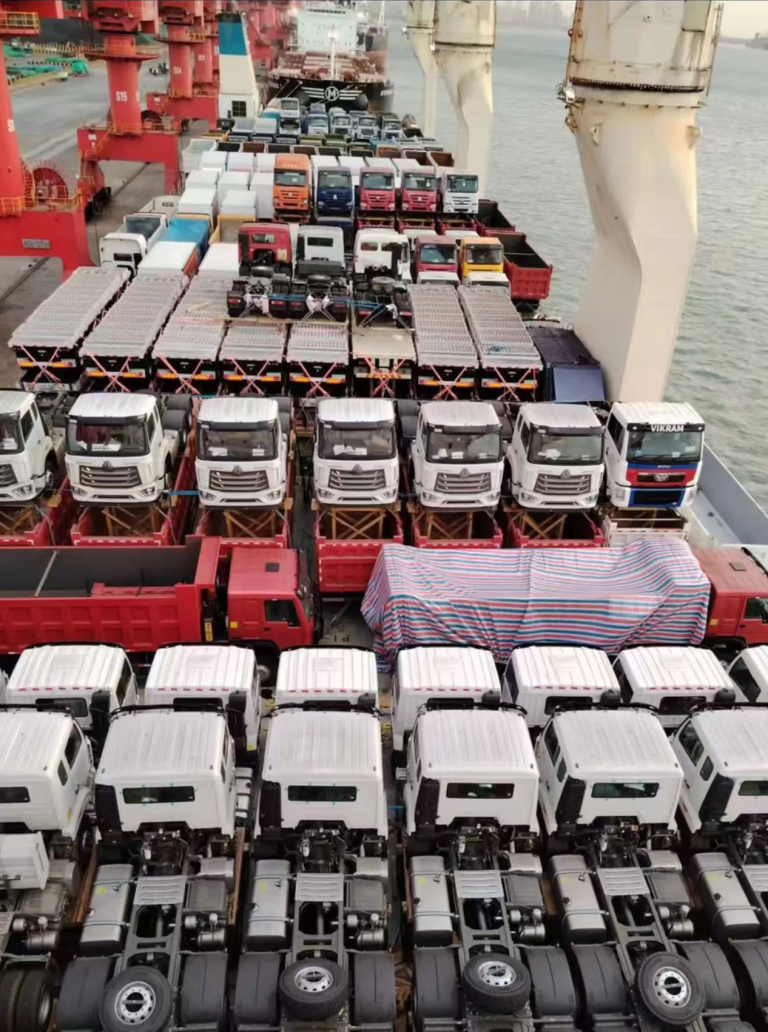
Since 2018 we have bought our trucks at the source in Yuanshi County, Shijiazhuang, one of the biggest used truck markets in China, and shipped them to buyers in Africa, the Middle East, Central Asia, Southeast Asia and South America. On every unit we pull the registration and transfer records, then verify the VIN in all three stamped locations. After that we run a structural check on the frame and cab mounts, and finally a mechanical inspection covering engine, gearbox, hydraulics, brakes and tyres.
So you get the photos, the video walkaround and the records with the quote, not after the deposit. If you are weighing up the 371 against a 400 right now, send me your route, your load and your destination port, and I will tell you honestly which one fits. And if neither does, I will say so. Payment terms, inspection rights and the LC and TT options are all covered in our buyer’s guides. Also worth reading before you choose a model: our HOWO buyer’s guide.
About the author
This guide was written by Wang Jianbin, founder of HebeiCar, and it draws on eight years of buying and exporting used trucks from Yuanshi County, Shijiazhuang — one of China’s largest used truck markets — to buyers in Africa, the Middle East, Central Asia, Southeast Asia and South America. Since 2018 we have shipped 500+ trucks, and most of the dump trucks among them were 371s and 380s heading to Nigeria, Ghana, Tanzania and Zambia. If you want the deeper HOWO reading, start with our HOWO tipper buyer’s guide and the complete dump truck guide.
Bottom line
If you move 25–30 tonnes of sand and gravel on ordinary roads, buy the HOWO 371 6×4, and spend the difference on tyres and a spare-parts float. If you are hauling 40–50 tonnes of ore up a pit ramp every day, buy the 400 8×4 — or a 380 8×4 if the budget is tighter. Either way, the HOWO 371 vs 400 decision should come down to the job rather than the badge: match the truck to the work, check the frame before the engine, and confirm the engine plate before you pay.
So if you want a straight answer on which truck fits your operation, plus current stock and a CIF price to your port, then message us on WhatsApp at +86 157 1768 7720 or use our contact page. Send your route, load and destination, and we’ll come back with real options — not a brochure.
Last updated: September 2026.