Used Truck Scams China — 10 Red Flags & Safe Buying Guide (2026)
Every week, I get messages from buyers who wired money to a “supplier” and never saw a truck. Sometimes it is $5,000. Sometimes $50,000. used truck scams China follow predictable patterns — a low price, a smooth talker, and then silence.
Still, buying a used truck from China does not have to be risky. There are real scams out there, and they follow predictable patterns. I have been in this business long enough to spot them at a glance. This article walks you through the red flags, the verification steps, and the buying process that keeps your money safe.
Watch real truck inventory walkarounds on our YouTube channel →
Why Used Truck Scams Are Common When Buying from China
First, most Chinese used truck exporters are honest. But the industry has a trust problem because of a few bad actors. Understanding why used truck scams China happen helps you avoid them. Here is why they are so common:
- Buyers cannot visit in person — Most African importers never set foot in China. They rely on photos, videos, and online communication. So that makes it easy for scammers to fake inventory.
- Payment is irreversible — Bank transfers and even letters of credit can be manipulated. Once the money leaves your account, getting it back is a legal battle.
- No central regulation — Unlike Japan or the US, China’s used vehicle export industry is still maturing. So not every exporter holds the same licence or follows the same rules.
- Fake inventory is cheap to produce — Then scammers steal photos from legitimate yards, create fake listings on Alibaba or Facebook, and disappear after collecting deposits.
Still, most used-truck scams in China follow the same blueprint — once you know the red flags, they become easy to spot.
10 Red Flags — How Used Truck Scams in China Work
1. Price Way Below Market
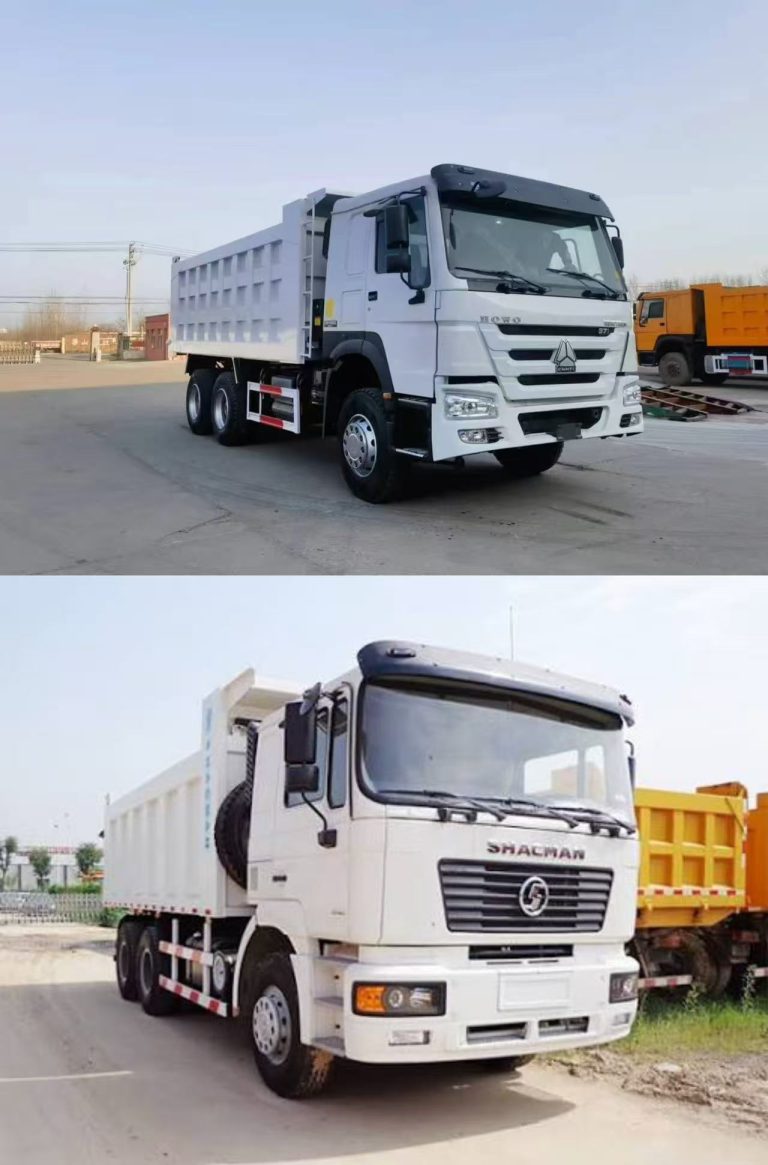
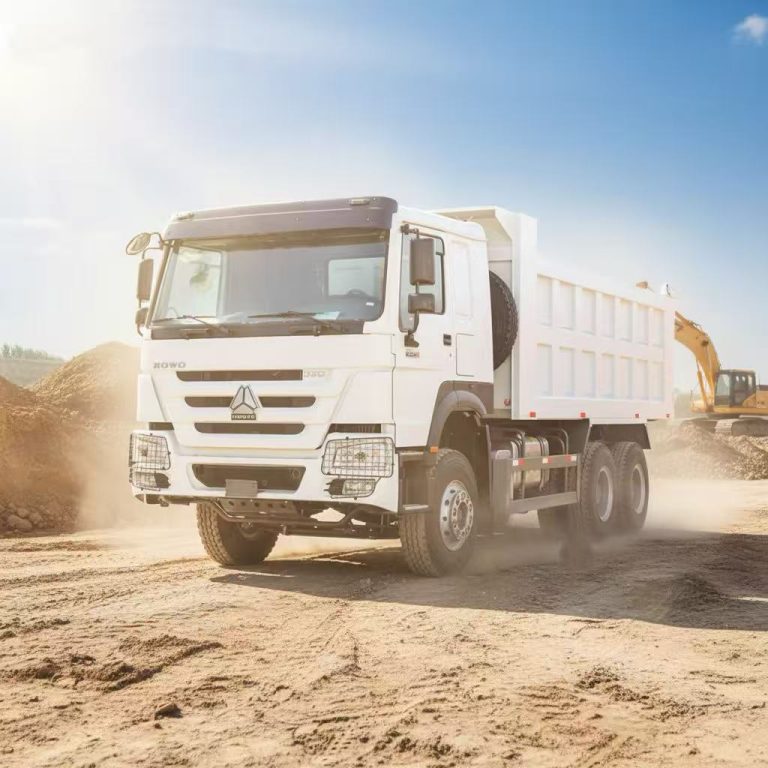
First, remember that a HOWO 371 dump truck in good condition does not sell for $8,000 FOB. The real price range for a decent 2018–2020 model is $16,000–$22,000. If the deal looks too good to be true, it is. Check our dump truck price guide for realistic numbers.
2. No VIN Number or Fake VIN
Also, a legitimate exporter sends the VIN before you pay. Then you cross-check it online, because China’s VIN system is verifiable. If the seller hesitates or sends a VIN that does not decode properly, walk away.
3. Stock Photos or Watermarked Images
Then try a reverse-image search on the truck photos. If the same image appears across ten different websites with different prices, the truck simply does not exist. Instead, ask for a live video call showing the specific unit.
4. Rushed Payment Pressure
Next, watch for rushed payment pressure: “Pay today or someone else will take it.” Scammers create urgency, so you skip verification. Real sellers with real trucks do not disappear in 24 hours if you ask a few reasonable questions.
5. Personal Bank Account, Not Company Account
Meanwhile, legitimate Chinese exporters use company bank accounts. However, a request to wire money to a personal account — in China or elsewhere — is the single biggest red flag. Read our payment methods guide for safe options.
6. No Physical Address or License
Also ask for the exporter’s business license and physically verify the address on Google Maps or Baidu Maps. Still, scammers use residential apartments or PO boxes. A real truck yard in Shijiazhuang or Jinan is easy to find on the map.
7. Photos of Different Trucks in Each Message
If the seller sends photos that show different license plates, different backgrounds, or different truck colors for “the same unit,” you are being fed a slideshow of stolen images.
8. No Loading Video or Shipping Proof
Then check for loading videos, because real exporters send them when the truck goes into a container or onto a RoRo vessel. If the seller cannot produce a loading video after receiving payment, something is wrong.
9. WeChat or WhatsApp Only — No Contracts
Similarly, scammers love chat apps because messages are informal and easy to deny. Meanwhile, a real exporter sends a signed sales contract with company chop (stamp).
10. No Third-Party Inspection Option
Finally, an honest exporter welcomes third-party inspection (SGS, Bureau Veritas, or your own agent). Meanwhile, a scammer always has an excuse why inspection is not possible right now.
How to Avoid Used Truck Scams — Step by Step
So here is the process I recommend to every buyer who contacts us. Then follow these steps, and you reduce your risk to nearly zero.
Step 1: Verify the Exporter
- First, get the company’s full Chinese name and business license number.
- Then check their registration on China’s National Enterprise Credit Information System (gsxt.gov.cn).
- Also look for a physical yard address, not just a WeChat number. A real truck exporter operates from an industrial area, not an apartment.
- Finally, search for reviews from other African buyers. Facebook groups and trade forums often have honest feedback.
Our full supplier verification guide has the complete process.
Step 2: Get the VIN and Verify It
- Then check that every truck carries a unique 17-character VIN stamped on the chassis and dashboard.
- Then use a VIN decoder (many are free online) to check make, model, year, engine type, and factory configuration.
- If the seller claims the truck is a 2020 model but the VIN decodes to 2015, you know something is wrong.
Step 3: Arrange an Independent Inspection
- Next, hire a third-party inspector in China. For $200–$500, you get a detailed condition report with photos and a video walkaround.
- Also check engine compression, transmission operation, chassis cracks, tyre condition, hydraulics on dump trucks and cab electronics.
- However, avoid sellers who block or delay inspection. Our inspection guide covers what to check in detail.
▶ Watch the video: How to inspect a used truck from China in 30 seconds — 5 checks our mechanics run on every truck: cold start, oil, welds, hydraulics and tire tread. Watch on YouTube. Want the full walkaround of a specific truck? WhatsApp +86 157 1768 7720.
Step 4: Use Safe Payment Terms
- L/C at sight — Letter of Credit is the safest option. The bank releases payment only after shipping documents are submitted.
- TT with deposit + balance — Put a 30% deposit maximum, balance against shipping documents. Never pay 100% upfront.
- Also escrow services — Some platforms offer escrow for cross-border transactions. Worth the small fee.
- No personal accounts — If the payment goes to a personal bank account, stop the transaction. This is how most used truck scams China succeed.
Full details in our payment safety guide.
Step 5: Get a Signed Contract
- Also make sure the contract specifies: truck model, year, VIN, agreed condition, price (FOB or CIF), delivery timeline, and warranty terms.
- Must include the company’s official stamp (chop). In China, a contract without a stamp has limited legal weight.
- Also keep the contract, chat records and payment receipts. If a dispute arises, this is your evidence.
Step 6: Track Loading and Shipping
- After that, ask for loading photos and the Bill of Lading (B/L) once the truck ships.
- Then use the B/L number to track the vessel in real time on MarineTraffic or VesselFinder.
- If the seller cannot produce a B/L within a week of the promised shipment date, investigate immediately.
Our shipping guide explains the full logistics process.
Real Stories: How Buyers Got Scammed
However, I do not name names, and these used truck scams and China patterns come up again and again in our inbox.
The Alibaba Mirage. A buyer in Ghana found a Shacman F3000 listed for $9,500 on Alibaba with Trade Assurance attached. So he paid the full amount, assuming he was protected. But the truck never shipped — and Trade Assurance covered only $500. Meanwhile, the “seller” had already emptied the account.
The Fake Yard Tour. A Nigerian buyer received live video of a truck yard — the seller walked through rows of HOWO and Shacman trucks. Then the buyer paid a 50% deposit. Later he found out the video was filmed at someone else’s yard. The seller had no inventory at all.
The Document Delay. A Kenyan buyer paid for a truck that supposedly sat at “port” for three months. Meanwhile, each week brought the same reply: “Next week it ships.” Finally, after three months, it became clear there was no truck — the seller was just buying time while hunting for a unit cheap enough to fill the order.
Overall, these stories share one thing in common: the buyer skipped at least one verification step.
Questions to Ask Every Supplier
Then print this list and keep it handy. Before sending any money, run through these ten questions with your exporter — they will reveal a lot about who you are dealing with and help you avoid used truck scams China.
- What is your full company name and business license number?
- Where is your physical truck yard located?
- Can you send me the VIN of this specific truck?
- Can you arrange a live video call showing this exact truck?
- Do you allow third-party inspection before payment?
- What payment methods do you accept — company account only?
- What is your standard contract format? Do you use a company stamp?
- Can you send references from past African buyers?
- What happens if the truck condition does not match the inspection report?
- Do you provide loading videos and Bill of Lading?
Meanwhile, a legitimate exporter answers all ten without hesitation. A scammer dodges, deflects, or gets defensive.
Frequently Asked Questions About Used Truck Scams in China
How do I verify a Chinese truck exporter is real?
First, ask for the full Chinese company name and business licence number, then check both on gsxt.gov.cn. Also confirm a physical yard address on the map and request a live video call, because registration plus live video removes most of the risk before you pay anything.
Is Alibaba Trade Assurance safe for buying a truck?
Partly. However, cover is usually capped far below the value of a truck, so treat it as a small safety net rather than insurance. Then move the payment to a company account against shipping documents, and keep the platform chat as evidence.
Should I pay a deposit before I see the truck?
Yes, but only after a live video inspection, and never above 30%. Also insist on a signed contract with the company stamp before the money moves, because a contract without a chop carries little legal weight in China.
What is the most common used truck scam in China?
Still, the most common pattern remains payment to a personal account for a truck that does not exist. Also common is the fake yard tour, where the seller films another company’s stock and disappears after the deposit.
Can the police in my country help after a scam?
Sometimes. However, local police usually need a written complaint plus the Chinese bank record before they act, so file both on the same day. Meanwhile, for amounts above 10,000 US dollars, a Chinese lawyer is often faster than a criminal referral.
Already Paid a Scammer? Act Within 72 Hours
If you have already sent money, speed matters more than anything else, because most cross-border transfers can still be recalled within 72 hours. First, call your bank and request a SWIFT recall while the funds sit at the beneficiary bank. Then file a written complaint with the beneficiary bank in China, because Chinese banks will freeze an account once a fraud claim is registered. Also report the case to your local police and get a report number, since both banks and international channels ask for one. Meanwhile, screenshot every chat, invoice, contract and bank slip, and keep the originals untouched. After that, check the company on gsxt.gov.cn for a registered address you can serve with a formal demand letter. Finally, if the amount exceeds about 10,000 US dollars, hire a Chinese lawyer to file a civil claim, because civil claims move far faster than criminal referrals.
| Situation | Immediate action | Evidence to gather | Realistic recovery odds |
|---|---|---|---|
| Wired to a personal account, no shipment | Bank recall and police report within 72 hours | Bank slip, chat, invoice | Low unless the recall lands in time |
| Deposit paid to a company account, no loading video | Formal demand letter plus a gsxt check | Contract with chop, deposit receipt | Medium |
| Alibaba or Trade Assurance order | Open a platform dispute inside the window | Listing, payment record, chat | Low to medium, because cover is capped |
| Truck shipped but not as inspected | Independent survey plus a Bill of Lading claim | Survey report, inspection video, B/L | Medium to high with full documents |
Quick Checklist — Avoid Used Truck Scams China
- ☐ Verified company registration on gsxt.gov.cn
- ☐ Physical yard address confirmed on map
- ☐ VIN received and decoded correctly
- ☐ Third-party inspection completed, matches description
- ☐ Signed contract with company stamp
- ☐ Payment to company account, not personal
- ☐ Loading video received
- ☐ Bill of Lading matches shipment details
This guide is based on real cases we have seen and helped buyers avoid at hebeicar.com. used truck scams China are common, but they are also avoidable. The safest way to buy? Work with an exporter who encourages — not avoids — every verification step on this list.
Have questions about a specific supplier or truck? Contact us. We are happy to help you verify before you commit.
Related reading: How to run a VIN check on a Chinese truck and Warranty and after-sales support.
About the Author
Wang Jianbin is the founder of HebeiCar (hebeicar.com), a China-based used truck exporter. Since 2014, he has helped 500+ fleet owners and dealers across 20+ African countries — Nigeria, Ghana, Kenya, Tanzania, Zambia, DRC, Ethiopia and more — source quality used HOWO, Shacman, FAW and FOTON trucks at factory-direct prices. Every truck is inspected in his own yard in Shijiazhuang, Hebei before shipping, and he writes about import procedures, shipping logistics, customs clearance and truck selection based on that real export experience.
Watch real inventory walkaround videos on the YouTube channel, or contact Wang Jianbin directly for current inventory and CIF prices via WhatsApp.
Related guides
If you are working through the next step of an import, these guides answer the questions buyers ask us most: