Shacman X3000 vs X5000 — Which Used Shacman Truck Should You Buy in 2026? (Specs, FOB & CIF Prices)
Quick answer: The Shacman X3000 vs X5000 question really comes down to one thing — how new a truck you can afford to keep running. The X3000 is the proven workhorse: 375–430 hp, a 12-speed manual, parts in every major African city, and used units from $8,500–16,500 FOB. The X5000 is Shacman’s flagship: 480–550 hp, a 16-speed AMT, a common-rail engine and roughly 8% better fuel economy, from about $17,000 FOB. However, that newer technology asks more of you — cleaner diesel, better filters and a workshop that owns a diagnostic laptop. If your operating conditions are rough and your diesel is questionable, the X3000 is still the safer buy.
So here is the whole comparison in one table, before we go into the detail:
| Shacman X3000 | Shacman X5000 | |
|---|---|---|
| Launched | 2013 | 2019–2020 |
| Platform | MAN-technology DeLong | MAN-technology, newer generation |
| Common engines | Weichai WP10 / WP12, some Cummins ISM | Weichai WP13, some Cummins M13 |
| Power range | 336–460 hp | 480–550 hp |
| Peak torque | 1,600–2,200 N·m | 2,400–2,550 N·m |
| Gearbox | 9/12-speed manual (Fast) | 12-speed manual or 16-speed AMT |
| Fuel system | Mostly mechanical / pump-line | High-pressure common rail |
| Used FOB range | $8,500–16,500 | $17,000–23,000 |
| Parts in Africa | Excellent | Good — main cities only |
| Best for | Mixed roads, variable diesel, tight budgets | Long paved corridors, fleets, fuel-sensitive work |
Why the Shacman X3000 vs X5000 decision trips people up
I sell Shacman trucks out of Hebei, and this comparison comes up most weeks — usually from a buyer who has seen a cheap X3000 and a shiny X5000 on the same lot and cannot work out why the price gap is so wide. It is a fair question, because the two trucks share a family name, a dealer network and a lot of visual DNA. Meanwhile, the parts that decide whether you make money are completely different.
Here is the part that surprises buyers most: the newer truck is not automatically the better truck for Africa. The X5000 is genuinely more advanced. Yet advanced means more sensors, a higher-pressure fuel system and electronics that need proper diagnostics when something goes wrong. Therefore, the right answer depends less on the badge and more on your route, your fuel supply and your mechanic.
The X3000 and X5000 in 60 seconds
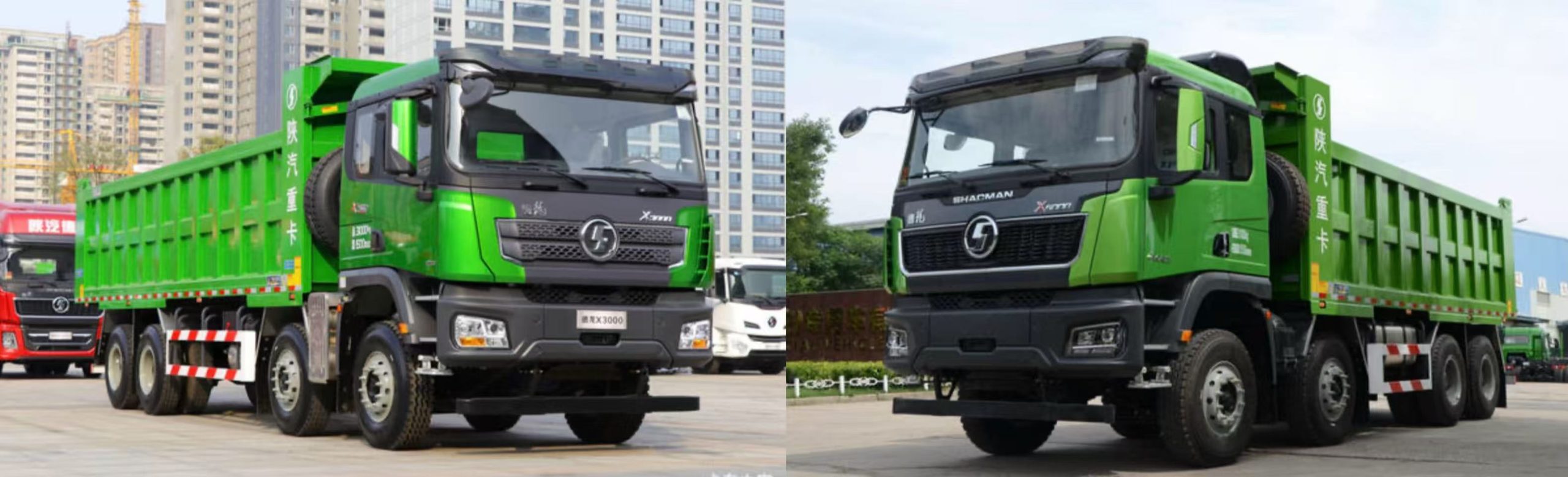
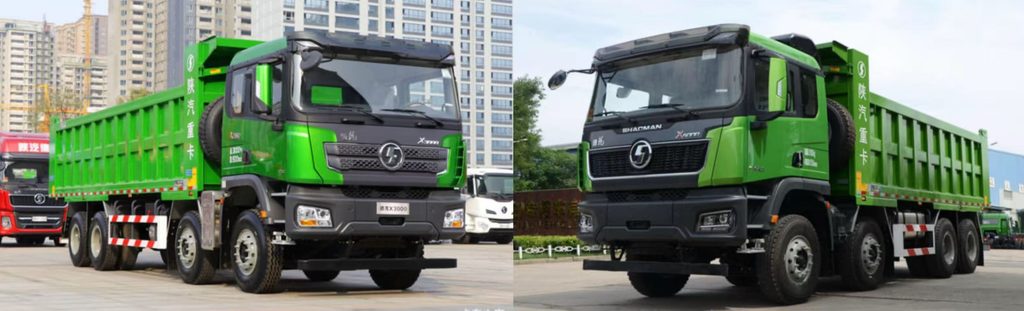
In any Shacman X3000 vs X5000 comparison, the first thing to understand is that these are two generations of the same idea. Both are DeLong trucks built on MAN-licensed technology. Nevertheless, the gap between them in electronics, power and comfort is bigger than the badge suggests.
Shacman X3000: the workhorse Africa already knows
The X3000 has been on African roads since around 2015, so it is the Shacman most mechanics have already worked on. Typically it runs a Weichai WP10 or WP12 engine in the 336–430 hp band, with a 9- or 12-speed Fast manual gearbox and a straightforward mechanical fuel system on the older export specs. Because of that simplicity, it tolerates dusty sites, long service intervals and diesel that would make a European fleet manager wince. We usually have several in stock — see the live listing for the Shacman X3000 here.
Shacman X5000: the modern flagship
By contrast, the X5000 arrived around 2019–2020 as Shacman’s long-haul flagship. It usually carries a Weichai WP13 or a Cummins M13, producing 480–550 hp and up to 2,550 N·m of torque, paired with a 12-speed manual or a 16-speed automated manual gearbox. On top of that, the cab is quieter, the aerodynamics are better and Shacman’s own figures claim roughly 8% lower fuel consumption than the X3000 on the same duty. It drives like a much newer truck — because it is one. Our current stock page for the Shacman X5000 shows a 550 hp 6×4 unit, and we also handle the newer X5000S and the top-of-range X6000. It is also worth reading the manufacturer’s own material on the official Shacman site alongside this guide.
Shacman X3000 vs X5000 specs, side by side
| Spec | Shacman X3000 6×4 | Shacman X5000 6×4 |
|---|---|---|
| Model family | DeLong X3000 (SX4256/SX3256 and similar) | DeLong X5000 (SX4259 and similar) |
| Engine | Weichai WP12, 11.6 L, or Cummins ISM | Weichai WP13, 12.5 L, or Cummins M13 |
| Power / torque | 375–460 hp / 1,600–2,200 N·m | 480–550 hp / 2,400–2,550 N·m |
| Emission spec | Euro II–V depending on year | Euro V / China VI on newer units |
| Gearbox | Fast 9/12-speed manual | Fast 12-speed manual or 16-speed AMT |
| Rear axle | Hypoid, hub reduction on heavy specs | Hub reduction, air suspension optional |
| Cab | Mid/high roof, mechanical seat | High roof, air-suspension seat, more insulation |
| Fuel tank | 400–600 L | 600–1,000 L (dual tanks common) |
| Tyres | 12.00R20 or 315/80R22.5 | 315/80R22.5 or 12R22.5 |
Engine: WP12 against WP13
The WP12 is an 11.6-litre workhorse that has earned its reputation in West and East Africa. It is not the smoothest or the quietest engine on the market. Yet it pulls a 40-tonne combination without drama, and when it does need work, most diesel mechanics can strip and rebuild one without a laptop. Both the WP12 and the newer WP13 come from Weichai, China’s largest heavy-duty engine maker, which is one reason parts coverage across the WP family is so strong.
The WP13, meanwhile, is the newer and bigger unit at 12.5 litres, and it delivers its torque lower and flatter. In practice, that means the X5000 holds a gear on a climb where an X3000 would need to shift down twice. Moreover, the extra 300-plus N·m is exactly what you want when you run a container or a tanker at highway speed.
Gearbox and driveline
This is the difference drivers notice first. A 12-speed manual X3000 is honest, cheap and repairable, and clutch parts are on the shelf in Lagos, Nairobi and Dar es Salaam. The X5000’s 16-speed AMT, on the other hand, shifts for you, which reduces driver fatigue and clutch wear on long hauls. Still, an AMT needs clean fluid, correct calibration and a workshop that understands it — three things no fleet should assume they have.
▶ Watch the video: a Shacman X3000 6×4 dump truck in our yard, with the CIF Lagos price on screen. Watch on YouTube. For current X3000 and X5000 stock, WhatsApp +86 157 1768 7720.
Shacman X3000 vs X5000 fuel use and diesel quality
What each truck actually drinks
Manufacturer figures are optimistic, so on the Shacman X3000 vs X5000 fuel question, here are the numbers buyers report on real routes with a loaded trailer:
| Condition | X3000 (WP12, 430 hp) | X5000 (WP13, 550 hp) |
|---|---|---|
| Empty, highway | ~26–31 L / 100 km | ~24–28 L / 100 km |
| Loaded, 40-ton combination | ~36–42 L / 100 km | ~32–38 L / 100 km |
| Loaded, hilly or rough roads | ~45 L / 100 km+ | ~40–44 L / 100 km |
| Urea (SCR models) | none on older units | ~4–6 L / 1,000 km |
Why common-rail engines hate dirty diesel
Now the important caution. The X5000’s common-rail system runs at extremely high fuel pressure through very fine injector nozzles, which is why it is efficient and clean. Unfortunately, water and grit are what kill those injectors. In countries where fuel quality varies between stations, that is a genuine cost risk rather than a theoretical one.
Therefore, if you buy an X5000, budget for a proper pre-filter and water separator, change filters on schedule rather than on mileage, and buy fuel from outlets you trust. The older mechanical X3000, by comparison, is far more forgiving — which is a real reason so many operators in remote areas still run them.
Payload, configurations and what they pull
Both trucks come in several shapes, and the body matters as much as the model. The X3000 is widely used as a 6×4 tractor head for 40-foot containers, as an 8×4 tipper, and as an 8×2 or 6×4 cargo truck with a 6.5–9.6 m body. Consequently, spare parts and trailer compatibility are rarely a problem: it accepts a standard 2-inch JOST or Fuwa fifth wheel and any normal semi-trailer.
The X5000 is mostly a highway tractor in 6×4 form, with 8×4 versions for heavier work. Because it is rated for a 49-tonne gross combination weight and often comes with a 1,000-litre fuel capacity, it suits corridors such as Mombasa–Kampala, Durban–Lusaka or Lagos–Kano, where range and driver comfort actually change your operating cost. If you are still choosing a configuration rather than a model, our tractor truck buyer’s guide covers the variants.
One practical check before either truck: confirm your country’s axle-weight limits. An X5000 running legally at 49 tonnes in one market can be overweight at the same load elsewhere, and that is the kind of problem a weighbridge discovers at the worst moment.
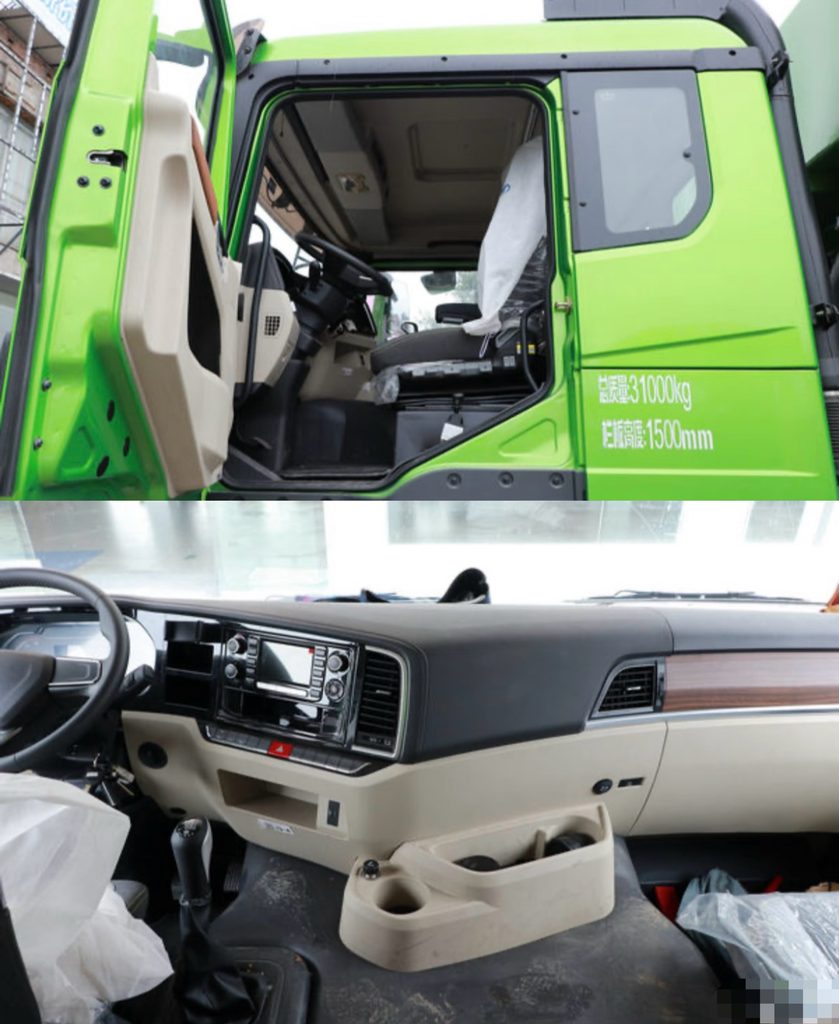
Shacman X3000 vs X5000 parts and repairs
Parts on the ground
Shacman’s parts network in Africa is broad, although the X3000 sits deeper in it. Filters, brake chambers, clutches, springs and hubs for the WP12 family are stocked in most major cities, and our own Chinese truck spare parts guide lists where to look and how to spot fake parts. X5000 parts are available too, but often only in the largest cities — so a breakdown in a small town can mean a two-day wait for a sensor.
Diagnostics: laptop against spanner
Because the X5000 is sensor-heavy, it is not a truck you fix with a hammer and hope. When its SCR system derates, you need fault codes, and that means a diagnostic tool and someone who understands what it says. The X3000 lets you keep going with basic tools in most cases. Still, that advantage only holds if the X3000 is in good condition to start with — an abused workhorse is not simpler, it is just more expensive.
Shacman X3000 vs X5000 prices in 2026
FOB and CIF ranges
In the Shacman X3000 vs X5000 price comparison, these are the ranges we quote for inspected used units in 2026. FOB is the truck at the Chinese port, and CIF adds freight, insurance and export documents to your destination.
| Model | Model year | FOB China | CIF Lagos | CIF Mombasa / Dar |
|---|---|---|---|---|
| X3000 6×4 tractor, 375–430 hp | 2016–2018 | $8,500–12,000 | $12,000–15,500 | $12,500–16,000 |
| X3000 6×4 tractor, 430–460 hp | 2019–2021 | $12,000–16,500 | $15,500–20,500 | $16,000–21,000 |
| X3000 8×4 tipper | 2017–2020 | $10,500–15,500 | $14,500–19,500 | $15,000–20,000 |
| X5000 6×4 tractor, 480–520 hp | 2019–2021 | $17,000–21,000 | $20,500–25,500 | $21,000–26,000 |
| X5000 6×4 tractor, 550 hp | 2020–2022 | $19,500–23,000 | $23,000–27,500 | $23,500–28,000 |
What moves the price
Four things decide where a truck lands inside those bands: year and mileage, frame condition, the engine and gearbox combination, and tyres. On top of that, freight is the wild card this year. Ocean rates to African ports jumped sharply during 2026 and booking windows are long, so always ask for a CIF figure instead of estimating shipping yourself — our shipping cost guide breaks RoRo and container options down by port.
Also worth knowing: the cheapest X3000 on a lot is rarely the cheapest truck to own. Because a 2016 unit with 500,000 km will ask for real money in its first year, we grade every truck and send buyers honest video condition reports before any deposit. For the full tractor market picture, our 2026 tractor price guide covers all the main brands.

Which one should you buy?
Choose the X3000 if…
- Your budget is under $16,000 FOB and you need the truck earning next month.
- Your routes mix paved roads with gravel, sand or mud.
- Your fuel comes from wherever is closest, not wherever is cleanest.
- Your mechanic is good with spanners, not laptops.
Choose the X5000 if…
- You run long, paved corridors and care about cost per tonne-kilometre.
- You can secure consistent, decent-quality diesel.
- You have a workshop with diagnostic equipment — or a dealer nearby.
- Driver comfort and retention matter to you, because good drivers cost more than good trucks.
▶ Watch the video: a Shacman X3000 8×4 cargo truck with a 6.5 m box body, from $9,900 FOB. Watch on YouTube. There is more Shacman footage on our channel, including an X3000 8×2 340 hp cargo truck at $7,500 FOB.
What to check on a used Shacman before you pay
Engine and gearbox checks
Ask for a cold start on video, not a warm one, because a warm engine hides a lot. Listen for a steady idle instead of a knock, and confirm there is no blue or persistent white smoke. After that, test every gear under load, and on an AMT ask for the fault-code list rather than a promise that “it shifts fine”.
Chassis, fifth wheel and cab
Then check the frame rails for cracks and fresh welds, particularly around the spring hangers — and be sceptical of a seller who will not show them, which is something our guide to used truck scams explains in more detail. Look at the fifth wheel plate for wear and confirm the locking jaw works. Finally, check the cab floor for rust and the seat and pedals for wear that does not match the odometer — that mismatch is the classic sign of a rolled-back clock. Our free 30-point inspection checklist covers all of it, and our VIN and accident history guide explains how to verify what a seller tells you.

Common questions from buyers
On paper, yes: the X5000 is newer, more powerful and around 8% more fuel-efficient. Yet it needs clean diesel, better filtration and diagnostic support. Therefore, the X3000 still wins for rough routes, remote sites and tight budgets.
Most X3000s run a Weichai WP10 or WP12 between 336 and 460 hp, and some export specs use a Cummins ISM. Always check the engine plate, because the same X3000 badge covers several ratings.
Loaded with a 40-ton combination, buyers report roughly 32–38 L per 100 km, compared with about 36–42 L for an X3000 on the same route. Cleaner fuel and steady highway speeds improve both figures noticeably.
A 2016–2021 X3000 tractor runs about $8,500–16,500 FOB, or $12,000–21,000 CIF to an African port. A 2019–2022 X5000 runs about $17,000–23,000 FOB, or $20,500–28,000 CIF, depending on power rating and mileage.
Yes, and the X3000 is the easiest of all, with WP12 consumables stocked in most major cities. X5000 parts are also available, although usually only in larger centres, so plan for a longer wait if you operate remotely.
Yes. We send a cold-start video, a full walkaround, chassis and gearbox footage and the documents for the specific unit before any deposit. Ask for the VIN and confirm it matches the registration at the same time.
How we source, inspect and ship Shacman trucks
Whichever way the Shacman X3000 vs X5000 decision goes for you, the sourcing process is the same. Since 2018 we have bought our trucks directly in Xingtai and Shijiazhuang, two of China’s largest used truck markets, and exported them to buyers in Africa, the Middle East, Central Asia, Southeast Asia and South America. You can see how the inspection side of that works on our quality and inspection page. On every Shacman we pull the registration and transfer records, then verify the VIN in all stamped locations. After that, our team runs a structural check and a mechanical inspection covering engine, gearbox, hydraulics, brakes and tyres.
Because of that process, you get photos, video walkarounds and documents with the quote — not after the deposit. If you want the deeper context, our Shacman buyer’s guide covers the whole range, the F3000 guide explains the older tipper line, and our brand comparison puts Shacman next to HOWO, FAW and FOTON. For payment terms, the LC and TT guide explains what is standard. And if you are deciding between Shacman and HOWO for West Africa specifically, this comparison is a good next read.
About the author
This guide was written by Wang Jianbin, founder of HebeiCar (hebeicar.com). Since 2014 he has helped 500+ fleet owners and dealers across 20+ African countries source used HOWO, Shacman, FAW and FOTON trucks, and he has personally inspected and exported Delong X3000 and newer X5000 units since 2019. Every truck is checked in our own yard in Hebei before it ships, and every price in this article reflects real 2026 yard data rather than a brochure. For the wider picture on running costs, see our guide to how long Chinese trucks last in Africa.
Bottom line
If your priority is a truck that starts every morning, tolerates rough diesel and can be fixed anywhere, buy the Shacman X3000 — and put the savings into tyres and a parts float. If you run long paved corridors, can source clean fuel and want the lowest cost per tonne-kilometre, the X5000 is worth the extra $8,000 and up.
Whichever way you lean, the Shacman X3000 vs X5000 decision should be made on your route and your fuel, not on the showroom shine. Send us your route, load and destination port on WhatsApp at +86 157 1768 7720, or use our contact page, and we will quote both options honestly — including when we think you should buy neither.
Last updated: September 2026.