Ethiopia Truck Import Ban 2026: What Is Banned and What Still Gets In
Quick answer: Ethiopia has closed its market to fuel-powered vehicles. Petrol and diesel car imports were banned in January 2024, the ban was extended to semi- and fully-knocked-down ICE kits in May 2025, and on 3 October 2025 the Prime Minister announced it now covers fuel-powered trucks as well. In practice, a used diesel HOWO, Shacman or FAW cannot be imported for Ethiopian registration in 2026. Fully-built electric vehicles enter at 15% import tax, semi-assembled at 5%, and knocked-down kits at zero. Natural-gas cargo and public-transport vehicles were given duty-free treatment in October 2025 for qualifying units. Always confirm the current customs instrument with a licensed clearing agent in Addis Ababa before you transfer money.
Written by Bean Wang — founder and export manager at Hebei Car, with 10+ years in the used truck export business.
We still get enquiries from Addis every week asking for a CIF Djibouti quote on a HOWO dump truck. The honest answer is that we can quote the truck, but it will not clear Ethiopian customs. This page explains what changed, what still gets in, and what an Ethiopian fleet owner can realistically do in 2026.
The Ban, Date by Date
| Date | What changed |
|---|---|
| January 2024 | Ethiopia bans imports of petrol and diesel vehicles — the first country in the world to do so. Passenger cars and three-wheelers affected. |
| May 2025 | Ban extended to semi-knocked-down (SKD) and completely-knocked-down (CKD) internal-combustion kits, closing the local-assembly loophole. |
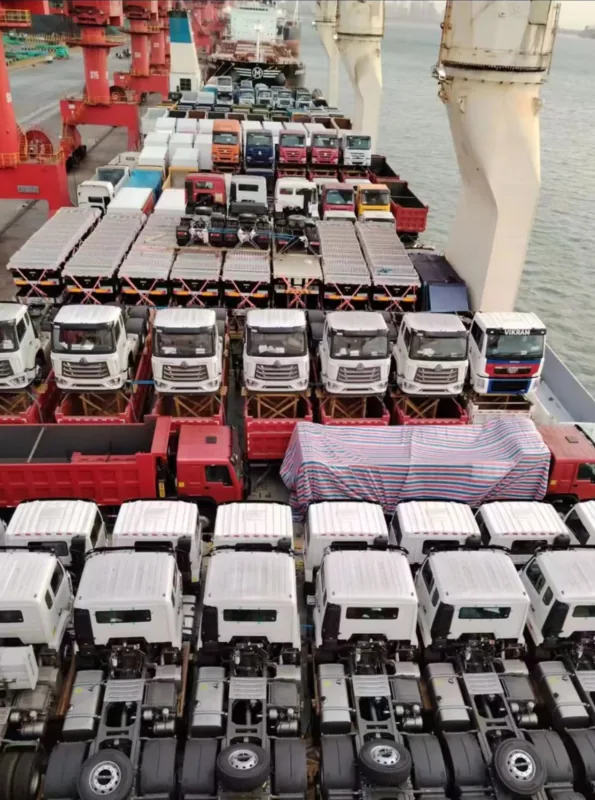
| 2–3 October 2025 | Prime Minister Abiy Ahmed announces that fuel-powered trucks can no longer be imported either. This is the change that closed the used-truck route. |
| 10 October 2025 | Ministry of Finance announces duty-free treatment for qualifying natural-gas cargo and public-transport vehicles. |
| 2026 | Tariff controls reported approved, but implementing rules and customs practice still vary by port and by clearing agent. Verify locally, every time. |
Two things about this timeline matter for buyers. First, the truck ban did not come with a long lead-in period — trucks that were already on the water when the announcement landed became a live commercial problem for importers. Second, the natural-gas exemption announced a week later is real policy intent, but it is not a rubber stamp: whether a specific gas truck qualifies, and at what rate, is decided by the customs instrument in force at the time of clearance, not by a news report.

What Still Clears Ethiopian Customs
| Vehicle category | Status in 2026 | Import tax reported |
|---|---|---|
| Fully-built electric vehicle | Allowed | 15% |
| Semi-assembled EV | Allowed | 5% |
| Knocked-down EV kit for local assembly | Allowed | 0% |
| Natural-gas cargo / public-transport vehicle | Duty-free for qualifying units (MoF, October 2025) | 0% for qualifying units |
| Petrol or diesel passenger car | Banned since January 2024 | Not importable |
| Petrol or diesel truck | Banned since October 2025 | Not importable |
| Used ICE truck of any brand | Banned | Not importable |
Note what is missing from that table: there is no used-truck line that reads “allowed”. Age limits, emission standards and left-hand-drive rules all still exist on paper, but they are moot for diesel trucks — you cannot argue your way past an import ban by having a clean Euro 4 engine and a 2021 build year.
Why Ethiopia Did This
The environmental framing is genuine — more than 90% of Ethiopia’s electricity comes from renewable sources, mainly hydropower, so electrifying transport actually displaces imported fuel rather than shifting the emissions elsewhere. But the financial motive is the bigger one. Fuel imports were reported at over €6 billion in 2023, in a country short of foreign currency and managing an IMF programme after a 2023 default. Every diesel truck imported is a multi-year commitment to buy imported fuel.
That context explains why the policy has held. It is not a trial balloon that will quietly reverse — EV registrations reportedly moved from under 1% of vehicles entering the country to around 6%, and the government has set a target of 500,000 electric cars by 2032. If you are waiting for the diesel truck ban to be lifted, you are running a business plan on an assumption that the government has given no sign of making.
If You Already Run a Diesel Fleet in Ethiopia
This is where most of our Ethiopian conversations actually land now. Nobody is scrapping a working HOWO because the import rules changed — they are keeping it running for longer. That changes what a fleet owner needs from a supplier:
- Parts, not units. The existing fleet has to be kept alive, so demand shifts from whole vehicles to engines, gearboxes, axles, brake systems and body panels.
- Rebuild decisions. A gearbox rebuild on a HOWO 371 usually costs a fraction of a replacement truck — and replacement is no longer an option, which changes the maths in favour of rebuilding.
- Resale distortion. Trucks already inside Ethiopia gained scarcity value. That makes buying a used truck inside the country expensive, and it makes the parts channel the only sane cost lever.
- Cannibalisation. Some operators buy a dead truck domestically purely as a parts donor. If you go that route, check the VIN and engine number against the registration documents before paying.
We publish a full breakdown of the parts channel here: Chinese truck spare parts for Africa — HOWO, Shacman and FAW, and a sourcing guide for used Chinese truck parts from China.
Where Trucks We Sell Actually Go Now
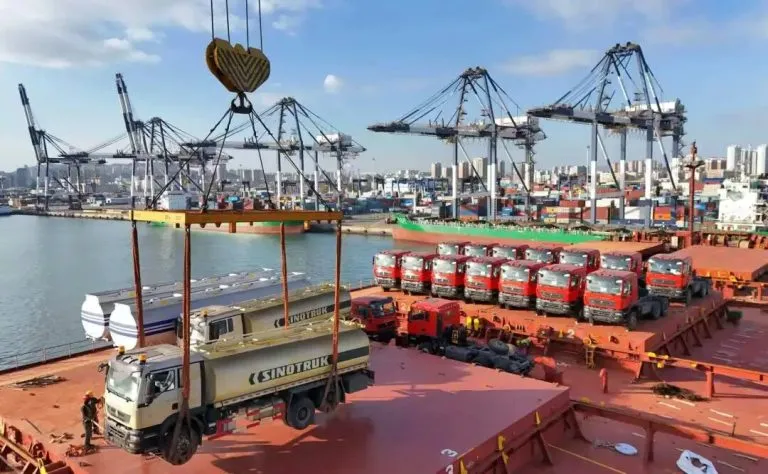
Ethiopia is landlocked and clears its imports through Djibouti, which is why the Djibouti–Addis corridor shows up in every Ethiopian guide. The corridor still works — it just no longer carries new diesel trucks. Buyers in the region who used to combine an Ethiopian order with a Djibouti transit now place the order for the destination country instead:
- Kenya — right-hand drive, clears through Mombasa.
- Tanzania — clears through Dar es Salaam, serves a wide hinterland.
- Zambia — no age limit, clears via Dar es Salaam or Beira.
- UAE — for buyers who want to inspect stock in the Gulf first.
If you are comparing sources rather than destinations, our China vs Dubai used truck comparison covers the price and condition differences that actually matter.
How to Verify Before You Pay Anyone
Rules in this market move faster than any website, including this one. Before you send a deposit to anyone — us included — do these four things:
- Ask a licensed clearing agent in Addis Ababa, in writing, whether the exact HS code and fuel type you are buying is currently importable.
- Ask them for the customs instrument or directive number they are relying on, not a verbal assurance.
- Check the Ethiopian Customs Commission’s latest tariff and restriction notices directly.
- Put the risk on the seller’s side of the contract: no clearance, no final payment. Any exporter who will not accept that on a banned-category vehicle is telling you something.
Frequently Asked Questions
Can I still import a used diesel truck into Ethiopia?
No. Since the October 2025 announcement, fuel-powered trucks are covered by the same import ban that has applied to petrol and diesel cars since January 2024. A used diesel HOWO or Shacman cannot be registered for Ethiopian use.
Are used electric trucks allowed?
Electric vehicles are the permitted category, with import tax reported at 15% for fully-built units. Whether a specific used EV qualifies — and what condition or age requirements apply — has to be confirmed with Ethiopian customs for that exact vehicle. The category is open; the individual unit is not automatically approved.
What about natural-gas trucks?
The Ministry of Finance announced duty-free treatment for qualifying natural-gas cargo and public-transport vehicles on 10 October 2025, a week after the truck ban. That signals gas is the intended exception path for heavy transport, but qualification is decided by the customs instrument in force at clearance. Get it confirmed in writing for the specific unit before committing.
Does the ban affect trucks already inside Ethiopia?
No. The restriction is on imports. Trucks already registered in the country keep operating, which is exactly why the parts and rebuild market has become the main channel.
Can I ship to Djibouti and truck it across the border?
Only if the vehicle is legally importable into Ethiopia. Djibouti is a transit corridor, not a loophole — the vehicle still has to clear Ethiopian customs at the border. Shipping a banned category to Djibouti just moves the problem to a port where storage charges accumulate daily.
What do you recommend for an Ethiopian fleet owner right now?
Two things: secure parts supply for the fleet you already run, and stop budgeting for diesel replacements that cannot be imported. If you want to talk through a parts plan or a different destination market, message us on WhatsApp at +86 15717687720 or email [email protected].
Sources
- IEA Global EV Policy Explorer — Ban on import of internal combustion engine vehicles
- Business Insider Africa — Ethiopia’s fuel vehicle ban tightens as diesel, gas trucks face import blacklist
- CleanTechnica — Ethiopia says ICE vehicle import ban continues
- Le Monde — Ethiopia, the first country to ban petrol and diesel vehicle imports
Last checked: November 2026. This page describes regulation, not legal advice. Confirm the current position with a licensed Ethiopian clearing agent before any transaction.