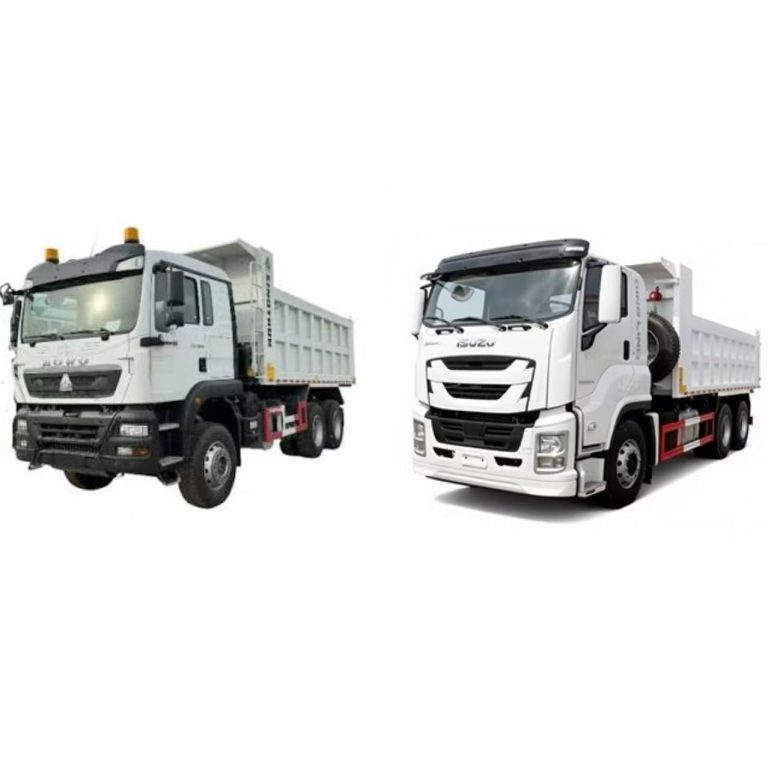
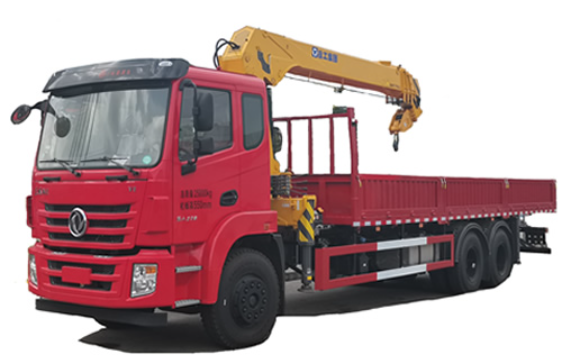
Used Crane Trucks from China for Africa — 2026 Complete Buyer’s Guide (Prices, Sizes & Import Tips)
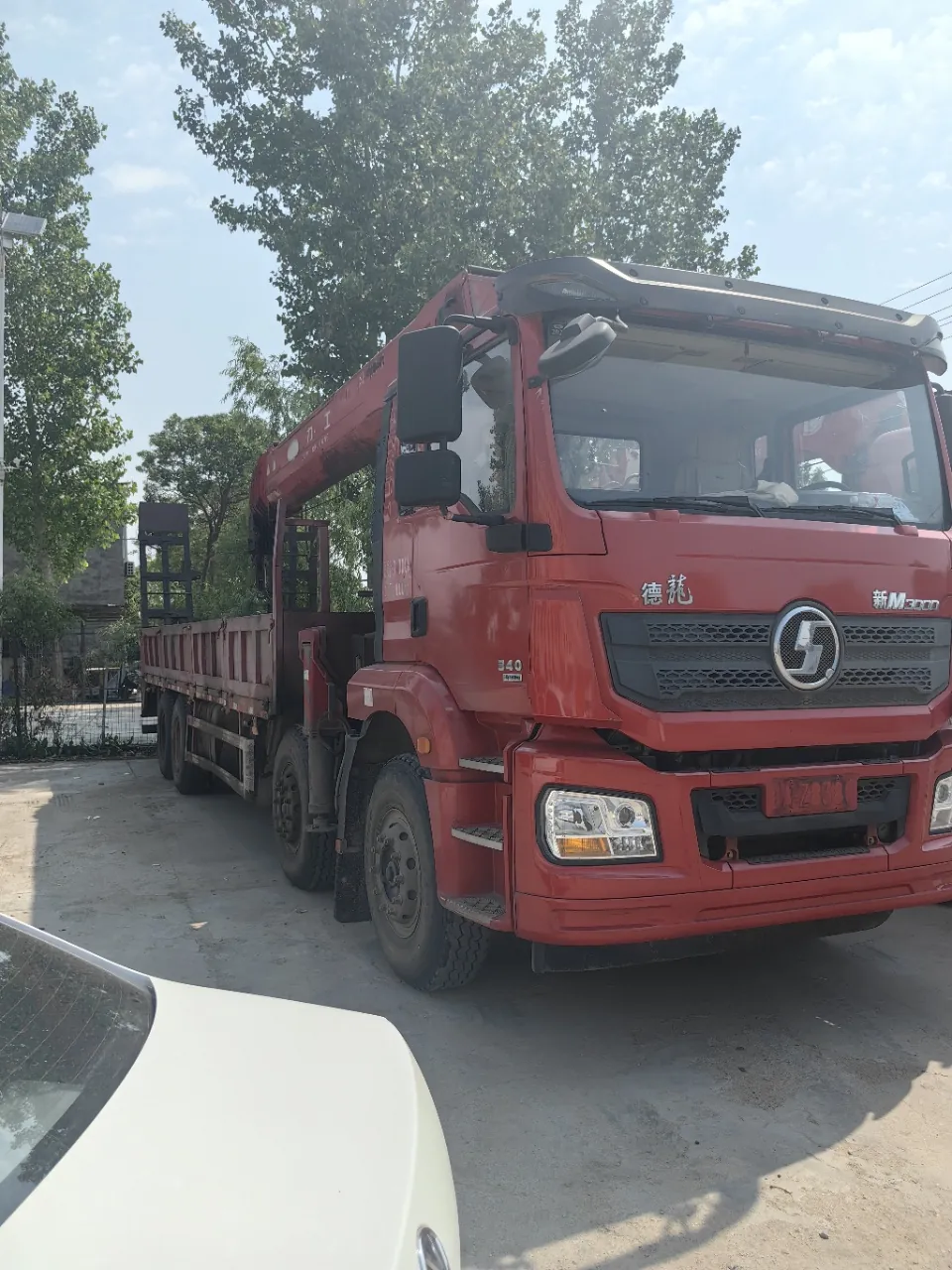
“How much is a used crane truck from China?” is a question we get almost every week now — from construction companies in Lagos, contractors in Nairobi, and even a few governments in West Africa.
It makes sense. A crane truck is not a luxury. It is a money-making machine. One truck with a 12-ton crane can unload steel, lift prefab panels, set up billboards, and pull out broken trucks — and every one of those jobs has a day rate attached to it. In most African cities, a used crane truck from China in the 10–16 ton class rents out for $150–$350 per day, and the good months run 20+ working days.
This guide is for buyers who want to import a used crane truck from China without getting burned — and if you are new to buying from China at all, read our used truck scams guide first. It applies to cranes just as much as dump trucks. We cover the two crane types you need to understand, the tonnage table that matches size to real jobs, actual 2026 prices (FOB and CIF), the inspection checklist we use on every crane we ship, and the customs side — including the new 2026 import rules that affect Nigeria buyers.
Why Crane Trucks Are in Demand in Africa Right Now
Three things changed in the last two years. First, infrastructure spending across West and East Africa pulled construction companies into jobs they used to outsource. Second, electricity grid expansion (and repairs) created steady work for crane trucks — poles, transformers, and cable drums all need lifting. Third, the cost of hiring a crane from a rental company keeps climbing, so owning your own unit starts to pay for itself much faster than before.
The typical buyers we ship crane trucks to fall into four groups:
- Construction contractors — steel structures, precast concrete, and roof trusses. Usually buy 12–20 ton units.
- Power and telecom crews — poles, transformers, cable drums. 8–12 ton is normally enough.
- Municipal and utility departments — tree work, street lights, sewer pipes, water tanks. 5–10 ton.
- Oilfield and mining suppliers — pipe handling, equipment moves, workshop lifts. 16–25 ton, often on 8×4 chassis.
If you are not sure which group you fit into, start from the tonnage table below — it will tell you faster than any brochure.
Straight Boom vs Knuckle Boom — Which One Do You Actually Need?
There are two families of truck cranes, and buyers mix them up all the time. The difference changes both the price and what you can do with the machine.
Straight (telescopic) boom. The classic look — one long arm that extends in sections, like the cranes you see on highway construction. Chinese brands call it 直臂 (straight arm). It reaches higher and further, lifts more at full extension, and is what rental companies mostly use. If your jobs are high lifts — steel frames, water towers, bridges — this is your machine.
Knuckle boom (articulated). The arm folds in the middle like an elbow. It cannot reach as high, but it is far more flexible: it can reach over obstacles, work in tight spaces, and load/unload cargo from the truck bed itself. This is the standard choice for delivery trucks, pipe haulers, and utility crews. It is also cheaper and lighter than a straight boom of the same rating.
Rule of thumb we tell buyers: if you lift things on top of things, buy straight boom. If you load and unload things beside you, buy knuckle boom. A contractor lifting steel columns needs straight boom. A company delivering precast pipes to sites needs knuckle boom.
How to Read a Crane Spec Sheet (Without Getting Confused)
Most buyers glance at the tonnage sticker and stop there. That is where the expensive mistakes start. A crane spec sheet has four numbers that actually matter:
- Rated lifting capacity (额定起重量) — the maximum weight at the minimum boom radius, with outriggers fully extended. This is the number painted on the side of the truck. It is also the number sellers love to quote.
- Lifting moment (t·m) — capacity multiplied by radius. A 12-ton crane with a 36 t·m rating is actually stronger than a “15-ton” crane with only 32 t·m. When two machines look similar, compare this, not the sticker.
- Maximum lifting height — how high the hook goes with full boom extension. Steel-frame jobs need 20m+; pole and sign work needs less.
- Working radius — how far from the truck the hook can reach. Remember: capacity drops as the radius grows. For example, a “12-ton” crane lifting at 18 meters of boom extension is realistically a 3–4 ton crane at that radius.
Ask the seller for the load chart (起重量表) — the official table showing capacity at each boom length and radius. Any serious seller has one for the exact model. If the seller cannot produce a load chart, that alone is a warning sign.
Which Tonnage Should You Buy? (2026 Matching Table)
Tonnage on a crane truck means maximum lifting capacity at minimum boom extension. Lifting at full extension, the real capacity drops to roughly a third. That is normal — but keep it in mind when a seller quotes “12 tons”.
| Crane rating | Typical chassis | What it is actually used for | Who buys it |
|---|---|---|---|
| 5–8 ton | 6-wheel (4×2) light truck | Small pipes, transformers, tree work, workshop lifts | Municipalities, telecom crews, small contractors |
| 10–12 ton | 6×4 (10-wheeler) | Steel, precast, billboards, general construction | Small-to-mid contractors — the most common import |
| 16–20 ton | 6×4 or 8×4 heavy | Structural steel, heavy machinery moves, oilfield pipe | Mid contractors, rental companies, oil/gas suppliers |
| 25 ton | 8×4 heavy | Bridge work, large precast, industrial lifts | Rental fleets, big contractors, government projects |
In our experience, for a used crane truck from China, the 10–12 ton class is the sweet spot for African buyers. It is affordable, does not need an 8×4 chassis (so it is lighter and cheaper to ship), and covers 80% of construction and utility jobs. If you are buying your first crane truck, start here — not at 25 tons.
The Brands You Will Actually Find in Chinese Used Truck Yards
When you shop for a used crane truck from China, you will find three dedicated crane manufacturers — XCMG (徐工), Zoomlion (中联重科), and SANY (三一) — plus truck builders who mount cranes on their own chassis, mainly HOWO (Sinotruk), Shacman, and Dongfeng. What you actually see in used yards depends on which market you are buying in.
XCMG dominates the used crane market in China. Models like the QY25K and XCT25L5 (25 ton) are everywhere because construction fleets renew them constantly. XCMG cranes have strong resale value and parts are easy to find in Africa — XCMG has official service points in Nigeria, Kenya, South Africa, and several other countries.
Zoomlion and SANY are more common as newer units and in larger tonnages (50t+). If you are looking at 25 ton and below, XCMG is usually the better deal for parts and familiarity.
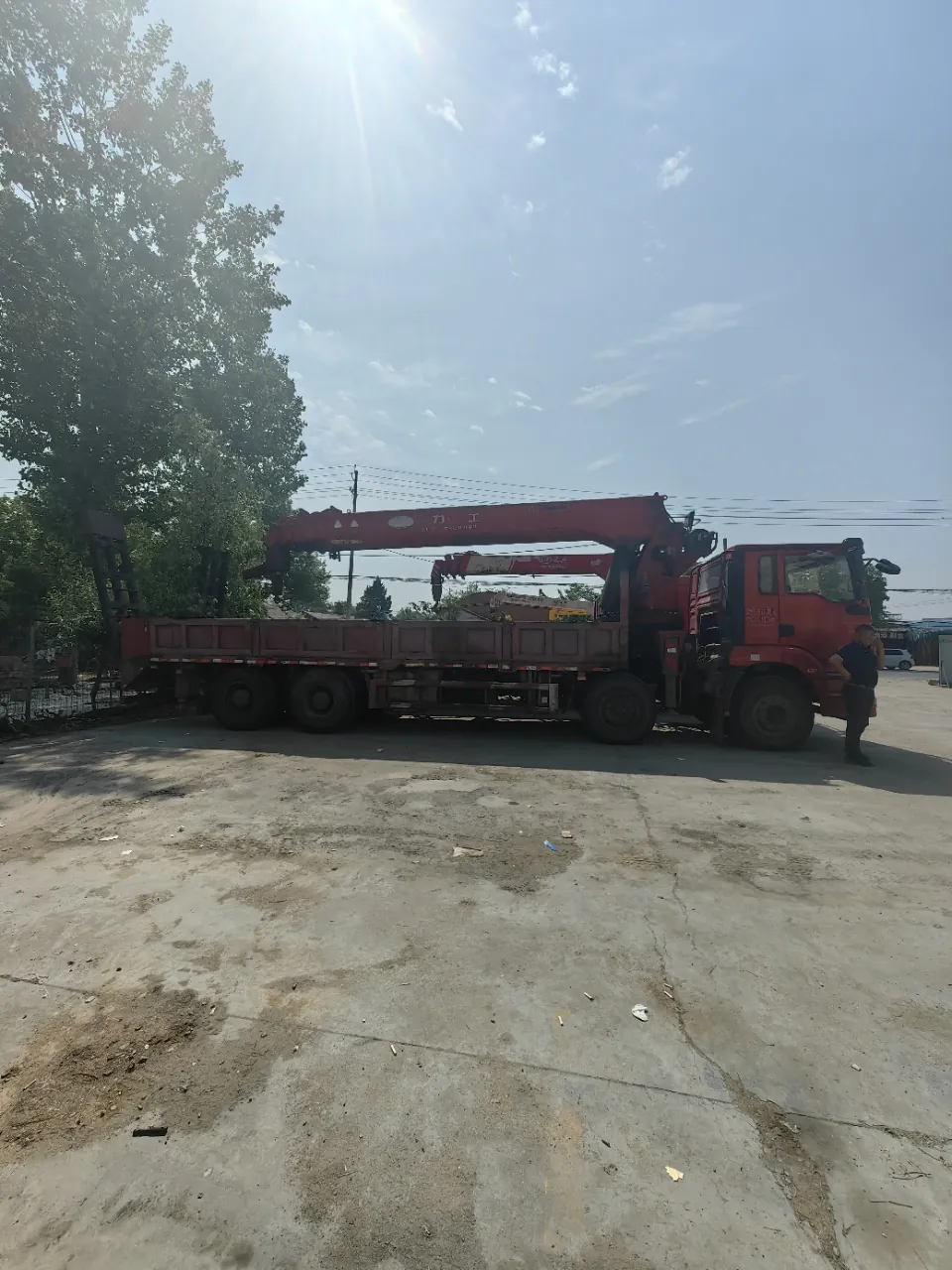
HOWO, Shacman, and Dongfeng truck cranes are a different animal: a truck chassis with a crane mounted behind the cab (often a Chinese or Japanese crane unit like SANY, XCMG, or Kato). These are cheaper than dedicated crane trucks and double as cargo trucks when the crane is not working. The 8-meter box version we export — a 20-ton crane on a tractor chassis — is exactly this style, and it is the most popular configuration with our buyers because one truck does two jobs.
Used Crane Truck Prices in 2026 (FOB & CIF Reference)
Here is the honest price picture for a used crane truck from China in 2026. These are real ranges we track across yards, B2B platforms, and our own stock — not brochure numbers.
| Machine | Condition | FOB China (USD) | CIF Lagos approx. (USD) |
|---|---|---|---|
| 5–8 ton truck crane (Dongfeng/FAW chassis) | Used 2015–2019 | $9,000 – $14,000 | $13,000 – $19,000 |
| 10–12 ton truck crane (HOWO/Shacman 6×4) | Used 2016–2020 | $14,000 – $22,000 | $19,000 – $28,000 |
| 16–20 ton crane truck (6×4/8×4) | Used 2017–2021 | $22,000 – $35,000 | $29,000 – $44,000 |
| XCMG QY25K / XCT25L5 (25 ton) | Used, 2,000–6,000 hrs | $38,000 – $55,000 | $47,000 – $66,000 |
| Same tonnage, new (XCMG/Zoomlion) | New 2024–2026 | $85,000 – $120,000 | $95,000 – $132,000 |
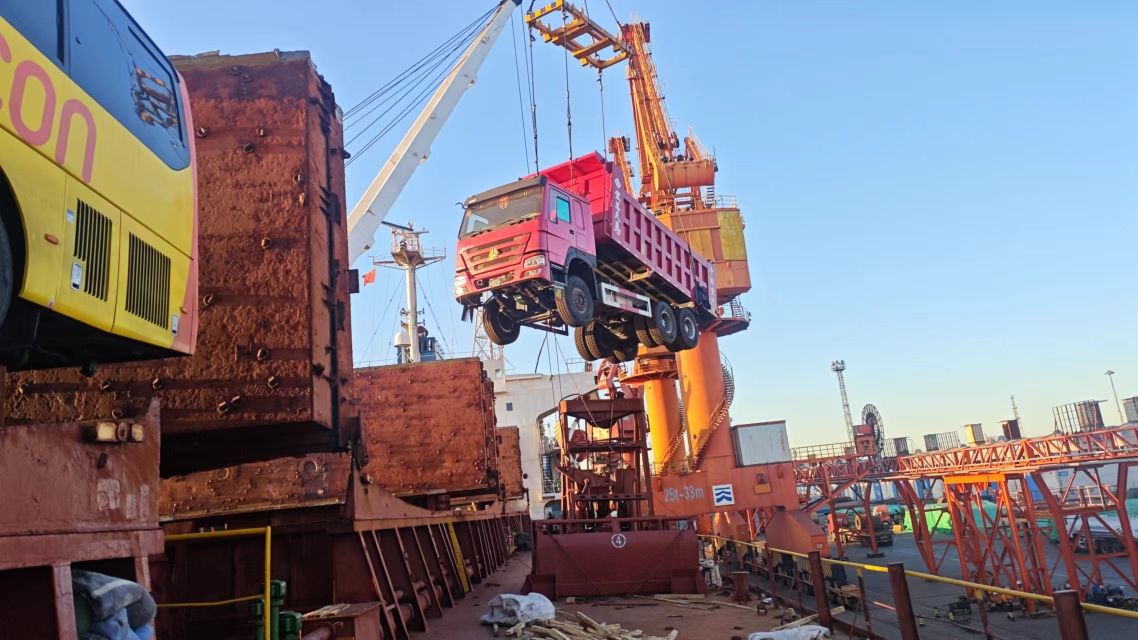
Three notes on these numbers. First, crane hours matter more than year — a 2017 unit with 3,000 hours beats a 2020 unit with 12,000 hours. Second, prices above are for telescopic straight-boom cranes; knuckle booms run about 20–30% cheaper at the same rating. Besides, shipping a used crane truck from China costs more than a normal dump truck because of weight — figure roughly $1,200–$2,500 extra in ocean freight and port handling depending on the route. RORO is usually the cheapest option for crane trucks under 25 tons; flat-rack container only if the machine is too wide or tall for RORO. Our shipping cost guide breaks down all the charges you will actually see on the freight quote.
Full Cost Breakdown: From FOB Price to Your Yard
“FOB” and “CIF” get thrown around a lot, but here is the real money trail for a used crane truck from China in the 10–12 ton class, shipped to Lagos or Tema in 2026:
| Cost item | Amount (USD) | Notes |
|---|---|---|
| FOB truck price (10–12t, used) | $14,000 – $22,000 | What you pay the seller at the Chinese port |
| Ocean freight (RORO) | $2,800 – $4,500 | Crane trucks weigh 15–25 tons — freight is weight-based |
| Marine insurance | $150 – $350 | Roughly 0.3–0.5% of cargo value; never skip it |
| Origin port charges & export docs | $300 – $700 | Loading, terminal handling, export customs |
| Destination port charges | $500 – $1,500 | Discharge, storage, terminal fees at arrival port |
| Import duty + clearing | $2,000 – $6,000 | Depends on country; Nigeria 2026 levy is 5% of CIF (see customs section) |
| Total landed | $20,000 – $35,000 | Before local registration and transport to your city |
In short, the truck itself is roughly 70% of the landed cost — the rest is freight, port, and duty. That is why the FOB price alone is a meaningless comparison between suppliers. Always compare total landed cost, and ask the supplier for a CIF quote to your specific port so you see the whole picture in one number.
New vs Used — The Honest Math
A brand-new 25-ton XCMG will run you $85,000–$120,000 before shipping. A good used one with 3,000–5,000 hours: $38,000–$55,000. That is a 50%+ saving for a machine that still has years of working life, and the difference is usually one big project’s rental income.
What you give up with used: no factory warranty, and you must verify the crane’s maintenance history yourself — most used yards in China cannot show you a full service log for older units. As a result, the inspection checklist below is not optional. Buy from a supplier who lets you inspect the crane’s hydraulics and boom operation on video, not just the paint — our supplier selection guide explains how to separate real yards from middlemen.
For most African buyers, used is the right call — but only if the inspection is done properly. If you want a new unit or a specific year, tell us and we will source it, but be ready for the price gap above.
Will a Crane Truck Pay for Itself? The 2026 Math
This is the question that actually decides the purchase, and the honest answer is: a working crane truck pays for itself in 8–16 months in most African markets, assuming you book 15+ working days a month.
Here is the realistic monthly picture for a 10–12 ton crane truck (landed cost around $25,000):
- Revenue: day rate $150–$350, average 18 working days → $2,700 – $6,300/month
- Driver + operator: $300 – $600/month (in most countries, one person runs both)
- Fuel: $400 – $800/month (cranes burn fuel even while lifting, not just driving)
- Maintenance + insurance: $200 – $400/month averaged over the year
- Net: $1,500 – $4,500/month before your own time
That range is wide because contracts differ. A crane booked for a long construction job at a fixed rate earns more predictably than one chasing daily rental calls. Either way, compare those numbers to a bank loan payment or the cost of renting a crane for your own projects — the buy-vs-rent math favors owning very quickly if you have steady work.
What changes after 12–18 months of ownership? This is the part most price guides skip. Based on follow-ups with buyers who came back to us for a second crane, the pattern is consistent. The first year is mostly trouble-free: seals, filters, and minor hydraulic leaks are the norm, not the exception. Around month 12–18, the items that start talking to you are the wire rope (replace it before it frays — it is a cheap part compared to the boom), the outrigger seals, and the turntable bearing if the machine was abused before you bought it. Owners who run a weekly 10-minute inspection — oil level, hose condition, outrigger pins — consistently report lower repair bills than owners who wait for a breakdown. Budget roughly 3–5% of the truck’s value per year for maintenance, and a used crane truck stays a money-maker instead of becoming a money pit.
What to Check Before You Pay — Crane Inspection Checklist
Anyone can send you photos of a clean crane. However, the inspection is where you separate a machine from a money pit. This is the checklist we run on every crane before it is offered for export:
- Working hours on the crane meter, not the truck odometer. Ask for both. A truck can have low mileage and a crane with 15,000 hard hours.
- Hydraulic leaks. Look under the crane and around every cylinder. Fresh oil drips mean seals are going — hydraulic seal kits for XCMG/Zoomlion are cheap, but a scored cylinder barrel is not. (For parts availability in Africa, see our Chinese truck spare parts guide.)
- Boom extension test. The boom must extend and retract smoothly under no load, then under load. If the supplier refuses a load test, walk away.
- Wire rope condition. Fraying, corrosion, or crushed sections anywhere on the rope means replacement — a 25-ton crane rope is not a small cost.
- Outriggers (支腿). They must extend and lock fully on all four corners. Cracked welds around outrigger boxes are a common reason cheap cranes are cheap.
- Slewing (turntable) play. With the boom raised, check for clunking or excessive play when swinging. Turntable bearings are one of the most expensive repair items on a crane.
- Safety devices. Load moment indicator (LMI), overload alarm, and limit switches must be present and working. A crane without these is a liability, not a bargain.
- Third-party inspection. For cranes over $30,000, budget $300–$600 for an independent inspection (SGS or a local crane engineer) before payment. It is the cheapest insurance you will ever buy.
If you are buying through us, we do all of the above on camera during your live walkaround — engine running, boom cycling, outriggers out. What you see is what gets shipped.
Common Mistakes First-Time Crane Buyers Make
After years of shipping these machines, here are the mistakes we see repeat the most — and how to avoid each one:
- Judging by year, not by hours. A 2018 crane with 4,000 hours is worth more than a 2021 unit with 14,000 hours. Always ask for crane meter hours, not just the registration year.
- Confusing a repaint with a rebuild. Chinese yards repaint before export — it is standard practice. Paint means nothing about mechanical condition. Judge the hydraulics, boom, and outriggers, not the shine.
- Ignoring the outriggers and turntable. These are the most expensive repair items on a crane, and the easiest to hide with a fresh coat of paint. Check welds, pins, and swing play yourself.
- Underestimating freight. Crane trucks are 15–25 tons. If a quote looks suspiciously cheap on shipping, either the weight is wrong or the seller is planning to surprise you later.
- Skipping the age-limit check. Falling in love with a 2012 unit and then discovering your country caps imports at 10 years is a painful, expensive way to learn.
- Starting at 25 tons. The extra capacity costs you 2x the price and 30% more freight. Start with a 10–12 ton unit unless you already have heavy-lift contracts lined up.
Importing and Customs — What Nobody Tells You
Crane trucks sit in a different customs lane than normal trucks, and the paperwork mistakes here are expensive.
HS code. A crane truck is classified under HS 8705 — special purpose motor vehicles — specifically 8705.10 (crane lorries). This is different from cargo trucks (8704). Your clearing agent must declare it correctly; a wrong classification can mean re-inspection and demurrage charges at the port.
Nigeria’s 2026 changes. Under the 2026 Fiscal Policy Measures, Nigeria cut the import levy on used vehicles from 15% to 5% of CIF value (new vehicles from 20% to 10%), and introduced a Green Tax of 2–4% on larger engines. The base import duty on vehicles still applies on top, and VAT is charged on the assessed value. Net effect for a used crane truck: total clearing cost is lower than 2025, but the calculation now has more components — use a clearing agent who has actually cleared special-purpose vehicles before — the full Nigeria import process is covered in our Nigeria import business guide.
Age limits. Check your country’s used-vehicle age limit before you fall in love with a truck. Ghana, Kenya, and Tanzania all have import age restrictions, and some countries apply them differently to special-purpose vehicles. If your country caps at 10 years, a 2015 crane is your floor — a 2012 unit is money you cannot land.
Operator certification. A few African countries require crane operator licenses or crane registration certificates for special-purpose vehicles. Ask your local transport authority before importing — not after the truck is sitting at the port.
Step-by-Step: Buying a Crane Truck from China (7 Steps)
Here is the exact process we use for every used crane truck from China we ship — and the order matters:
- Fix your tonnage and boom type first. Re-read the tonnage table above before contacting anyone. “I want a crane” is not a specification; “12 ton straight boom on a 6×4, 2016 or newer, under 8,000 hours” is.
- Get a video inspection, not photos. Ask for the engine start, full boom extension and retraction, a load test, outriggers out and in, and a walk around the chassis. If the seller hesitates, move on.
- Confirm the load chart and crane meter. Request the official load chart for the exact model and photos of the crane hour meter plus truck odometer.
- Third-party inspection for expensive units. Above $30,000, spend $300–$600 on an independent inspection before paying the balance.
- Agree on contract terms. FOB or CIF, delivery time, and the document pack (Bill of Lading, Commercial Invoice, Packing List, Certificate of Origin). Payment is normally 30% deposit / 70% against scan of documents — see our payment methods guide for LC vs TT safety.
- Shipping and tracking. RORO or flat-rack, vessel schedule to your port, and a pre-loading video confirming the exact unit is the one on the bill of lading.
- Customs clearance with the right HS code. Give your clearing agent the truck’s chassis number, engine number, and HS 8705.10 classification in advance — it saves days at the port.
That is the whole process. Total time from deposit to arrival at most African ports: 25–45 days, depending on the route and port congestion.
FAQ — Used Crane Trucks from China
How much does a used crane truck from China cost?
Realistic 2026 range: $9,000–$22,000 FOB for 5–12 ton units, $22,000–$35,000 for 16–20 ton, and $38,000–$55,000 for a good used 25-ton XCMG. Add $4,000–$11,000 for shipping and port costs to West Africa depending on weight and route.
Which is better for Africa — straight boom or knuckle boom?
For construction and high lifts, straight boom. For loading/unloading cargo, utility work, and tight spaces, knuckle boom. Most first-time buyers in Africa pick a 10–12 ton straight boom, and it works well.
Can I see the crane working before I pay?
You should insist on it. We do live video walkarounds with the engine running and a load test. If a supplier refuses to demonstrate the crane under load, treat it as a red flag.
How much does it cost to ship a crane truck to Africa?
Freight alone runs roughly $2,500–$5,500 depending on port and weight, plus port handling. Crane trucks are heavy (12–30 tons), so budget more than you would for a normal used truck. RORO is usually cheapest.
What is the import duty for crane trucks in Nigeria?
In 2026, the used-vehicle import levy was cut from 15% to 5% of CIF under the Fiscal Policy Measures, plus the base import duty, VAT, and the new Green Tax on engines above 2,000cc. A specialist clearing agent should confirm the current total for HS 8705.10.
Do I need a special license to operate a crane truck?
In several African countries, yes — crane operation requires certification or the vehicle needs registration as special-purpose equipment. Check with your local transport authority before importing.
How do I know the seller is a real exporter and not a middleman?
Ask for three things: a live video walkaround of the exact unit, the truck’s chassis and engine numbers on camera, and a physical yard address you can verify. A genuine exporter can show you all three in one call. Our supplier selection guide goes deeper on this, and the FAQ page covers common questions about documentation, payment and delivery.
About HebeiCar. We are a used truck exporter based in Shijiazhuang, Hebei Province, operating since 2015. To date we have exported 500+ trucks to buyers across Africa, the Middle East and Central Asia — including crane trucks, dump trucks, tractor heads and cargo trucks. Every unit we ship goes through the same inspection checklist in this guide, on camera, before any payment is made. Company and contact details are on our About page.
Ready to Find Your Crane Truck?
A used crane truck from China is one of the fastest-returning pieces of equipment we export — because a crane never sits idle if the owner is willing to work it. The market demand is there, the price gap vs new is huge, and the inspection checklist above protects you from the bad deals.
We currently have 10–20 ton crane trucks in stock, including the 20-ton tractor-mounted crane with an 8-meter box shown at the top of this guide. Every unit comes with a live video inspection, real photos, and full export documentation (Bill of Lading, Commercial Invoice, Certificate of Origin).
Tell us your tonnage and your port — we will send you what is actually available in your budget.
WhatsApp: +86 15717687720
Contact Us
About the Author
Wang Jianbin is the founder of HebeiCar (hebeicar.com), a China-based used truck exporter. Since 2014, he has helped 500+ fleet owners and dealers across 20+ African countries — Nigeria, Ghana, Kenya, Tanzania, Zambia, DRC, Ethiopia and more — source quality used HOWO, Shacman, FAW and FOTON trucks at factory-direct prices. Every truck is inspected in his own yard in Shijiazhuang, Hebei before shipping, and he writes about import procedures, shipping logistics, customs clearance and truck selection based on that real export experience.
Watch real inventory walkaround videos on the YouTube channel, or contact Wang Jianbin directly for current inventory and CIF prices via WhatsApp.