Import Used Trucks from China to Benin — 2026 Complete Guide (Cotonou Port, No Age Limit, Duties & CIF Prices)
Quick answer: Quick answer: Importing used trucks from China to Benin costs $13,000-$30,000 CIF Cotonou. Shipping takes 30-40 days via Cotonou Port. Benin is a major transit hub for landlocked neighbors like Niger. HOWO and Shacman dump and cargo trucks are the most requested types for Beninese and transit trade.
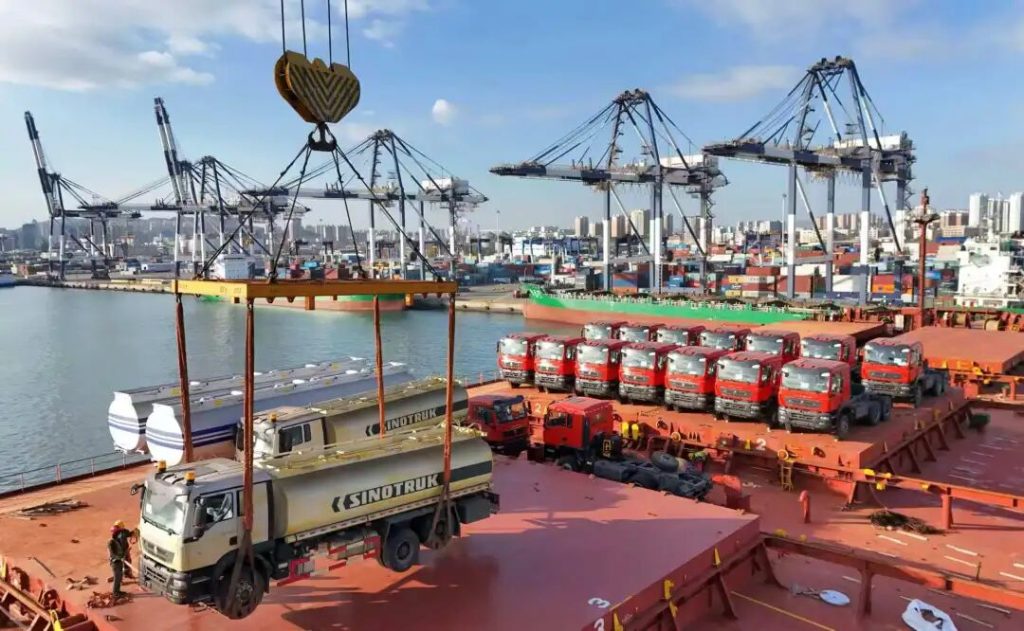
Every week I get messages from buyers across West Africa asking the same question: which port should I ship to? If you’re planning to import used trucks from China to Benin, the answer is almost always Cotonou.
Benin’s main port is the second-largest used-vehicle hub in the region — well over 300,000 used vehicles pass through it every year, and a large share of them don’t even stay in Benin. They are driven across the border into Nigeria, Niger, and Burkina Faso, which is exactly why the transit trade matters as much as the local market.
Traders keep coming back to Cotonou for two reasons. First, Benin has no age limit on used vehicle imports — almost unheard of in Africa, where most countries cap used vehicles at 5, 8, 10 or 15 years. Second, clearing a truck at Cotonou is usually faster and less painful than at the big Nigerian ports, and for transit cargo it can even work out cheaper.
This guide covers the rules, the paperwork, the shipping options and the real costs of importing a used truck from China to Benin in 2026. I’ve shipped hundreds of trucks from China to African ports over the years, so I’ll keep it practical.
Why Benin? The Cotonou Advantage
Benin is a small country with an outsized role in West African vehicle trade. The Port of Cotonou sits right on the Gulf of Guinea, roughly 100 kilometres from the Nigerian border, and it has built its entire economy around re-export.
Transit trade: Cotonou’s real engine
That geography matters for truck buyers. If you sell into Nigeria — the largest market in the region — you already know how congested Apapa and Tin Can Island can get. Ship to Cotonou instead, clear the truck under transit, and drive it across the Sèmè-Kraké border. Many Nigerian dealers have been doing exactly that for years, and so have buyers in landlocked Niger and Burkina Faso, who get their trucks through Cotonou because their own countries have no seaport.
So if you import used trucks from China to Benin mainly for re-export, you’re following a well-worn path — but it changes your buying decisions. Stock, steering side, and specs all depend on the final market.
There is also the age question. Nigeria’s customs rules cap used vehicles at 15 years, Ghana at 10. Benin simply doesn’t impose an age limit — which means a 2015 or 2016 truck that would be painful to import almost anywhere else in West Africa can still come into Benin without a penalty. For buyers who want maximum truck for their budget, that’s a genuine edge.
One thing to know before we go further: Benin drives on the right-hand side of the road, so the market wants left-hand drive (LHD) trucks. Standard Chinese-market trucks are LHD, so they fit Benin directly — no conversion needed. If you’re buying for re-export to Nigeria, you need right-hand drive units instead, and that changes the stock you should be looking at. More on that below.
Rules for Importing Used Trucks from China to Benin
Here’s the practical side. Benin is a member of ECOWAS, so import duties follow the ECOWAS Common External Tariff (CET). Vehicles fall into the 20% duty band. On top of that, you pay VAT at 18%, an ECOWAS community levy of roughly 0.5–1.5%, a small statistical levy, and port handling charges. Customs works through the SYDONIA electronic system, and the duty base is the CIF value — the truck’s cost plus insurance plus freight.
Whether you need a licence depends on who you are. A private individual can import one vehicle for personal use. Importing commercially — multiple trucks, or trucks for resale — requires you to be a registered importer in Benin and to work through a licensed customs broker. Do not try to skip the broker; the port simply won’t release commercial cargo without one.
One more critical detail: duty only applies if the truck stays in Benin. Trucks passing through to Nigeria under the ECOWAS transit regime move under bond — you don’t pay Benin duty, you pay at the destination. That’s the whole reason the Cotonou transit trade exists. Your clearing agent handles the transit documentation, so pick one who knows the Sèmè-Kraké corridor.
| Item | What applies (2026) |
|---|---|
| Age limit on used vehicles | None |
| Steering side | Right-hand traffic — LHD trucks required for the local market |
| Import duty (CET band) | 20% of CIF value (vehicles) |
| VAT | 18% on CIF + duty |
| Other levies | ECOWAS community levy ~0.5–1.5%, statistical levy, port handling |
| Private import | 1 vehicle per person, personal use |
| Commercial import | Registered importer + licensed customs broker |
| Transit to Nigeria / Niger / Burkina | No Benin duty — bonded transit, duty paid at destination |
| Customs system | SYDONIA (electronic declaration) |
Rates and rules do shift, and the official source is Benin customs at douanes.gouv.bj. Your clearing agent can confirm the current tariff line for your exact model before you book the ship.
Documents You Need to Clear a Truck at Cotonou
Get the paperwork right and clearing takes days, not weeks; get it wrong and the truck sits at the port burning demurrage. So here’s the list we prepare with every export:
- Commercial invoice — must state the truck’s make, model, year, chassis number and engine number, and the sale value. Customs values from this, so keep it realistic.
- Bill of lading — the original, matching the truck’s details exactly. Any mismatch between the B/L and the invoice is a delay.
- Certificate of origin / export certificate — issued by the Chinese exporter, confirming the truck left China legally.
- China export documents — including the paperwork tied to the 180-day export rule for used vehicles, which we explain in our guide to China’s 180-day export rule.
- Passport / ID and importer registration — your NIF (tax number) if you’re a registered importer.
- Transit documents — only if the truck is heading to Nigeria, Niger or Burkina: the transit declaration and bond arranged by your broker.
- Marine insurance certificate — protects the cargo during the voyage; usually included in the CIF quote.
Shipping Used Trucks from China to Benin: RoRo or Container?
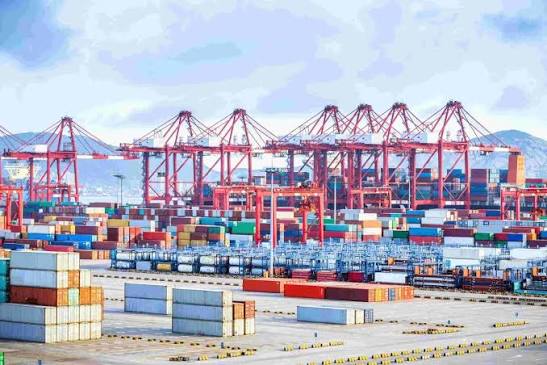
Two practical options for shipping a truck to Cotonou: RoRo and flat rack / container. Because this route is so well established, freight stays competitive — one more reason buyers import used trucks from China to Benin instead of routing through more expensive ports.
RoRo: the default choice
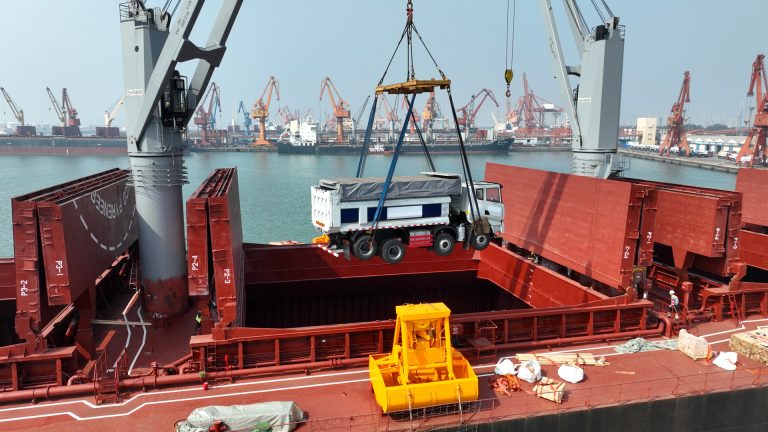
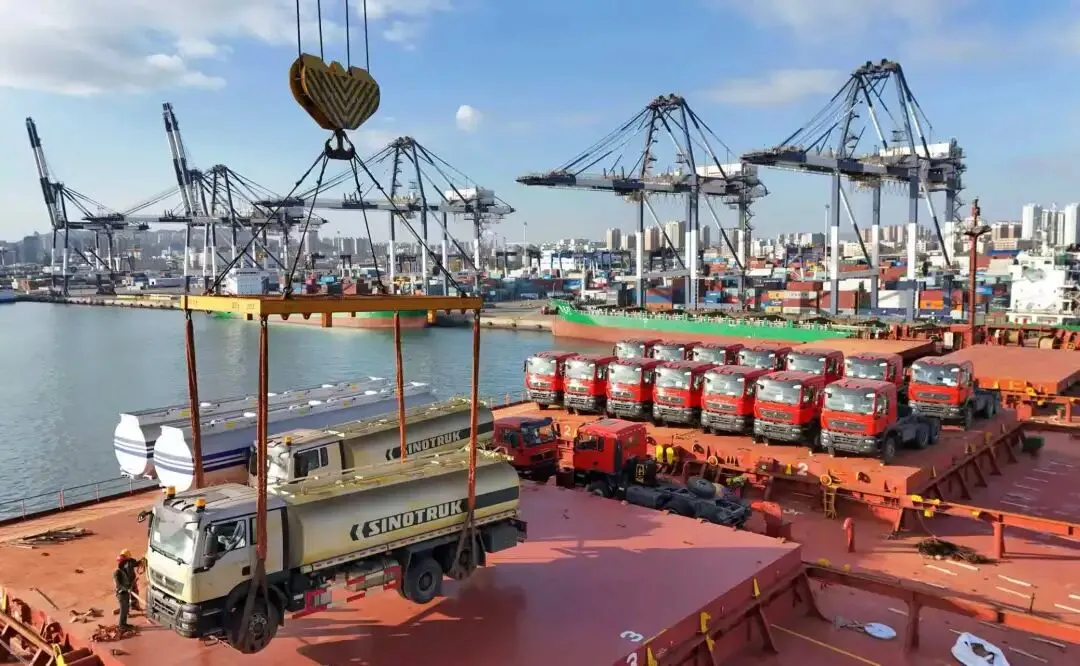
RoRo — the truck is driven onto the vessel in Tianjin, Shanghai or Guangzhou and driven off at Cotonou. It’s the cheapest option for a running truck, saves you $500–1,000 a truck versus container, and loading takes hours, not days. The catch: the truck must actually run — decent tyres, working battery, no serious brake issues — because it has to drive on and off the ship under its own power.
Flat rack or container: when it’s worth paying more
Flat rack or 40ft open-top container — better protection for high-value trucks, and it lets you ship a non-running truck. It costs more and adds loading time. For a typical dump truck or tractor head, however, most of our buyers go RoRo and it serves them fine.
| Method | Cost (USD per heavy truck) | Transit time | Best for |
|---|---|---|---|
| RoRo | $1,800 – $2,600 | 25–40 days | Running trucks, most buyers |
| Flat rack / container | $2,500 – $3,500 | 25–40 days | High-value or non-running trucks |
Voyages from China’s main export ports to Cotonou typically take 25–40 days depending on the line and routing. Prices move with fuel and demand — we publish a full breakdown of shipping costs from China to African ports, and a CIF Cotonou quote includes the freight plus marine insurance, so you know the total before the truck leaves.
Best Used Trucks to Import into Benin from China
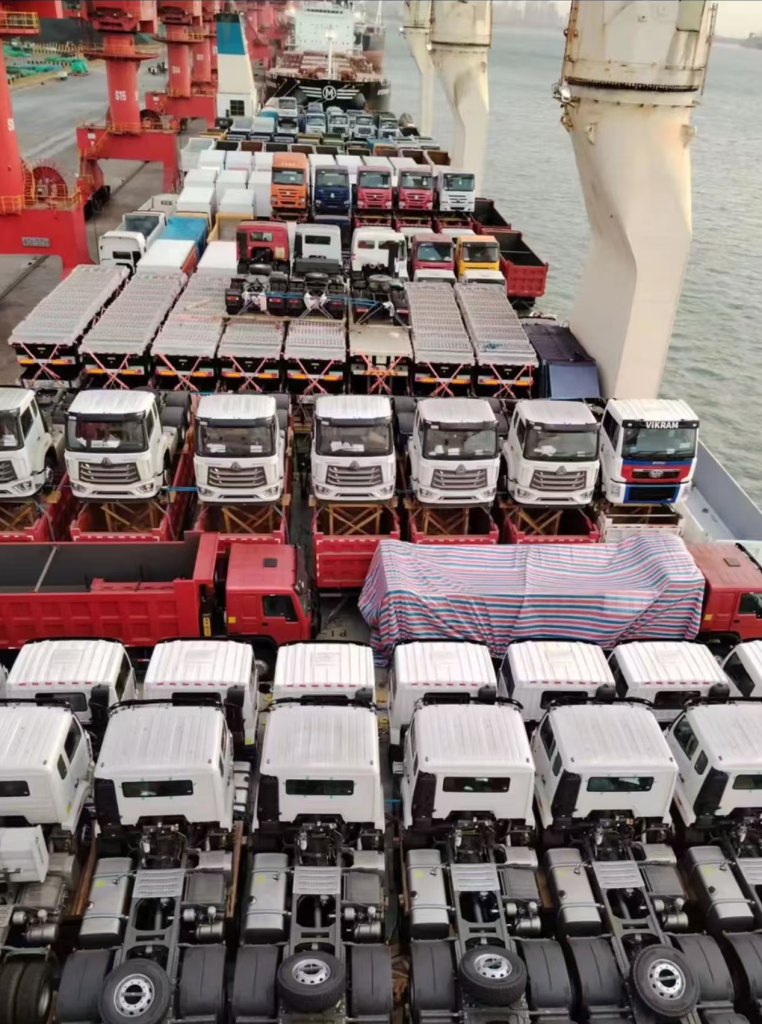
What sells in Benin depends on the work. Construction is booming in Cotonou and upcountry, the port itself moves constant cargo, and a big share of trucks that clear in Benin keep rolling across the border into Nigeria’s construction, sand and logistics businesses. These are the models our buyers keep coming back for:
Dump trucks: the construction backbone
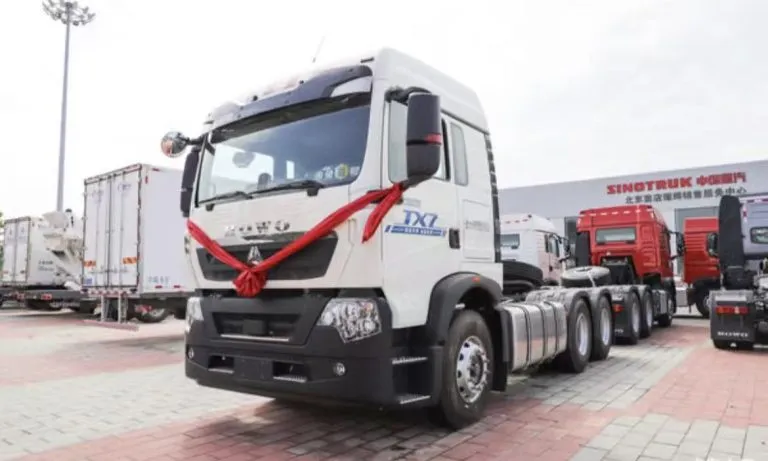
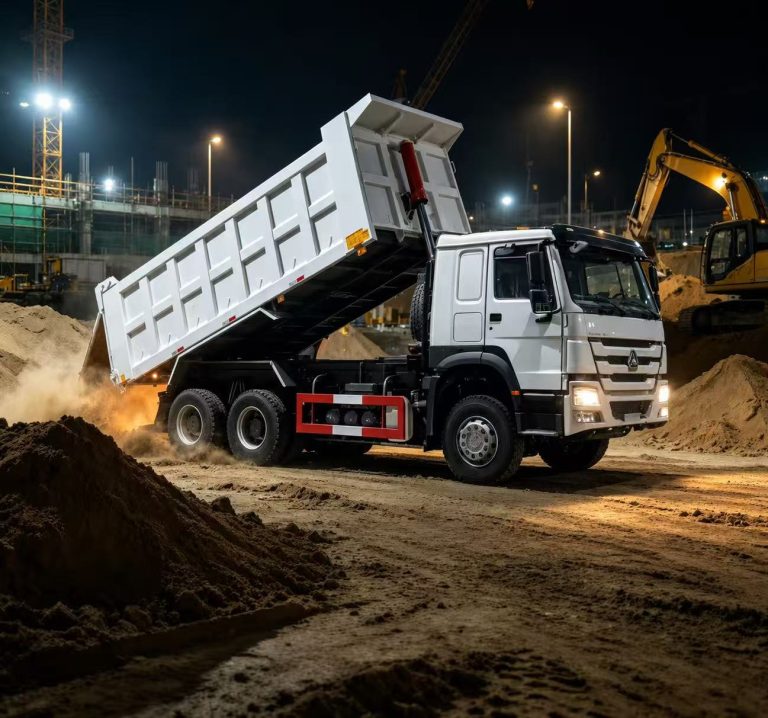
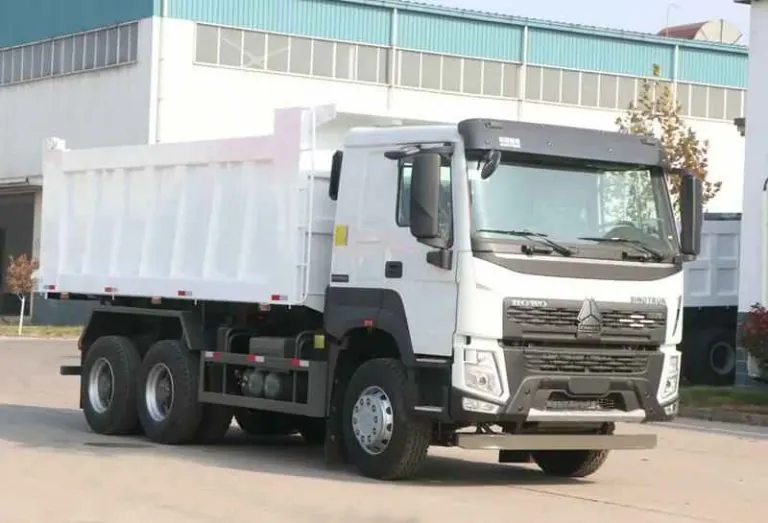
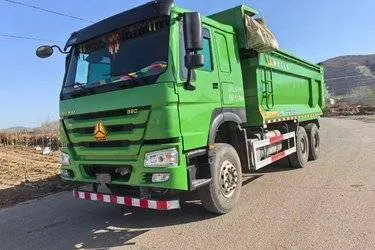
- HOWO 371 6×4 dump truck — the workhorse of West African construction. Plenty of power, parts everywhere, and the resale market is liquid. Full specs and pricing in our HOWO 371 guide.
- Shacman F3000 dump truck — the tougher, simpler cousin of the HOWO. Strong choice for mine sites and bad roads, and it’s covered in detail in our Shacman F3000 guide.
- HOWO 8×4 dump truck — for heavy payloads and mining work upcountry; see the HOWO 8×4 breakdown.
Tractors and cargo: the corridor movers
- FAW J6P tractor head — the standard choice for port-to-border haulage, and the FAW guide covers the range.
- Cargo trucks and tippers — for the grain, sand and container runs that dominate the corridor. Our dump truck buying guide goes deeper on what to check.
On price: right now a HOWO 371 6×4 dump truck in good 2019–2021 condition runs roughly $18,000–19,500 CIF Cotonou — similar to our published CIF Lagos pricing. Older units with higher mileage drop well below that. For transit buyers targeting Nigeria, keep in mind the RHD requirement and check the brand comparison before you commit — HOWO vs Shacman vs FAW vs Dongfeng vs FOTON has the honest rundown.
Step by Step: How to Import Used Trucks from China to Benin
- Choose the truck and verify it. Ask for a live video walkaround — engine start, cab, chassis, tyres. If a supplier won’t do a video call, walk away. We do video inspections on every truck we sell.
- Agree terms. Decide FOB vs CIF and the payment structure. A 30% deposit with balance against documents is normal. Read up on LC and TT payment safety before you send a cent.
- Sort the export paperwork. The exporter handles the Chinese side — including compliance with the 180-day export rule — and gives you the invoice and certificate of origin.
- Book shipping. RoRo is the default for running trucks. Your exporter can handle the booking, or you can use a freight forwarder for the China–Cotonou leg.
- Track the voyage. Expect 25–40 days at sea. Use the time to line up your clearing agent in Cotonou — don’t wait until the vessel is at anchor.
- Clear at Cotonou. The broker files the declaration through SYDONIA, customs values the truck, and you pay duty, VAT and levies. For transit trucks, the broker sets up the bonded transit instead.
- Register or roll. If the truck stays in Benin, register it locally. If it’s heading to Nigeria, roll it across the Sèmè-Kraké border under the transit regime and clear it on the Nigerian side — our guide to starting a used truck import business in Nigeria covers that market in detail.
If you’re new to importing from China at all, start with the full import guide — it walks through the whole pipeline from supplier selection to arrival.
Frequently Asked Questions
No. Benin does not impose an age limit on used vehicles, which is rare in West Africa — so you can import used trucks from China to Benin that would be penalised in most neighbouring countries. By comparison, Nigeria caps used imports at 15 years and Ghana at 10.
Budget roughly 40–50% on top of the CIF price for a truck that stays in Benin: about 20% import duty, 18% VAT on the CIF plus duty, the ECOWAS levy, port handling and the broker’s fee. For transit trucks heading to Nigeria, Benin duty does not apply — you clear under bond and pay on the Nigerian side.
Yes — this is one of the most common routes in West Africa. The truck clears Cotonou under the ECOWAS transit regime, no Benin duty is charged, and you drive it across the Sèmè-Kraké border to clear Nigerian customs. Many Nigerian dealers prefer this when Lagos ports are congested. Remember Nigeria needs right-hand drive trucks.
Benin drives on the right, so the local market uses left-hand drive (LHD) trucks. Standard Chinese-market trucks are LHD and can be registered in Benin directly. If your target market is Nigeria, you need RHD units — clarify this before you buy.
RoRo voyages from Tianjin, Shanghai or Guangzhou to Cotonou typically take 25–40 days. Freight for a heavy truck runs roughly $1,800–2,600, and a CIF quote includes insurance so the price is locked before departure.
A private individual can import one vehicle for personal use without a commercial licence. For commercial imports — multiple trucks or resale — you must be a registered importer and use a licensed customs broker at Cotonou.
Cotonou vs Lagos vs Lomé: Which Port Should You Use?
But the honest answer depends on where the truck ends up. Here’s how the three ports compare for a used truck buyer in 2026:
| Cotonou (Benin) | Lagos (Nigeria) | Lomé (Togo) | |
|---|---|---|---|
| Age limit | None | 15 years | None |
| Clearing speed | Fast — smaller port, less congestion | Often slow, congestion dependent | Fast, growing hub |
| Best for | Benin market + Nigeria/Niger/Burkina transit | Direct Nigeria delivery | Togo/Burkina/Ghana transit |
| Inland transport | Add road leg to final destination | Port-side delivery | Add road leg |
For a buyer in Lagos, shipping direct still saves the border crossing. For everyone else in the region, Cotonou is usually the smarter gateway — and it’s the one we route most West African orders through.
What a HOWO 371 Really Costs Landed at Cotonou
Let’s put the numbers together with a real example. A HOWO 371 6×4 dump truck at $18,500 CIF Cotonou:
| Item | Amount (USD, typical) |
|---|---|
| CIF Cotonou (truck + freight + insurance) | $18,500 |
| Import duty (20%) | $3,700 |
| VAT 18% on CIF + duty | $3,996 |
| ECOWAS levy + statistical levy (~1.5%) | ~$280 |
| Port handling + broker fee | $600 – $1,200 |
| Total landed (staying in Benin) | ~$27,000 – $27,700 |
Transit to Nigeria changes the picture — no Benin duty or VAT, and you settle everything on the Nigerian side. Ask your broker for a full breakdown before you commit; that’s the number that decides whether the deal works.
Mistakes That Cost Buyers Money on This Route
But after years of watching shipments go right and wrong, the same errors keep showing up:
- Buying without a video inspection. A truck that won’t start can’t do RoRo — then you’re paying for a crane and a flat rack you didn’t budget for. How to avoid used truck scams lists the red flags.
- Paying 100% upfront. Spread the payment: deposit to reserve, balance against documents. See payment methods explained.
- Ignoring tyres and battery. The two things that kill a RoRo booking. A $150 battery beats a $600 crane call.
- No broker lined up before arrival. Demurrage at Cotonou is charged from day one. Fix your broker while the vessel is at sea.
- Mismatched documents. If the invoice says 2019 and the B/L says 2020, customs stops everything. Check every number twice.
These are the same mistakes we wrote up in 5 mistakes African buyers make importing from China — they apply on every route, not just this one.
Bottom Line
Benin is the quiet heavyweight of West African truck trade. No age limit, a fast port, and a transit corridor that feeds Nigeria, Niger and Burkina Faso. For a used truck buyer in 2026, though, Cotonou deserves a place in your calculations — especially if Lagos keeps you waiting.
If you plan to import used trucks from China to Benin — or use Cotonou as a gateway into Nigeria — we can show you the actual stock with a live video walkaround, give you a straight CIF Cotonou price, and line up the export paperwork on our side. Message us on WhatsApp (+86 157 1768 7720) or use the contact form — tell us the model and the work you have in mind, and we’ll tell you honestly what fits.
More African Market Guides
Importing trucks to another market? Read our guides for Nigeria, Burkina Faso, Ghana, Côte d’Ivoire.
About the AuthorWang Jianbin is the founder of HebeiCar (hebeicar.com), a China-based used truck exporter. Since 2014, he has helped 500+ fleet owners and dealers across 20+ African countries — Nigeria, Ghana, Kenya, Tanzania, Zambia, DRC, Ethiopia and more — source quality used HOWO, Shacman, FAW and FOTON trucks at factory-direct prices. Every truck is inspected in his own yard in Shijiazhuang, Hebei before shipping, and he writes about import procedures, shipping logistics, customs clearance and truck selection based on that real export experience.
Watch real inventory walkaround videos on the YouTube channel, or contact Wang Jianbin directly for current inventory and CIF prices via WhatsApp.