
Buying Multiple Used Trucks from China — Fleet Order Guide for African Dealers (2026)
Most of our orders are one or two trucks. Still, every few weeks someone asks for eight, or twelve, or twenty — usually a dealer restocking, or a transport company replacing a whole fleet at once. Buying multiple used trucks works differently from buying one. Not just the price, which everyone expects. In fact, the inspection, the shipping, the payment terms and the spare parts all change once you pass five units.
This guide is what we tell those buyers before they send a deposit: how pricing works when buying multiple used trucks in 2026, how to inspect trucks you cannot walk around yourself, how to split shipments so the first batch earns money while the rest is still at sea, and the four mistakes that turn a good fleet order into a two-year problem.
Quick answer: In short, buying multiple used trucks from China saves 3–8% on unit price, but the real saving is freight and inspection efficiency — a 10-unit order typically lands 6–11% cheaper per truck than ten single orders. Also, expect 45–70 days from deposit to last unit delivered, and insist on a per-VIN inspection file for every unit, not one video for the batch.
Why Buying Multiple Used Trucks Behaves Differently
A single truck is a transaction, whereas five trucks is a small project. In practice, the difference shows up in four places.
- Price. Suppliers hold stock, not cash. If you move five units out of the yard in one month, there is room to talk; move one and there usually is not.
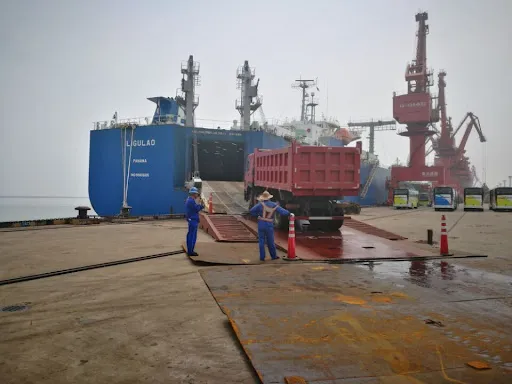
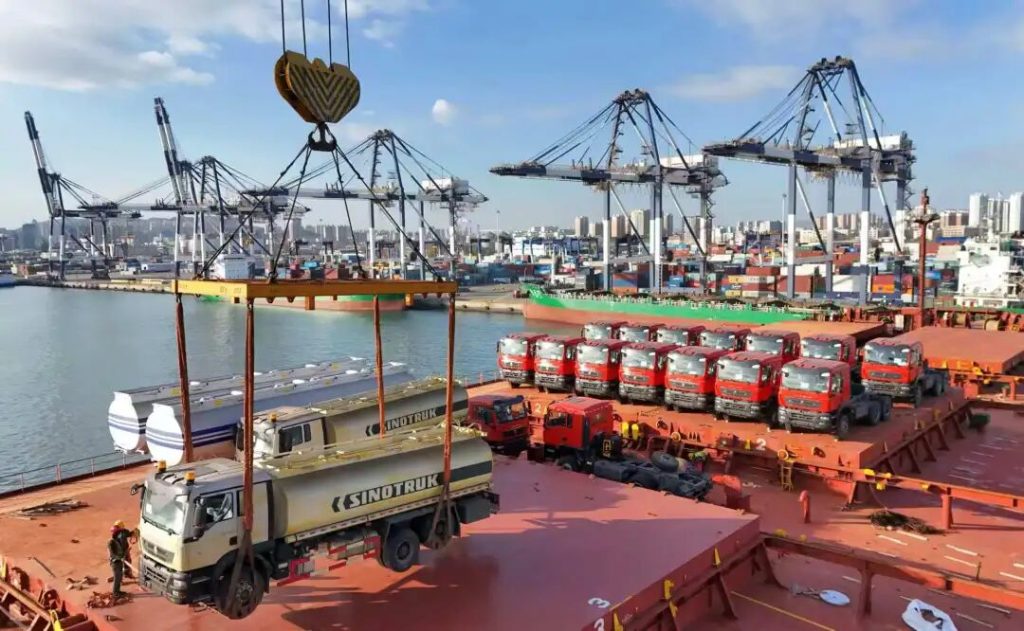
- Freight. RoRo charges per unit, but forwarders quote better on volume, and break-bulk vessels become an option above roughly six heavy units.
- Inspection. Ten trucks means ten engines, ten frames, ten sets of tyres. You cannot inspect a batch by watching one video.
- Risk. If one truck in ten is bad, you lose a tenth of the order. If all ten come from the same unchecked lot, you lose the business.
Indeed, that last point is the one buyers underestimate. Dealers who buy multiple used trucks tend to buy from whoever has the stock that week. As a result, the trucks are often a matched lot from the same fleet, which is good for parts commonality and bad for hidden defects — if the fleet was retired for a reason, every unit carries that reason.
Fleet Pricing for Multiple Used Trucks in 2026
Chinese used truck prices moved up through 2026 on stronger domestic demand and tighter export inspections. Consequently, the FOB Tianjin ranges below are the ones we quote today on clean 2018–2021 units, before any fleet discount.
| Truck | Typical year | Single unit FOB | 5–9 units | 10+ units |
|---|---|---|---|---|
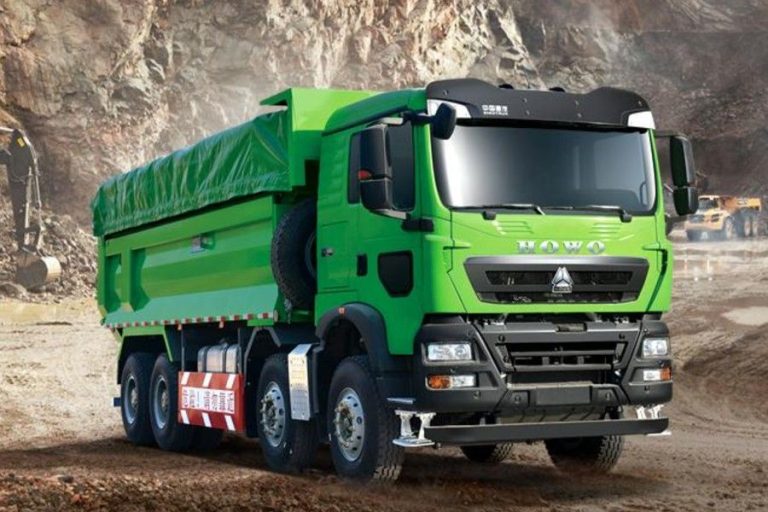
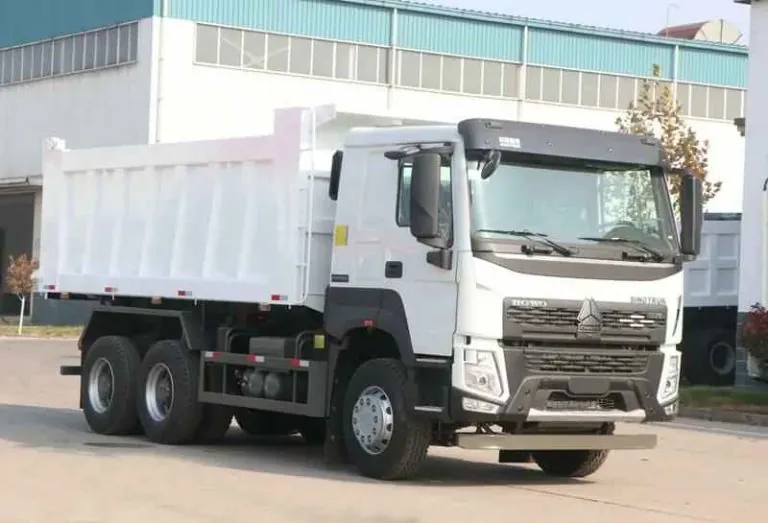
| HOWO 371 6×4 dump | 2019–2020 | $17,000–23,000 | −3% to −5% | −5% to −8% |
| Shacman F3000 6×4 dump | 2019–2020 | $19,000–24,000 | −3% to −5% | −5% to −7% |
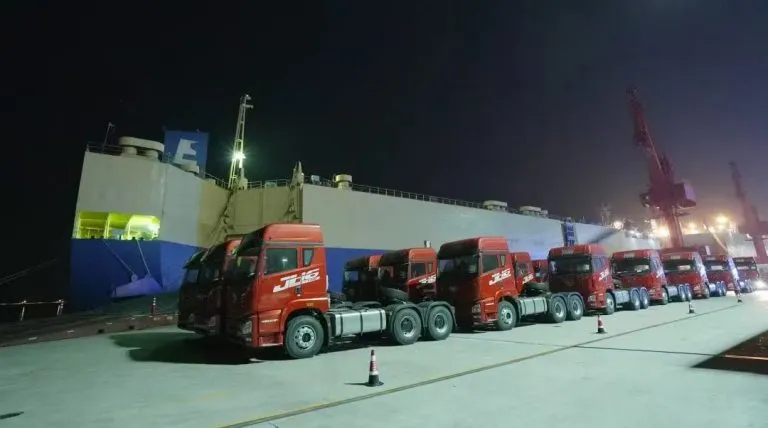
| HOWO T7H 6×4 tractor | 2019–2021 | $9,000–13,500 | −2% to −4% | −4% to −6% |
| HOWO N7G 6×4 tractor | 2019–2020 | $13,500–21,000 | −3% to −5% | −5% to −7% |
| FAW J6P 6×4 tractor | 2019–2020 | $11,000–16,000 | −3% to −5% | −5% to −8% |
Above all, read the discount column as a negotiation range, not a published rate. In fact, on five units we can usually move 3–5%, because the yard saves handling and finance cost. Beyond ten, the limit is what the supplier paid for the stock, not goodwill. Therefore, if someone offers 15% off a ten-truck order, ask what changed about the trucks.
Freight is where the bigger number hides. For example, ten single RoRo bookings to Lagos in 2026 run roughly $1,400–2,600 per unit. Meanwhile, ten units on one break-bulk or consolidated booking frequently come in 10–20% below that, and you also avoid ten separate port handling charges at destination. Also, container and break-bulk rates move with the global market tracked in UNCTAD’s Review of Maritime Transport 2025. If general rates fall in the quarter you ship, push your forwarder for the difference.
As for the CIF side of the maths, our full landed-cost breakdown covers duty, terminal and clearing; this article stays on the fleet side.
Choosing the Right Mix When Buying Multiple Used Trucks
For instance, dealers who order ten usually order six tractors, three dumps and one odd unit. That ratio is not random — it follows what earns money fastest in their market. In Lagos and Tema, for example, the container haulage work supports tractors; in Zambia and DRC the mine and construction work pulls dumps; in Kenya a mixed fleet spreads risk across both.
| Market | Typical 10-unit mix | Why it works |
|---|---|---|
| Nigeria (Lagos, Onitsha) | 6 tractor / 3 dump / 1 cargo | Container haulage plus construction demand; tractors resell fastest |
| Kenya, Tanzania | 5 tractor / 4 dump / 1 water | Corridor freight plus road and site work; water trucks sell to municipalities |
| Zambia, DRC | 3 tractor / 6 dump / 1 crane | Mining haulage; dump trucks dominate resale |
| Ghana, Côte d’Ivoire | 5 tractor / 3 dump / 2 cargo | Port and regional distribution work |
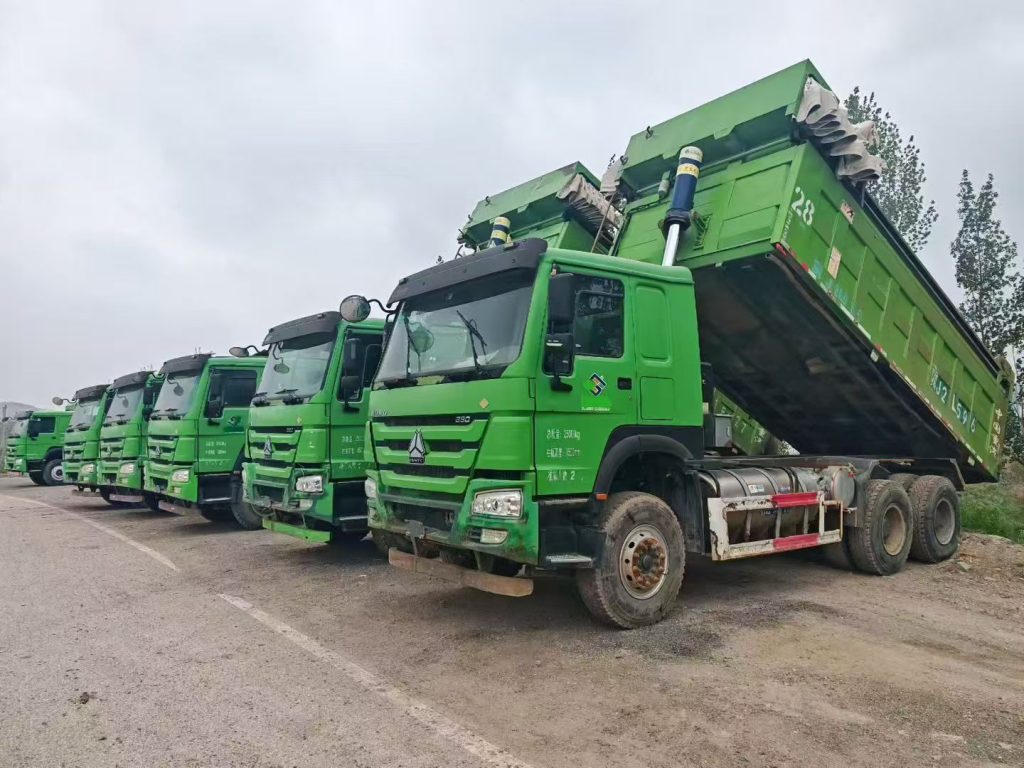
One practical note on mixing: keep the engines in one family where you can. Otherwise, ten trucks with three different engine models means three sets of filters, three injector types and a parts shelf nobody can manage. If the mix allows, standardise on Weichai WD615 or MC11 for the heavy units and take the small saving hit.
Inspecting Multiple Used Trucks You Cannot See
This is where fleet orders fail. A buyer approves one video, the supplier sends ten trucks, and three of them are not the ones in the video. It happens because the batch is inspected as a batch.
Instead, here is what we do — and what you should demand from any exporter:
- VIN list first. Before any video, get the VIN, engine number, year and odometer for every unit. If a supplier cannot produce this list, they do not have the trucks.
- Three videos per unit. Cold start with the exhaust on camera, a walk around the frame and cab, and the odometer with the engine running. Same angle, same order, every truck — so you can compare.
- One physical inspection per lot. Pick two units at random and have a third party check them properly. If those two are as described, the lot usually is.
- Written condition report. Tyre depth, brake lining, frame cracks, hydraulic leaks. Not adjectives — numbers and photos.
In fact, our own checklist is the same 30-point inspection we run on single units; when buying multiple used trucks it just gets repeated with a file per VIN. Still, if a supplier resists per-unit files, that is your answer.
Paying for Multiple Used Trucks Without Losing Sleep
Overall, the standard terms do not change much: 30% deposit to lock the units, 70% before loading. However, the size of the exposure changes: on a $150,000 order, a 30% deposit is $45,000 wired to a company you may never have visited.
In practice, three structures work:
- Split deposits by shipping batch. Pay 30% on the first five units, ship them, then pay the next tranche. Slower, but your capital is never fully exposed.
- Letter of credit above roughly $100,000. Although it costs 1–2% in bank fees and adds a week of paperwork, it is worth it when the supplier is new to you.
- Third-party inspection as a payment condition. Release the balance against the inspection report, not against photos. This is the cheapest insurance in the trade.
Payment mechanics — TT vs LC, who pays the bank charges, what to do when a wire is held — matter more when buying multiple used trucks, and they are covered in our LC and TT payment guide.
Splitting Multiple Used Trucks Across Two Sailings
Ten trucks rarely arrive together, and that is fine. Instead, send five first. Then they start earning within six to eight weeks while the second half is still being inspected. By the time batch two lands, you know the real condition of batch one — on the road, under load — and you can adjust the rest of the order.
Still, two rules follow from that. First, keep each batch self-sufficient (if batch one is all tractors, send a spare parts kit with it). Second, do not split a matched lot across batches — if units 6–10 are the sister trucks of 1–5, split them 3/2 rather than sending all the good ones first.
Nevertheless, port throughput matters more than distance. In fact, Lagos and Mombasa handle a large share of regional vehicle imports, and the World Bank container port traffic data shows how unevenly that volume is spread — consequently, a smaller port can mean fewer sailings and longer waits, not a cheaper route. For method and port choice, our shipping cost guide covers RoRo, flat rack and container rates by destination port. Finally, the short version for fleets: RoRo for anything over 3.3 m tall, break bulk or flat rack once you pass six heavy units, containers only for pickups and light cargo trucks.
The Spare Parts Bundle When Buying Multiple Used Trucks
A fleet without spares is a fleet with downtime. That is especially true when buying multiple used trucks: buyers focus on the trucks and then, three months later, pay retail for filters in Nairobi. Moreover, parts cost a fraction of the truck price and ship in the same booking.
| Item | Per 10 trucks | Typical add-on cost |
|---|---|---|
| Oil, fuel and air filter sets | 30 sets | $900–1,500 |
| Brake linings and drums (front axle) | 10 sets | $1,200–2,000 |
| Clutch plates and release bearings | 5 sets | $800–1,400 |
| Injectors (Weichai WD615 / MC11) | 10 pcs | $700–1,200 |
| Belts, hoses, wheel studs, lamps | Assorted box | $400–700 |
On a $200,000 fleet order that is roughly 2–3% extra spend, yet it removes the most common reason a new truck sits idle in month two. Also, our spare parts guide lists what is stocked locally in Lagos, Nairobi and Dar es Salaam and what is not.
Frequently Asked Questions
How many used trucks can I buy at once from China?
There is no legal limit. Practically, buying multiple used trucks usually means 5–20 units; above 30 units you are competing with Chinese domestic buyers for stock and lead times stretch. Dealers ordering more than 20 usually split into two orders placed 4–6 weeks apart.
Is the discount for buying multiple used trucks really 5–8%?
On unit price, yes, for clean stock the supplier already owns. However, the larger saving is freight consolidation and shared inspection, which together typically add another 3–5%. Anyone promising 15–20% off a ten-unit order is either quoting inflated starting prices or moving a lot nobody else wanted.
Can I mix different truck types in one order?
Yes, and most dealers do. After all, mixing dumps, tractors and cargo units is normal. What we advise against is mixing engine families within the same batch — it doubles the parts inventory the buyer has to carry.
How long does a 10-truck order take?
Overall, from deposit to the last unit in your yard, 45–70 days in 2026. Inspection and documentation take 7–12 days, RoRo or break-bulk sailing to West Africa 25–35 days, East Africa 18–28 days. So, add two to three weeks if you split the shipment.
Do fleet orders get a warranty?
Yes. Buying multiple used trucks gets you the same 12-month mechanical support as single units on the drivetrain, which is what our warranty terms describe. In addition, what fleets negotiate separately is a spare parts credit — often 1–2% of order value — instead of an extended warranty.
Four Mistakes That Cost Real Money
- Buying a matched lot without asking why it was retired. Ten identical trucks from one fleet usually share one reason for sale. Therefore, ask for the fleet service records, not just per-unit reports.
- Paying a deposit before the VIN list exists. After all, if the units are not identified, the deposit is not securing anything specific.
- Skipping the parts bundle. It saves 2% now, yet it costs 15% in downtime later.
- Sending all ten units to one port because it was cheapest. Before you book, check inland haulage. Mombasa is often cheaper than Dar es Salaam to the same inland city — and sometimes it is the reverse, depending on the month.
Worked Example: Costing a 12-Unit Order to Mombasa
Here is the arithmetic we run for buyers purchasing multiple used trucks. Take a Kenyan dealer replacing a mixed fleet: seven HOWO N7G tractors, four Shacman F3000 dumps and one water truck, all 2019–2020. At the FOB ranges above the units come to roughly $198,000 before negotiation; a 6% fleet adjustment lands near $186,000. Then add a $4,200 parts bundle to the first batch and about $21,000 in RoRo freight to Mombasa, and the CIF figure sits around $211,000 — roughly $17,600 per unit, before Kenyan duty and clearing.
Above all, the part worth copying is the structure: split 7/5 across two sailings three weeks apart, so the first seven start earning on the Mombasa–Nairobi corridor while the rest is still loading. In practice, inspect two units in person, watch per-VIN videos for the other ten, and release the balance against a third-party report. Overall, that diligence costs under $900 on an order this size.
Start With the List, Not the Deposit
Buying multiple used trucks is a project, not a purchase. If you are planning a fleet order this quarter, send your target mix, destination port and budget. Then we come back with a VIN-level list of what is actually available, per-unit photos and a CIF number — before you commit to anything. Ask for the fleet quote form or message us on WhatsApp at +86 157 1768 7720.
Related reading: how to vet a Chinese truck supplier, age limits by country, and our truck types overview.
About the Author
Wang Jianbin is the founder of HebeiCar (hebeicar.com), a China-based used truck exporter. Since 2014 he has supplied 500+ fleet owners and dealers across 20+ African countries, including orders for multiple used trucks placed by dealers in Nigeria, Kenya and Zambia. Every unit is inspected in his own yard in Shijiazhuang, Hebei before loading, and fleet orders are documented per VIN with photo and video files. He writes about pricing, inspection and export logistics from that operational experience.
Of course, you can see current stock on the YouTube channel, or contact Wang Jianbin directly on WhatsApp.