Used Refrigerated Trucks from China for Africa — A Buyer’s Guide for 2026
A few months back, a guy from Uganda called me. He runs a cold chain company — vaccines, dairy, frozen foods across East Africa. He was losing about 30% of every shipment because his old reefer couldn’t hold temperature on the Kampala–Kigali run.
“Can you find me a used refrigerated truck from China,” he asked, “that actually works in African conditions?”
I get this question a lot lately. Cold chain in Africa is exploding — vaccine logistics, dairy expansion, frozen food retail. Everyone wants in. But finding the right used reefer at the right price? That’s where most people get stuck.
So here’s what I’ve learned from 10 years of shipping these things. Which brands hold up, what stuff actually costs CIF to your port, how to inspect the reefer unit (and why most buyers forget to), and one mistake I keep seeing that costs people real money.
Africa’s Cold Chain Problem — and Why Used Reefers Are the Answer
The cold chain logistics market in Africa was worth around $14.5 billion in 2024. It’s growing at roughly 9-11% a year. Why?
- Post-COVID, vaccine supply chains got built and now they’re being used for more than just vaccines
- The African Development Bank says Africa loses 30-50% of its food because there’s no proper refrigerated transport. That’s a massive gap.
- Supermarket chains in Nigeria, Kenya, Ghana are expanding fast. They need reefers to stock their shelves.
- Kenya, Ethiopia, Uganda are scaling up dairy processing. Without reefers, the milk spoils before it gets anywhere.
Here’s the thing about pricing. A new refrigerated truck, landed in Lagos or Mombasa, runs you $60,000 to $120,000. A used one from China? $12,000 to $35,000 CIF. That’s the difference between buying one truck or five.
And honestly? For cold chain work in Africa, a good used unit with a Carrier or Thermo King reefer will do everything a new truck can — at a fraction of the cost. You just have to know what to look for.
Three Reefer Models I’d Actually Recommend
Not every refrigerated truck leaving China is built for African roads. I’ve seen them show up with undersized cooling systems, controllers that stopped working mid-voyage, insulation rotted out from years in China’s humid coastal weather.
These three are the ones I’ve had the least trouble with:
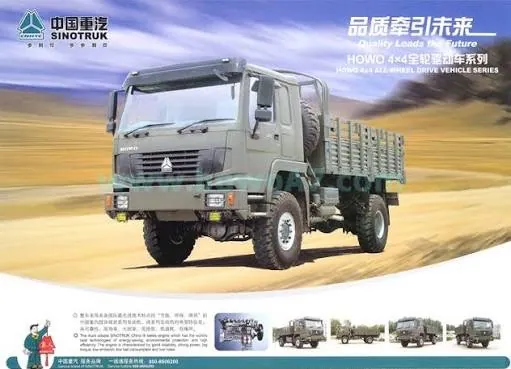
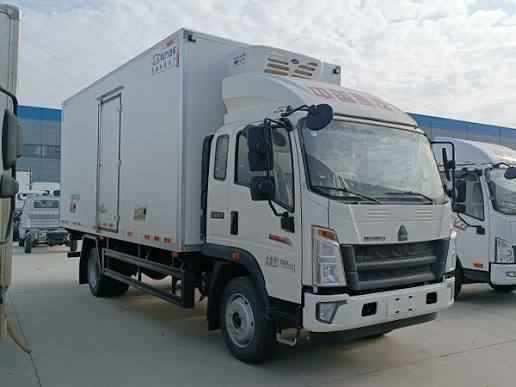
1. HOWO T5G 6×2 — The Workhorse
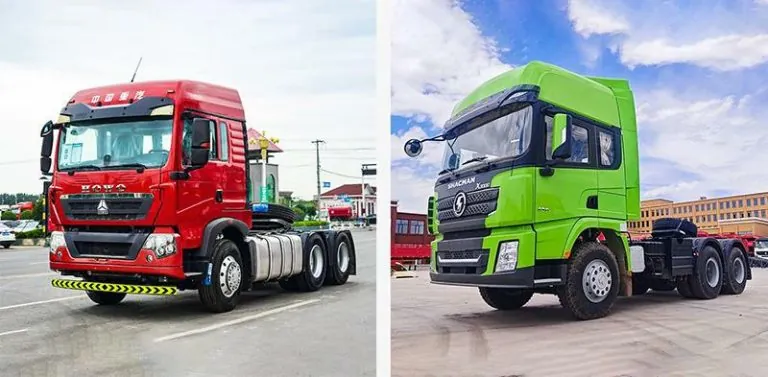
This is the reefer I export most often. Sinotruk WD615 engine, 266HP — nothing fancy, but reliable and every mechanic from Lagos to Nairobi knows how to fix it. The reefer unit is usually a Carrier Supra 750 or Thermo King SLXi, and both have service networks across Africa.
Box is 9.6m long, hits -20°C, costs around $22,000–$28,000 CIF Lagos. Works best for long-haul frozen food and dairy.
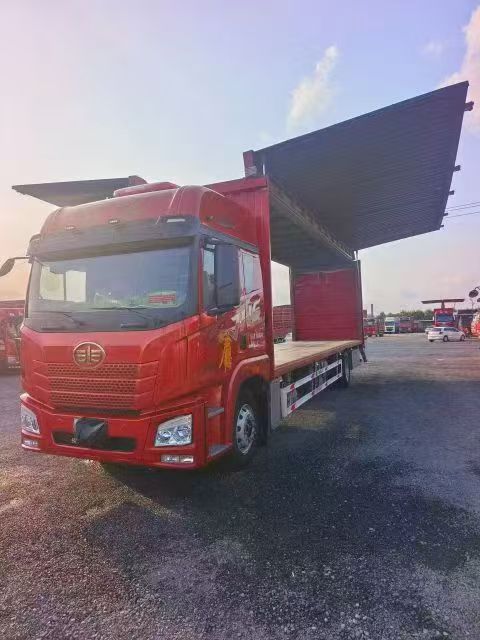
2. FAW J6L 6×2 — The Fuel-Saver
If fuel costs keep you up at night, this is your truck. The FAW CA6DM2 engine uses 3-5 liters less per 100km than the HOWO. On a 500km daily run, that’s $15–$25 saved every day. Over a year it’s real money.
Comes with Carrier Xarios or Thermo King T Series. 8.6m box, -15°C minimum. $15,000–$20,000 CIF Mombasa. See our FAW buyer’s guide for more on the brand.
3. Dongfeng D9 4×2 — The Budget Entry Point
If your budget is tight, the Dongfeng D9 gets you in the game. Cummins ISDe engine — genuinely solid, mechanics know it. But the reefer unit on budget D9s is usually Chinese-branded (Kingtec or similar), and those have limited support in Africa.
6.2m–7.2m box, -10°C minimum. $12,000–$16,000 CIF Dar es Salaam. My advice: if you can stretch another $1,500–$3,000, get one with a Carrier or Thermo King unit instead. It’ll pay off fast.
What Stuff Actually Costs (CIF Prices Mid-2026)
Here’s a rough guide based on recent shipments. Prices move with shipping rates and truck availability, so take these as ballpark:
| Model | Box Length | Reefer Unit | CIF Lagos | CIF Mombasa | CIF Dar |
| HOWO T5G 6×2 (2018-20) | 9.6m | Carrier Supra 750 | $22-28K | $20-26K | $18-24K |
| FAW J6L 6×2 (2019-21) | 8.6m | Carrier Xarios | $18-23K | $16-21K | $15-20K |
| Dongfeng D9 4×2 (2020-22) | 7.2m | Kingtec/Chinese | $14-18K | $13-17K | $12-16K |
| HOWO 6×4 Heavy Reefer (2017-19) | 9.6m | Thermo King SLXi | $25-32K | $23-30K | $21-28K |
Prices are estimates. If you want a real quote on what I’ve got right now, message me on WhatsApp.
The One Mistake Almost Everyone Makes
Here’s the thing nobody tells you about buying a used reefer: it’s two machines in one.
The truck itself — engine, chassis, cabin — that’s one machine. The reefer unit on the front of the box — that’s a completely separate machine. And guess which one costs more to fix?
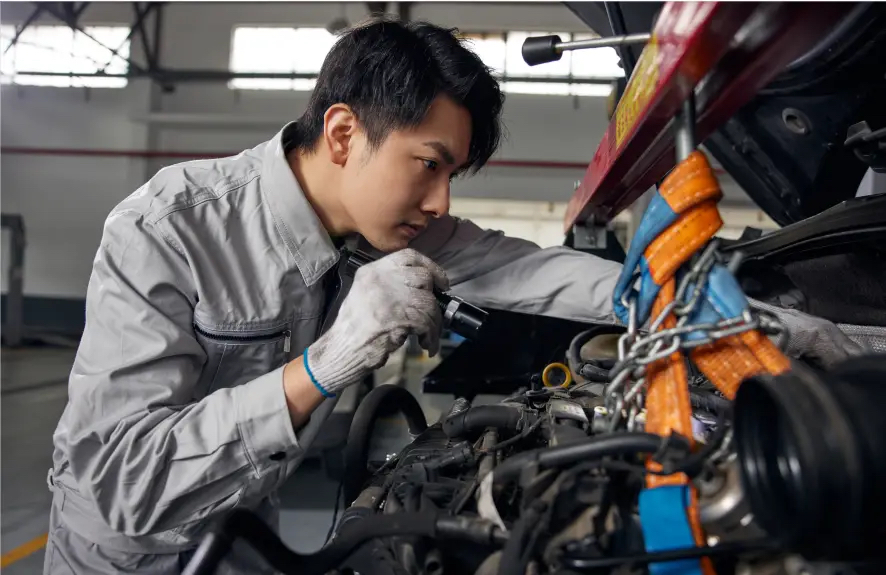
I see buyers all the time who spend an hour inspecting the truck. They check the engine, crawl under the chassis, test the AC. Then they glance at the reefer unit, see it blow cold air, and say “looks good.”
Two weeks later the unit dies, and the repair bill is $3,000–$5,000. Sometimes more than the engine is worth.
What to actually check on the reefer unit:
- Cold start test. Don’t watch a video of it running warm. Ask for a cold start and time how long to hit -10°C. A Carrier Supra 750 should get there in 30–45 minutes from ambient.
- Coolant lines. Surface rust is fine. Pitting or moisture at the joints means you’re replacing them soon.
- Evaporator fan. Frost buildup or bent blades = poor cooling. Simple fix but tells you how well it was maintained.
- Controller display. Does the digital readout work? Does the defrost cycle kick on?
- Compressor hours. Carrier units are good for about 15,000–20,000 hours before a major service. Ask for the meter reading.
My policy: Every reefer that leaves my yard runs a 4-hour temperature hold test. Set to -15°C, photos of the display every 30 minutes, full report to the buyer. If the unit fails, we don’t ship it. Simple as that.
Getting It from China to Your Port
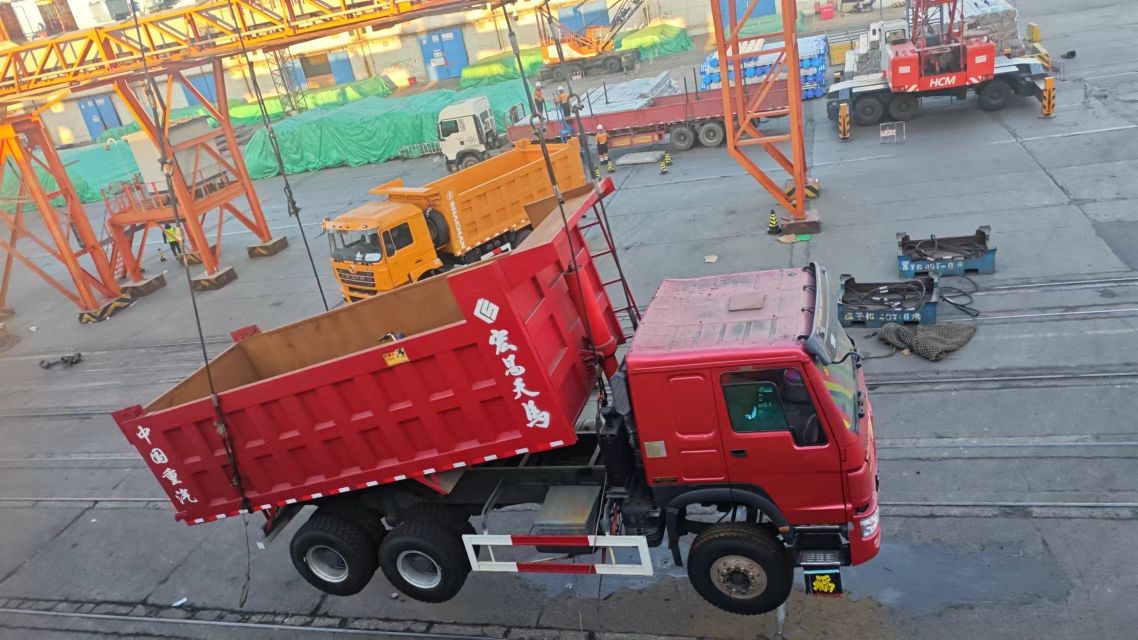
Reefers are too tall for standard containers, so it’s RORO (roll-on/roll-off) shipping. The truck drives onto the ship in Tianjin or Shanghai, drives off at Lagos or Mombasa. Simple in concept.
- Transit: West Africa — 25–35 days. East Africa — 20–30 days.
- Freight: $1,800–$3,000 per reefer (there’s an oversize surcharge because of the box body width)
- Documents: Bill of Lading, invoice, packing list, certificate of origin, vehicle inspection report. We handle all of these from the China side.
One thing: before you ship, check your country’s import rules for reefer equipment. Nigeria needs SONCAP clearance. Kenya requires KRA inspection at Mombasa. Some countries want environmental certs for the refrigeration system. I can advise on what you’ll need.
Keeping It Running Once It Arrives
This is the part people worry about most. “If something breaks, can I even get it fixed in Africa?”
Short answer: yes, if you buy the right unit.
Carrier Transicold has authorized dealers in Lagos, Accra, Nairobi, Mombasa, Dar es Salaam, and Johannesburg. Thermo King has service in Lagos, Nairobi, Accra, Casablanca, Durban. Chinese-branded reefer units (Kingtec, etc.) — parts have to come from China. That means downtime measured in weeks, not days.
Annual maintenance on a used reefer in Africa runs roughly:
- Preventive reefer service (every 500 hours): $200–$400
- Oil and filters (every 10,000 km): $150–$300
- Compressor rebuild (15,000-20,000 hours): $1,500–$3,000
For context, maintenance on a new reefer truck runs $5,000–$10,000+ annually. A well-maintained used unit costs significantly less — and you didn’t pay six figures to buy it in the first place.
New vs Used — Let’s Talk Numbers
Say you’re starting a cold chain operation in Nairobi. Here’s what the math looks like:
| New European | New Chinese | Used Chinese | |
| Landed Cost | $95-130K | $55-75K | $15-28K |
| Monthly Revenue | $8-12K | $7-10K | $6-9K |
| Monthly Operating Cost | $3-5K | $2.5-4K | $2-3.5K |
| Monthly Net Profit | $5-7K | $4.5-6K | $4-5.5K |
| Breakeven | 16-20 months | 12-15 months | 3-6 months |
| 5-Year Total Profit | $210-330K | $210-312K | $264-360K |
Here’s what this tells me: buy one new truck or three used ones for the same money. Three trucks earning at the same time. That’s the real advantage.
Where the Demand Is Right Now
Based on what we’re seeing:
- Nigeria — Biggest market by far. Food processing and pharma are growing. Just budget extra time for Apapa port clearance (5-10 days is normal).
- Kenya — East Africa’s cold chain hub. The Mombasa–Nairobi corridor is the busiest reefer route on this side of the continent. Dairy and horticulture exports are driving demand.
- Ghana — Tema port is smoother than most West African ports (3-5 day clearance). Mining and food processing demand is up.
- Tanzania — Dairy sector is growing. Dar es Salaam port serves inland markets — Zambia, DRC, Rwanda, Uganda.
- Ethiopia — Cold chain infrastructure is underdeveloped, which means first-mover advantage for anyone who gets in now. Government is investing.
More detail on specific markets: Kenya guide | Ghana guide | Tanzania guide | Starting in Nigeria
Quick Answers to Common Questions
Can I see the truck before buying? Yes. I do live video walkarounds on WhatsApp. Cold start, reefer test, chassis inspection — you see everything in real time. Just message me.
How cold do these things actually get? Most with Carrier or Thermo King units hit -15°C to -20°C. Good enough for frozen food and pharma cold chain. Top-end units go to -25°C. I’ll tell you exactly what a specific truck can do before you commit.
How long will the reefer unit last? 15,000–20,000 operating hours before it needs a major service. At 8 hours a day, that’s 5-7 years. Service it every 500 hours and it’ll go longer.
What documents do I need? From China: Bill of Lading, invoice, packing list, certificate of origin, used vehicle export cert, reefer compliance cert. I handle all of these. You’ll need to check what your country requires on the import side.
What I’ve Got in Stock Right Now
I usually keep 5-10 reefer trucks available. Right now that includes HOWO T5G with Carrier Supra 750 units (2018–2020), FAW J6L with Carrier Xarios (2019–2021), and a couple Dongfeng D9 budget options.
Every truck I ship comes with:
- Full mechanical inspection — chassis and reefer unit
- 4-hour temperature hold test with photo evidence
- Live video walkaround before you pay anything
- Ready for RORO shipping within 5-7 days
Message me on WhatsApp: +8615717687720 — tell me your budget, destination port, and what temperature range you need. I’ll send you what’s available.
Or browse everything at hebeicar.com.
Wang Jianbin — exported used trucks from China to Africa, Middle East, and Central Asia for over a decade. Founder of HebeiCar.com.
Keep reading:
HOWO Used Trucks Buyer’s Guide
Used Cargo Trucks from China to Africa
5 Mistakes African Buyers Make
Used Tractor Trucks from China to Africa