5 Costly Mistakes African Buyers Make When Importing Used Trucks from China
Last month, a customer from Ghana sent me a voice note on WhatsApp. His HOWO had been running for exactly two weeks, and the gearbox started making noise.
I asked him to record the sound. Da-da-da, clear in neutral, louder under load. I knew what it was before he finished describing it—there was a hairline crack on the gearbox housing. You can’t see it when the truck is stationary and clean. But put it to work, and it opens up.
He picked that truck because it “looked newer.” I had offered to do a full gearbox inspection before shipping. He said no.
This isn’t a one-off story. In 10 years of exporting used trucks from China to Africa, I’ve seen the same mistakes over and over. Not from careless people—from hardworking buyers who just didn’t know what to watch out for.
This article isn’t about “how to choose a good truck.” There’s plenty of that online. This is about 5 specific mistakes that cost real money. If you avoid even two of them, this article paid for itself.
Mistake #1: Buying the Cheapest Quote
A Lagos customer asked three exporters for a price on the same model—a HOWO 371 6×4 dump truck, 2019.
Exporter A: $15,000 FOB.
Exporter B: $16,500 FOB.
My quote: $18,000 FOB.
He went with the cheapest.
The truck arrived at Apapa port. He hired a local mechanic to do a pre-service check. The mechanic started the engine and heard it immediately—knocking from cylinder four. They pulled the head and found a scored cylinder wall. The truck had been used for coal hauling in northern China, running overloaded for years. The exterior had been repainted and detailed, but the engine was at the end of its life.
The real cost:
- Truck: $15,000
- Engine repair: $4,000
- Parts waiting time: 10 days
- Lost income during downtime: ~$200/day
Total: $21,000. Plus three weeks of zero revenue.
My truck cost $18,000. That customer picked it up and started working immediately. No extra cost. No downtime.
Why does this happen so often?
Pricing online is transparent. You can get three quotes in 10 minutes. But used trucks aren’t commodities. Two trucks of the same model and year can have completely different stories. The cheap one isn’t a bargain—it’s a truck that someone else already decided not to buy.
How to avoid this:
1. Insist on live video inspection. Not pre-recorded videos. I mean live, on WhatsApp, in real time. I walk around the truck, cold-start the engine, rev it, check the oil, show you the chassis welds, the gearbox, and the turbo. You ask, I zoom in. If you can’t see it live, assume there’s a reason.
2. Ask what the truck was used for. A truck that did 300,000 km on highways is in a completely different league from one that did 150,000 km hauling coal or sand. The mileage number doesn’t tell you everything. The use history does.
Related: HOWO Used Trucks Complete Buyer’s Guide →
Related: Shacman Used Trucks Buyer’s Guide →
Mistake #2: Buying What Your Neighbor Bought
A customer in Tanzania saw his neighbor making good money with an 8×4 dump truck at a large mining operation. So he ordered the same model.
The truck arrived at Dar es Salaam. He cleared it, drove it to his mine site, and realized the problem immediately.
His mine was an older operation—narrow roads, tight turns. An 8×4 is nearly 10 meters long. He couldn’t maneuver. First trip in, he scraped the passenger door against a rock wall. It took him 20 minutes to reverse out.
He sold the truck at a loss and bought a 6×4 instead. Total cost of the mistake: over $6,000 in lost margin and downtime.
The lesson is simple: your neighbor’s truck was built for his road, his load, his distance. Yours needs to fit yours.
Here’s a plain-language guide to what works where:
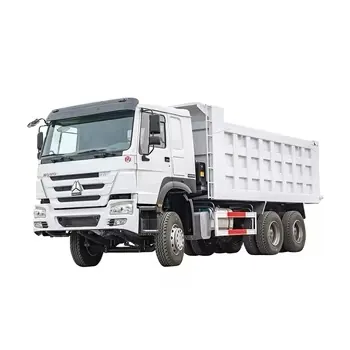
6×4 Dump Truck — This is the most popular model we sell, and for good reason. It works on mine sites, construction sites, unpaved roads, pretty much anywhere. A shorter wheelbase means it turns more tightly. 336-371HP is enough power for most jobs. Good payload without being too heavy on fuel. If you’re not sure what to get, start here.
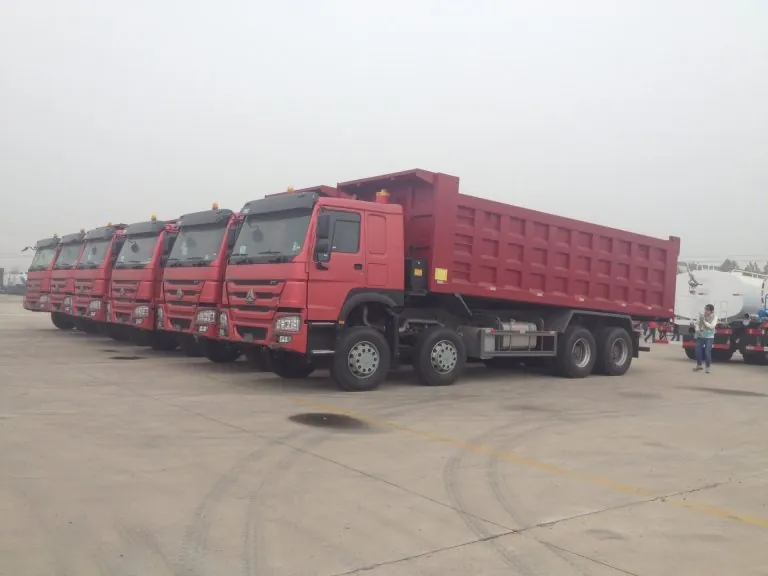
8×4 Dump Truck — Bigger payload, but bigger problems if your roads aren’t wide enough. Good for large-scale mining and major infrastructure projects where roads are built for heavy equipment. Not good for tight spaces, small mines, or village roads.
4×2 Tractor Truck — Light duty. Port container hauling, short-distance logistics. Fuel-efficient, cheap, maneuverable. Don’t put heavy loads on it.
6×4 Tractor Truck — Long-haul heavy transport. Lagos to Kano, Mombasa to Nairobi, cross-border routes. This is the standard answer for long-distance logistics.
How to choose:
Before you ask for a price, answer three questions:
- What am I carrying? — Sand, coal, containers, general goods?
- What roads am I driving on? — Highway, gravel, mine site, city streets?
- How far am I going each trip? — 50 km or 500 km?
That’s it. Three questions, and you’re 80% of the way to the right model.
Related: Used Dump Trucks for Export →
Related: Used Tractor Trucks Category →
Mistake #3: Comparing Freight Prices, Ignoring Everything Else
A customer in Kenya runs a logistics company. He’s a sharp guy—knows his numbers. He compared freight quotes from three shipping agents and chose the cheapest. Saved $800.
The ship arrived at Mombasa and waited 12 days for a berth. The shipping line his agent used had low priority on the East Africa route. Every day at anchor costs $150 in demurrage.
Then the paperwork problem showed up. His agent had typed the consignee name wrong—one letter off. Amendment fee: $300. Waiting time: one more week.
Final tally:
- Saved on freight: $800
- Paid in demurrage: $1,800
- Paid in amendment fees: $300
- Lost time: 3 weeks
He told me later: “Next time I’ll pay the higher freight and sleep better.”
RORO vs Container — plain language:
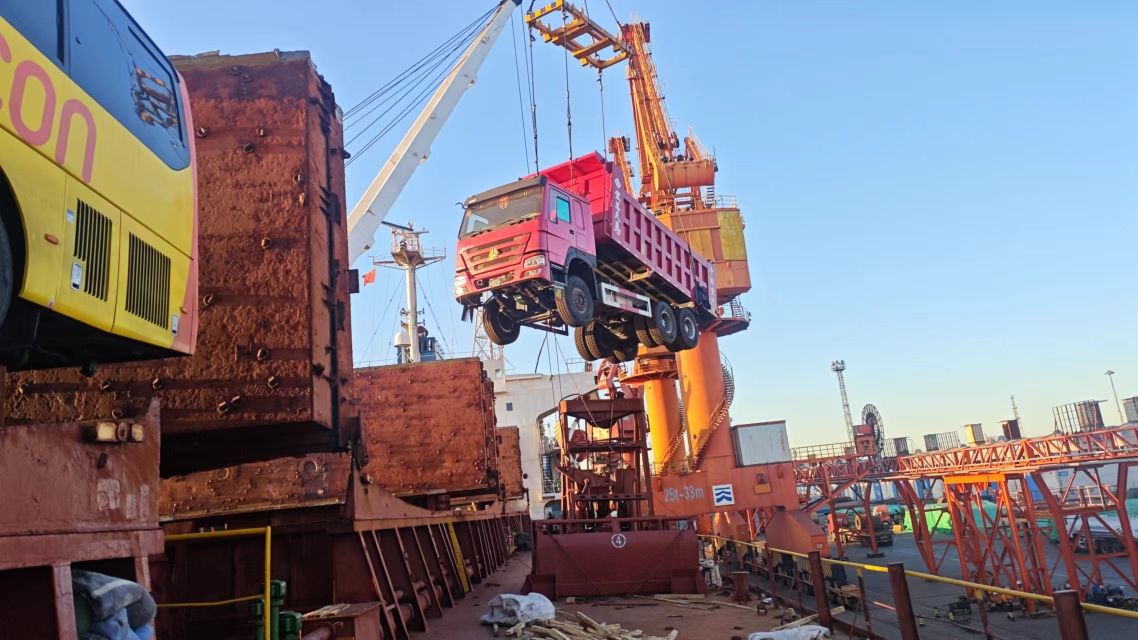
RORO (Roll-on/Roll-off): Best for heavy trucks. The truck drives onto the ship and drives off at the destination. No disassembly needed. Costs 15-30% less than container shipping. Downside: fewer sailing schedules than container lines.
Container: Best for pickup trucks, small trucks, or high-value equipment. Sealed environment, less risk of damage. But if your truck is wider than 2.35 meters (standard container width), you have to remove mirrors and bumpers—labor cost and risk of damage.
For a HOWO 6×4 dump truck: RORO is the right answer 90% of the time.
Real talk on African ports:
Lagos (Apapa / Tincan) — Busiest port in West Africa. Congestion is normal, especially from September to December. Build 5-10 days of potential delay into your timeline and budget.
Mombasa — East Africa’s main gateway. Peak season is July-September. Try to book outside those months if possible.
Dar es Salaam — Decent port, but clearance is slow. Expect 7-14 days from arrival to truck release.
Tema (Ghana) — Smoother than most. Typically 3-5 days. Ghana’s overall clearance process is better than average for West Africa.
Questions to ask before you book:
- Is this quote FOB or CIF? If CIF, exactly what’s included?
- What shipping line is this? What’s their priority at the destination port?
- What happens if the ship waits at anchorage—who pays demurrage?
- Has this agent handled used trucks before, or just container cargo?
If the answers are vague, find another agent.
Related: Used Cargo Trucks from China to Africa Shipping Guide →
Mistake #4: Saving Money on a Customs Agent
A Nigerian customer ordered four HOWO dump trucks. He found a customs agent who charged $300 per truck—about $200 below the standard rate. Good deal, right?
The trucks arrived at Apapa. Nigerian customs revalued them.
Why? The invoice only said, “Used HOWO Dump Truck.” No engine number. No chassis number. No actual mileage. No emission standard. Customs classified it as “unclear declaration” and reassessed the value at near-new truck prices.
The additional duty: $8,000 across four trucks.
He hired a lawyer to appeal—another $2,000 and three weeks of back-and-forth. He got some money back, but not all of it.
If he had paid a licensed agent $500 per truck from the start ($2,000 total), the invoices would have been done correctly, and none of this would have happened.
The most common customs mistakes:
| The Mistake | What Happens |
|---|---|
| The invoice description is too vague | Customs revalues at the highest applicable rate |
| SONCAP model number doesn’t match the truck | Cargo held, re-certification required |
| The consignee’s name has a typo | Amendment fee $200-500, 1-2 week delay |
| Declared value too low (flagged) | Fine + blacklist risk |
| No certificate of origin | Miss out on preferential duty rates |
Quick guide to country-specific rules:
Nigeria: Get SONCAP done before shipping. The model description must match the vehicle exactly—one character off and it’s a problem. The invoice must include the engine number and chassis number. Customs revaluation is common, so document quality directly affects your duty cost.
Kenya: Used trucks must be 8 years old or newer. Left-hand drive trucks need RHD conversion ($1,500-2,500). Find a reliable conversion shop before you ship.
Ghana: The clearance process is relatively standardized. But emission testing is getting stricter. Older trucks may fail.
Tanzania: Environmental levies are trending upward. Check current rates before budgeting.
Checklist before you ship:
- Bill of lading: consignee name is 100% correct
- Commercial invoice: includes brand, model, year, VIN, engine number, and actual mileage
- SONCAP (if Nigeria): model number matches invoice
- Certificate of origin: needed for preferential duty rates in some countries
- Packing list: basic but sometimes overlooked
Related: How to Import Used Trucks from China to Kenya →
SONCAP Official Website →
Mistake #5: Forgetting About Spare Parts
A customer in Zambia bought a FAW J6P tractor truck. It’s a good truck—strong engine, good fuel economy, comfortable cab. He ran it on the Lusaka to Copperbelt route and was happy with it.
Two months in, the brake booster failed.
He went to four spare parts shops in Lusaka. None had FAW brake boosters. One shop had one, but it was for a different model.
He ended up air-freighting a booster from China. Cost: $600. Waiting time: one week. His truck sat in the yard for seven days, earning nothing.
Now imagine the same situation with a HOWO:
- Three shops in Lusaka would have the part
- Cost: a fraction of the air freight
- Fix it the same day, keep running
He sold the FAW and bought a HOWO. Not because FAW makes bad trucks—on the highway, the J6P is actually more fuel-efficient. But the parts network wasn’t there, and that cost him more in downtime than any fuel savings could offset.
How to check parts availability before you buy:
- Go to the biggest truck spare parts market in your city. Walk around. Which brands have the most shelf space? That tells you everything.
- Join a local truck driver WhatsApp group. Ask: “What brand is easiest to fix in this city?” You’ll get honest answers.
What smart buyers do:
When you order the truck, ask for a basic spare parts kit. It costs very little in China but saves you a lot in Africa:
| Part | Why You Need It |
|---|---|
| Engine oil filter × 2 | Regular maintenance, easy to ship |
| Diesel filter × 2 | Bad fuel happens, have spares |
| Fan belt × 1 | Breaks without warning |
| Gasket set + oil seals | Small parts, big problems when missing |
| Brake pads (front + rear set) | Safety item, wears out |
| Clutch disc × 1 | If it goes, the truck doesn’t move |
Throw these in the cab or toolbox—they don’t cost extra freight, and they can save you weeks of downtime.
Also, save your engine model number and chassis number in your phone. When you need a part, send those two numbers to any supplier, and they’ll know exactly what you need.
Related: HOWO Used Trucks Buyer’s Guide →
Quick Reference Card
Here’s the whole article in 5 lines. Screenshot this or share it with a friend.
✅ Price vs. Condition — Live video inspection is not a bonus, it’s the minimum. The cheapest truck is usually the most expensive.
✅ Model vs. Market — Know your road and your cargo before you pick a model. Don’t copy your neighbor.
✅ Cheap Freight vs. Total Cost — Ask what CIF includes. Port waiting fees can cost more than the freight itself.
✅ DIY Customs vs. Licensed Agent — Agent fees are insurance, not expense. A bad clearance costs more than a good agent.
✅ Buying vs. Running — The parts network determines how much your truck earns. Plan for maintenance before the truck arrives.
Frequently Asked Questions
Q: Can I buy a good used truck without traveling to China?
A: Yes, most of our customers never visit. Live video inspection is the standard—I show you everything on camera: cold start, chassis, engine bay, cab. If you’re not satisfied with what you see, we’ll pick another truck.
Q: Do you accept L/C payments?
A: Yes. But most customers use T/T: 30% deposit to reserve the truck, 70% before the vessel sails. It’s faster and works well for both sides.
Q: Will old tires cause customs problems?
A: Depends on the country. Nigeria has restrictions on used tires. We check tire condition before shipping and replace heavily worn ones.
Q: Do you have service centers in Africa?
A: Not directly, but HOWO, Shacman, and FAW have authorized service points in most major African cities. Local mechanics are also very familiar with these brands.
Q: Is shipping insurance worth it?
A: Yes. RORO damage is rare, but if something happens—rough weather, handling accident—you’re fully covered. The premium is a small percentage of the truck value.
Q: How long from order to arrival?
A: Typically 35-50 days. Breakdown: selecting and confirming the truck (3-7 days), documentation and booking (7-10 days), ocean transit (20-30 days).
Q: What’s the total budget for a HOWO 6×4 dump truck landed in Lagos?
A: Rough estimate for 2026:
| Item | Estimated Cost (USD) |
|---|---|
| Truck price (HOWO 371 6×4, 2019-2021) | $16,000 – $22,000 |
| Ocean freight + insurance (CIF Lagos) | $5,000 – $7,000 |
| Customs clearance + duty (Nigeria estimate) | $4,000 – $6,000 |
| Local prep + registration | $500 – $1,500 |
| Total estimate | $25,500 – $36,500 |
This is a reference range based on recent shipments. Actual prices depend on truck condition, freight rates at the time of booking, and current duty policies.
A Final Note
Every story in this article is real. I didn’t make them up to make a point—these are conversations I’ve had on WhatsApp, trucks I’ve seen leave my yard, and customers I’ve stayed in touch with after delivery.
In 10 years of doing this, here’s what I’ve learned: the exporters who cut corners don’t last. You can fool a buyer once with cheap pricing and hidden problems. But he won’t come back, and neither will his friends.
The reason I’m still in business isn’t that my prices are the lowest. It’s that my customers refer their friends. That only happens when the truck works.
If you’re thinking about importing used trucks from China to Africa—whether you’re just getting started or you’re already comparing quotes—send me a message. I’ll tell you what truck makes sense for your market, how to inspect it, how to ship it, and what to watch out for at your port.
No sales pitch. Just 10 years of experience that might save you from making one of these mistakes.
📱 WhatsApp: +8615717687720
📧 Email: [email protected]
🌐 Website: https://www.hebeicar.com
📱 Truck inventory videos: @usedtrucksexport on TikTok
Text me this format: “I’m looking for [truck model] to [destination country]” and I’ll send you current options.
Internal links to verify before publishing:
– /howo-used-trucks-buyers-guide-2026/
– /shacman-used-trucks-what-african-buyers-need-to-know-before-buying-2026/
– /product/china-howo-heavy-truck-2/
– /used-tractor-trucks/
– /used-cargo-trucks-from-china-to-africa/
– /import-used-trucks-from-china-to-kenya/