Used Dump Trucks from China – Complete Buyer’s Guide for Africa (2026 Prices & Tips)
If you’re in construction, mining, or haulage anywhere in Africa, you already know the drill — you need dump trucks, and you need them to work, not sit in a shop waiting for parts.
Buying from China is usually the right move. A used HOWO or Shacman will cost you about a third of what a new European truck goes for, and the parts situation is way better than people think. But there’s a catch — not every truck you see on Alibaba is worth the container space it’s shipped in.
With over ten years in the business, I’ve seen it all — customers who nailed the perfect truck on their first try and saved thousands, and guys who came to me after getting burned by bad deals with bent frames, swapped engines, or missing documents. Most of those problems are avoidable if you know what to look for.
This guide is the stuff I tell my own customers when they ask what to buy. Brands, models, what each one’s good at, what to check before you wire money, and what things actually cost in 2026.
Why Chinese Dump Trucks Are All Over Africa
Let’s be real — they’re not the prettiest trucks on the road, they don’t have the nicest cabs, and you won’t impress anyone at a truck stop. But that’s not the point.
- The price gap is huge. A decent used HOWO 6×4 runs $16,000 to $24,000 delivered to Lagos. A new one is $60,000+. A used Scania in similar condition? You’re looking at $40,000 minimum if you can find one. The math is simple.
- Parts are everywhere. Ladipo market in Lagos, Industrial Area in Nairobi, Spintex Road in Accra — you can find HOWO and Shacman parts within an hour. Try finding Scania parts in those same markets in under a week.
- They handle abuse. Chinese dump trucks are built knowing they’ll be overloaded. The frame rails are thick, the suspension is tough, and the axles are rated above spec. In real African working conditions, that’s what matters.
- Any mechanic can fix them. No special diagnostic tools needed. No dealer-only software. Just a basic tool set and a mechanic who knows diesel engines.
Last week, a customer in Ghana sent me a voice note — his HOWO 371 had been hauling sand for fourteen months straight, only routine maintenance, still running strong. That’s not marketing, that’s what actually happens.
The Four Dump Trucks You’ll Actually See in Africa
Forget the brochure talk. Here’s what’s actually on the ground and what our customers keep coming back for.
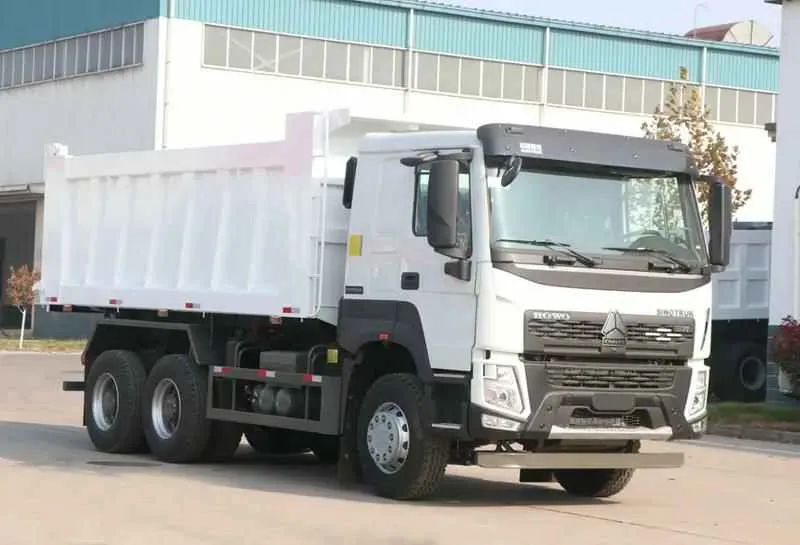
1. HOWO 371 6×4 – The Workhorse
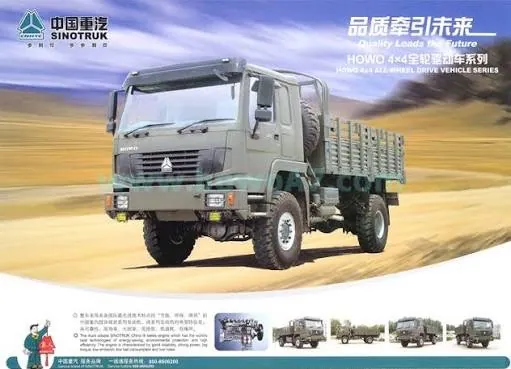
This is the one we sell more than anything else. Every major dealer in China stocks them, every parts shop in Africa carries spares, and every mechanic knows how to work on the WD615 engine. It’s not fancy — think of it as the Nokia 3310 of dump trucks. Boring but bulletproof.
- Engine: WD615.47, 371hp
- Transmission: HW19710, 10-speed manual
- Config: 6×4, three axles, single drive rear
- Payload: 30–40 tons comfortable
- Typical price CIF Lagos: $16,500–$24,500
- Best for: General construction, sand and gravel, coal hauling
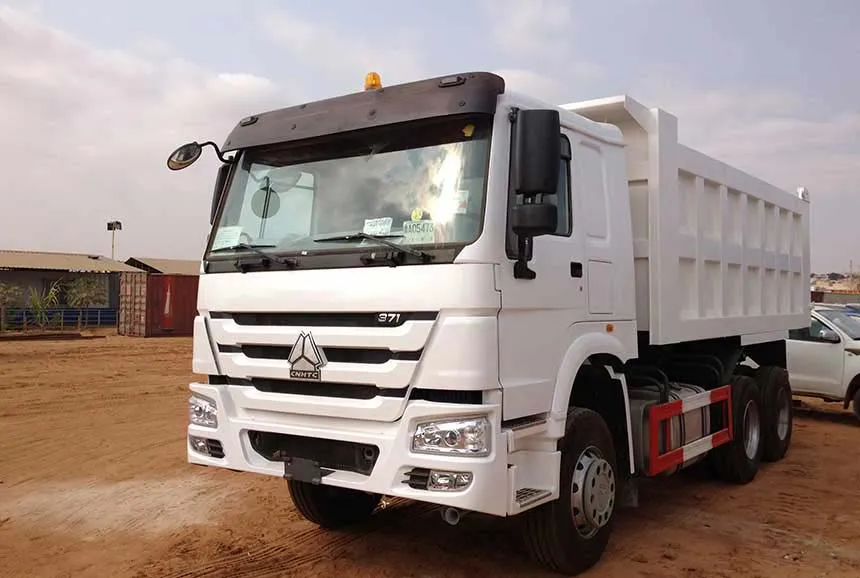
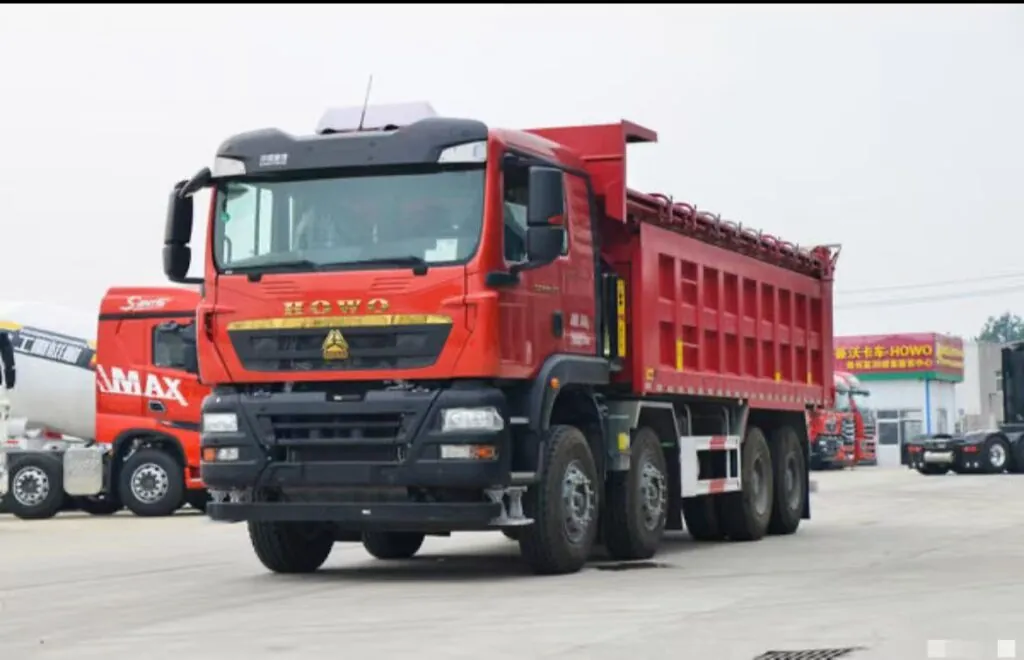
2. HOWO 8×4 – When You Need More
Two driven axles instead of one. More traction and more payload. If you’re hauling 50 tons of ore out of a muddy pit every day, this is your truck. The 8×4 also sits better on soft ground, which matters during the rainy season in places like Zambia or the DRC.
- Engine: WD618.42, 380–420hp
- Config: 8×4, four axles, dual drive rear
- Payload: 40–55 tons
- Typical price CIF Lagos: $22,000–$30,000
- Best for: Big mines, heavy infrastructure, soft terrain
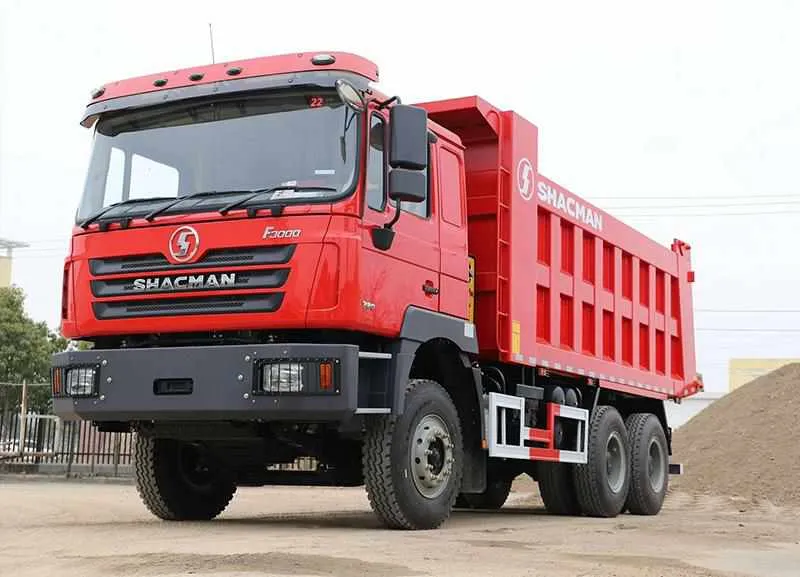
3. Shacman F3000 – The Mining Truck
Shacman uses Weichai engines, and those things have torque you can feel. The F3000 chassis is heavier than the HOWO — some people say it’s overbuilt, but I’ve never heard a customer complain about too much strength. Mining operators tend to prefer Shacman because the frame holds up better under continuous heavy loads.
- Engine: Weichai WP10/WP12, 350–430hp
- Transmission: Fast Gear 10-speed or 12-speed
- Config: 6×4 or 8×4
- Payload: 30–50 tons
- Typical price CIF Lagos: $18,500–$28,000
- Best for: Mining, extreme conditions, heavy continuous work
One thing to know about Shacman — parts availability is good, but not as universal as HOWO. If you’re operating somewhere remote, stock up on some spares upfront.
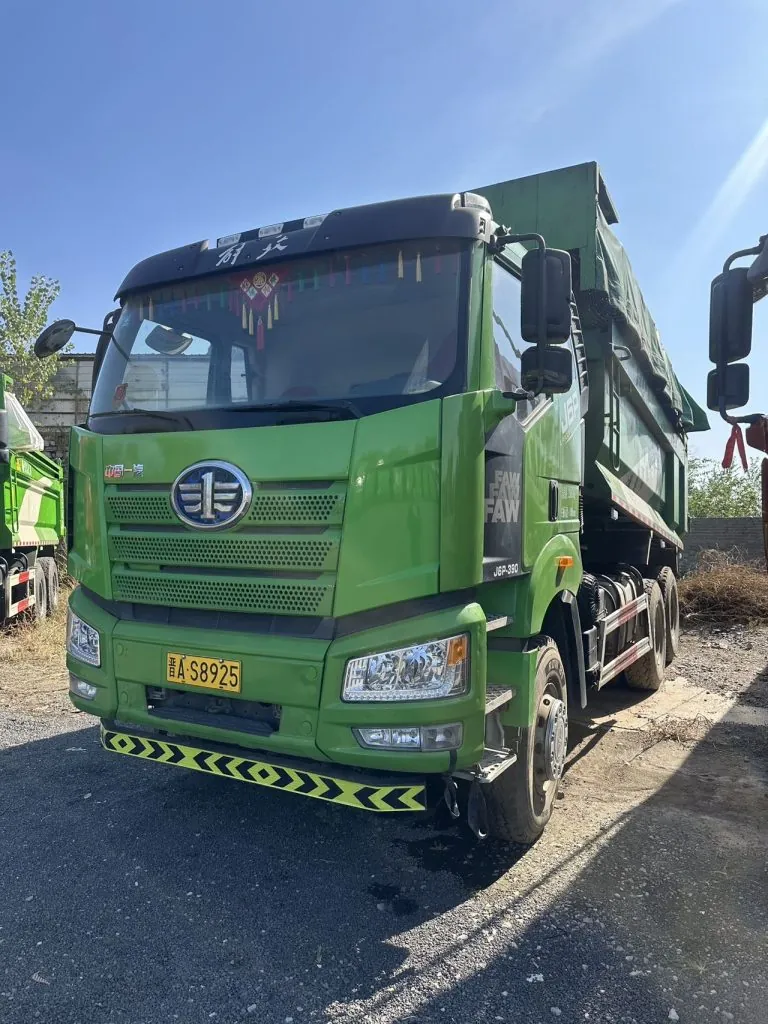
4. FAW J6 – The Fuel-Saver
FAW doesn’t get as much attention as HOWO or Shacman in West Africa, but in East Africa — especially Kenya, Ethiopia, Tanzania — it’s got a solid following. The J6 is noticeably lighter, which means better fuel economy. If you’re running long hauls where fuel cost is the main concern, FAW is worth a serious look.
- Engine: CA6DL/CA6DM, 350–420hp
- Config: 6×4 or 8×4
- Payload: 30–45 tons
- Typical price CIF Lagos: $15,000–$22,000
- Best for: Long-haul dump work, fuel-conscious operators
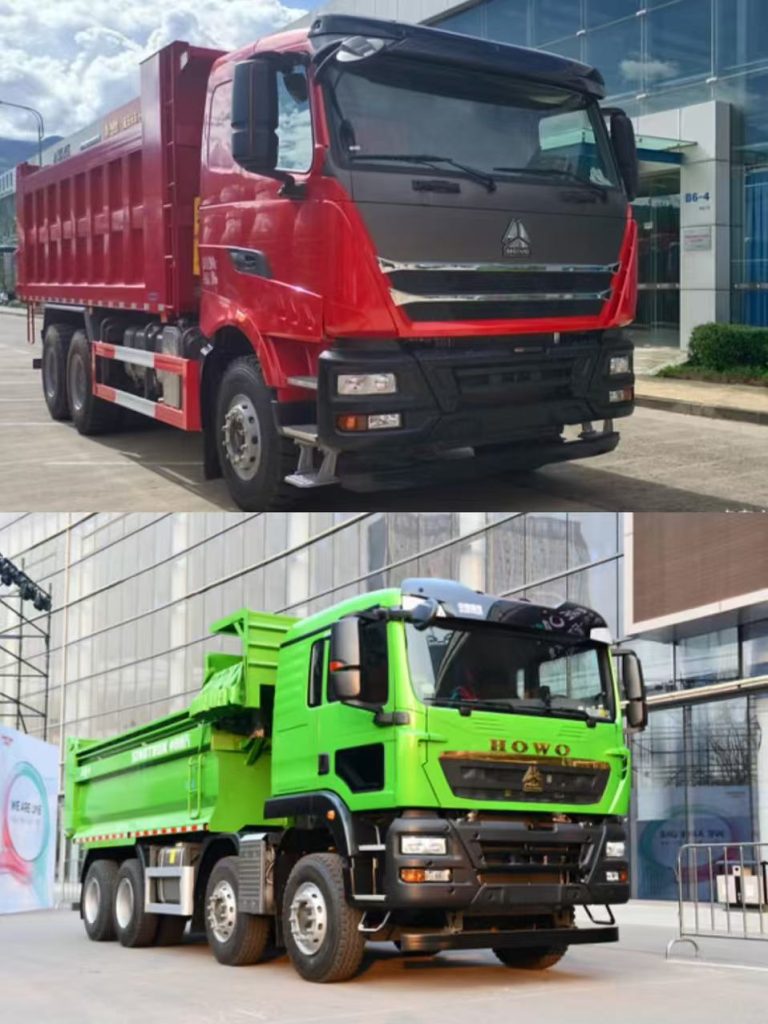
6×4 or 8×4 – How to Decide
I get asked this almost every day. Here’s the honest answer:
If you’re carrying less than 40 tons per trip and your site isn’t a swamp during the rainy season, get the 6×4. It’s lighter on fuel, cheaper to maintain, and the tire costs are lower.
If you’re regularly loading 50 tons or more, or working in mud, sand, or loose terrain, the 8×4 pays for itself through better traction and less time stuck. The fuel penalty is real, but so is the productivity gain.
I had a customer in Mozambique last year who insisted on 8×4 for a job that really only needed 6×4. He spent extra on the truck and extra on fuel for six months until he finally admitted I was right. Most people don’t need 8×4. But the ones who do, really do.
What Things Actually Cost in 2026
All prices below are CIF — Cost, Insurance, Freight. What you see is what you pay to get the truck to your port. No surprises.
| Brand / Model | Year | CIF Lagos | CIF Mombasa | CIF Tema |
|---|---|---|---|---|
| HOWO 371 6×4 | 2019–2021 | $16,500–$24,500 | $17,500–$25,500 | $17,000–$25,000 |
| HOWO 380 8×4 | 2020–2022 | $22,000–$30,000 | $23,000–$31,000 | $22,500–$30,500 |
| Shacman F3000 6×4 | 2019–2021 | $18,500–$26,000 | $19,500–$27,000 | $19,000–$26,500 |
| FAW J6 6×4 | 2019–2021 | $15,000–$22,000 | $16,000–$23,000 | $15,500–$22,500 |
These are ballpark numbers as of mid-2026. The real price depends on mileage, how well it’s been maintained, what kind of tires it has, and, honestly, how hard you negotiate. I’ve seen two trucks fresh from the same fleet sell for $5,000 apart because one had better tires and a cleaner service record.
Want current stock and real prices? Check what we have in the yard right now →
What to Check Before You Send Any Money
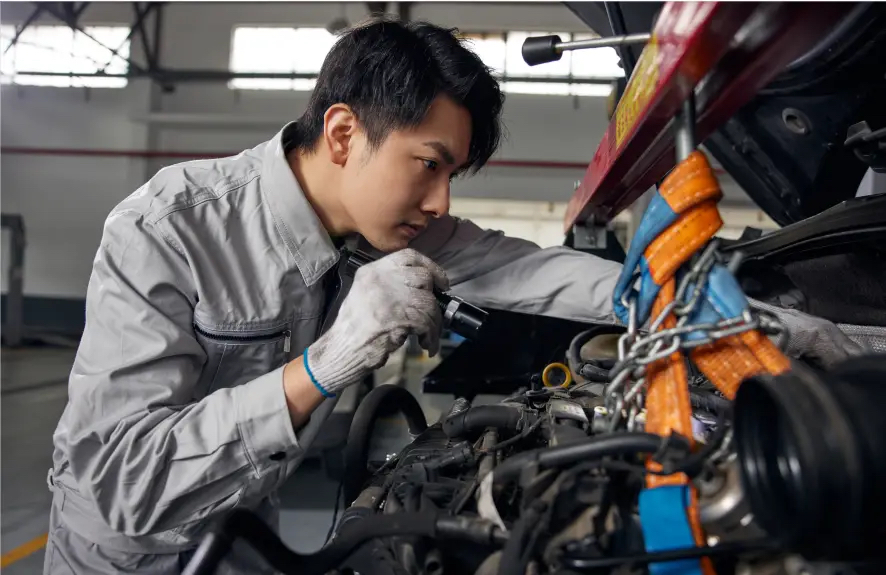
Pictures can hide a lot. Here’s what I tell every buyer to look at — and what a trustworthy exporter should have no problem showing you.
Engine
Ask them to start the engine cold on video — not warmed up. If it blows white smoke on startup, that’s coolant getting into the cylinders (bad). Blue smoke means burning oil. Black smoke usually means clogged injectors or a dirty air filter — fixable, but something to note.
Also listen for knocking. Top-end noise might be valve lash; bottom-end knocking is a whole different problem. I once had a supplier try to sell us a truck where the main bearing was clearly gone — they had music playing in the background during the video to hide the sound.
Transmission and Clutch
Shift through every gear. Any grinding means syncros are worn. Feel the clutch — if it engages right off the floor, the clutch disk is almost done. That’s a $300–500 fix you can plan for. But if it won’t shift into gear at all, walk away.
Frame Rails
This is the one thing I never compromise on. Check for cracks near the spring hangers and cab mounts. If you see welding repairs on the frame, don’t buy it. A welded frame might hold for a few weeks, but it will crack again under load, and when it goes, it goes badly.
Hydraulics (Dump Body Lift)
Have them raise and lower the dump body a few times. Smooth motion is good. Any jerking or hesitation means air in the system or a failing pump. Check the hydraulic cylinders for oil leaks — a little sweat is normal, dripping is not.
Tires
Uneven wear on one tire probably means that tire’s bad. Uneven wear on all four means the chassis alignment is off, and that’s a bigger problem. Also check for sidewall cracks — those are blowouts waiting to happen at 40 tons.
How It Works When You Buy From Us
I’ll walk you through our process so you know what to expect from any good exporter:
- You tell me what you need — model, year range, budget, destination port. The more specific, the quicker I can match you to something.
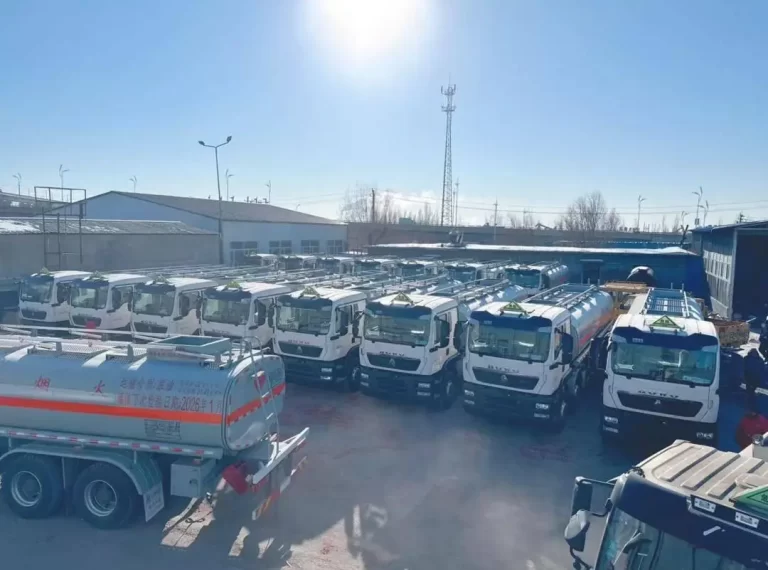
- I pull options from our yard in Shijiazhuang. We usually have 30 to 50 dump trucks in stock. If I don’t have what you want, I’ll tell you upfront instead of wasting your time.
- We do a live video call on WhatsApp. I walk around the truck, start it cold, run through the gears, and check the hydraulics. You see exactly what you’re getting.
- You decide. If it’s yes, 30% deposit, 70% before shipping. For larger orders, we can do L/C.
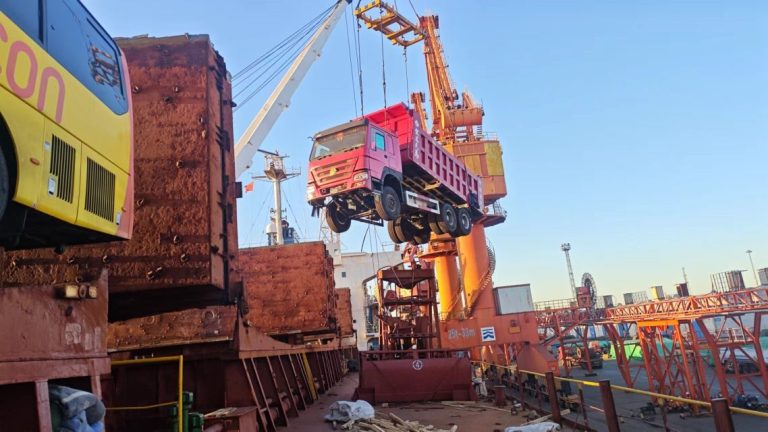
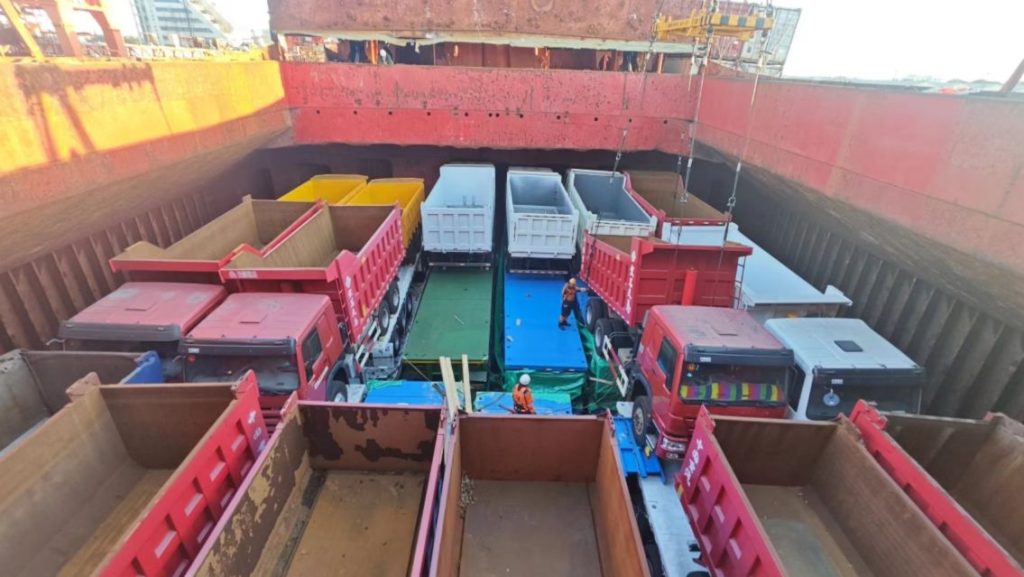
- We arrange RORO or container shipping from Tianjin Port, handle all export documentation — bill of lading, certificate of origin, customs clearance, and vehicle title.
- 20 to 30 days later, your truck arrives at port. I send you tracking updates the whole way.
More about our shipping process →
Shipping Costs at a Glance
Shipping is the part of the budget that surprises people most. Here’s what to expect in 2026 for one dump truck:
| To | Method | Transit | Cost (approx) |
|---|---|---|---|
| Lagos (Nigeria) | RORO | 25–30 days | $1,800–$2,500 |
| Mombasa (Kenya) | RORO | 22–28 days | $1,500–$2,200 |
| Tema (Ghana) | RORO | 20–25 days | $1,700–$2,400 |
| Dar es Salaam (Tanzania) | RORO | 22–28 days | $1,500–$2,200 |
| Durban (South Africa) | Container | 18–22 days | $2,000–$3,000 |
If you’re shipping one or two trucks, a container is fine — the truck arrives cleaner, and there’s less risk of minor damage. For bigger orders (5+ units), RORO is almost always the smarter choice. You save a few hundred per truck, and the logistics are simpler.
People Also Ask
How long will a Chinese-made dump truck last?
With regular oil changes and basic maintenance, 400,000 to 600,000 km before major work. I’ve seen HOWOs pass 800,000 km on original engines. The WD615 engine is old-school — simple mechanical injection, no electronics to fail.
What’s the real difference between HOWO and Shacman?
Short version: HOWO has the best parts network in Africa — you’ll find spares in smaller cities. Shacman has a stronger chassis and is better suited for pure mining. FAW is lighter and drinks less fuel. Full brand comparison here →
Can I see the truck before I pay?
If a supplier says no, stop talking to them. We do live video inspections for every single sale. You see the truck, we start it, shift through gears, and check everything. No surprises.
What paperwork do I need to clear customs?
Your exporter should provide: Bill of Lading, commercial invoice, packing list, certificate of origin, vehicle title, and export customs declaration. For Nigeria, you’ll also need SONCAP. We include everything in our CIF quote.
Are spare parts available in Africa?
HOWO and Shacman parts are stocked in Lagos, Accra, Nairobi, Dar es Salaam, Lusaka, and basically any city with a trucking industry. For FAW, the network is thinner but growing. If you’re in a smaller market, I recommend buying a starter spare parts kit with your first truck.
Do you offer any warranty?
We cover engine and transmission defects for 30 days after delivery. Parts only, not on-site labor. It’s not a new truck warranty — you’re buying used — but it covers the big stuff that would hurt if it failed.
Ready to Find Your Truck?
We keep 30 to 50 used dump trucks in our yard in Shijiazhuang at any time — HOWO, Shacman, FAW, others. Every truck is inspected, test-driven, and ready for a video showing.
No bait-and-switch. No “the truck you saw just sold, but I have another one” games. If I don’t have what you need, I’ll tell you.
Get in touch:
- 📱 WhatsApp: +86 15717687720
- 📧 Email: [email protected]
- 🌐 hebeicar.com
- 🚛 Browse current inventory →
Tell me what truck you’re looking for and where it’s going. I’ll send you matching options with real photos and a video within 24 hours.